
By: Julius Konton
Guinea-Bissau has reaffirmed its longstanding and unwavering support for Morocco’s sovereignty over the Sahara region, reinforcing growing African diplomatic backing for Rabat’s position on one of North Africa’s most enduring geopolitical disputes.
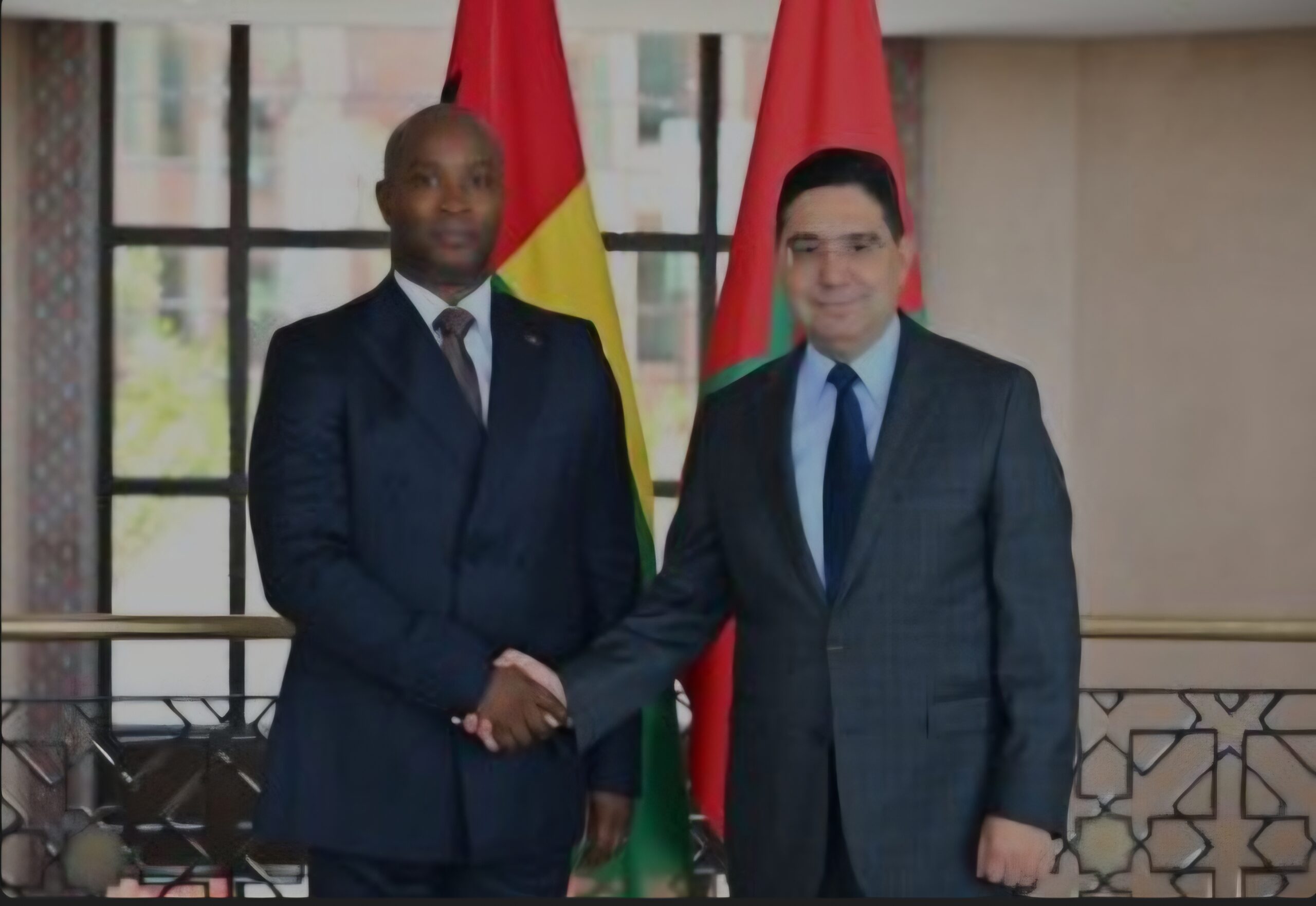
The position was reiterated by João Bernardo Vieira, Guinea-Bissau’s Minister of Foreign Affairs, International Cooperation and Communities, following high-level talks in Rabat with Nasser Bourita, Morocco’s Minister of Foreign Affairs, African Cooperation and Moroccan Expatriates.
Speaking during a joint press briefing, Vieira reaffirmed what he described as Guinea-Bissau’s “firm and constant” position supporting Morocco’s territorial integrity and sovereignty over all of its territories, including the Sahara region.
He emphasized that Bissau continues to regard Morocco’s autonomy initiative as the sole credible and realistic pathway toward resolving the long-running regional dispute.
The renewed diplomatic endorsement comes amid intensified international discussions over the future of the disputed territory, which has remained a major issue in North African and broader African diplomacy for nearly five decades.
The Sahara dispute dates back to 1975 following Spain’s withdrawal from the territory, triggering competing claims and a prolonged political impasse that has since involved regional actors and the United Nations.
Morocco, which controls approximately 80 percent of the territory and has invested heavily in infrastructure, renewable energy, fisheries, and logistics development in the region, has consistently advocated an autonomy proposal first introduced in 2007.
Under the initiative, the Sahara would remain under Moroccan sovereignty while enjoying local self-governance through legislative, executive, and judicial institutions.
According to Moroccan authorities, billions of dollars have been invested in southern provinces under development programs aimed at modernizing roads, ports, housing, education, healthcare, and renewable energy infrastructure.
Rabat argues that these investments demonstrate the viability of its governance model and commitment to regional development.
Vieira also welcomed what he described as a “historic” diplomatic milestone, the adoption of a United Nations Security Council resolution on October 31, 2025, which he said reinforced Morocco’s autonomy proposal as the basis for a political settlement to the dispute.
The Bissau-Guinean foreign minister expressed satisfaction with the resolution, describing it as a significant step toward achieving a realistic, durable, and mutually acceptable political solution under Moroccan sovereignty.
He further characterized Morocco’s autonomy initiative as the only serious, credible, and sustainable framework capable of ending what he termed an “artificial dispute” over the territory.
The renewed position reflects broader diplomatic momentum among African and Arab nations that have increasingly voiced support for Morocco’s autonomy proposal in recent years.
More than two dozen countries have opened consular representations in the cities of Laayoune and Dakhla, moves Rabat views as implicit recognition of Morocco’s sovereignty claims and expanding international legitimacy for its position.
Relations between Morocco and Guinea-Bissau have strengthened steadily through diplomatic cooperation, economic engagement, and South-South partnerships.
Rabat has increasingly positioned itself as a strategic diplomatic and economic partner across West Africa, investing in sectors ranging from banking and telecommunications to fertilizers, agriculture, and infrastructure development.
Analysts say Guinea-Bissau’s reaffirmation of support highlights Morocco’s continued success in consolidating African backing for its position at a time when diplomatic competition surrounding the Sahara issue remains central to regional stability, continental diplomacy, and relations between North Africa and sub-Saharan Africa.
For Morocco, the latest endorsement from Guinea-Bissau represents another diplomatic boost in its effort to secure wider international recognition for its autonomy proposal and territorial claims, while reinforcing Rabat’s broader foreign policy strategy of deepening alliances across the African continent.
