
By: Julius Konton
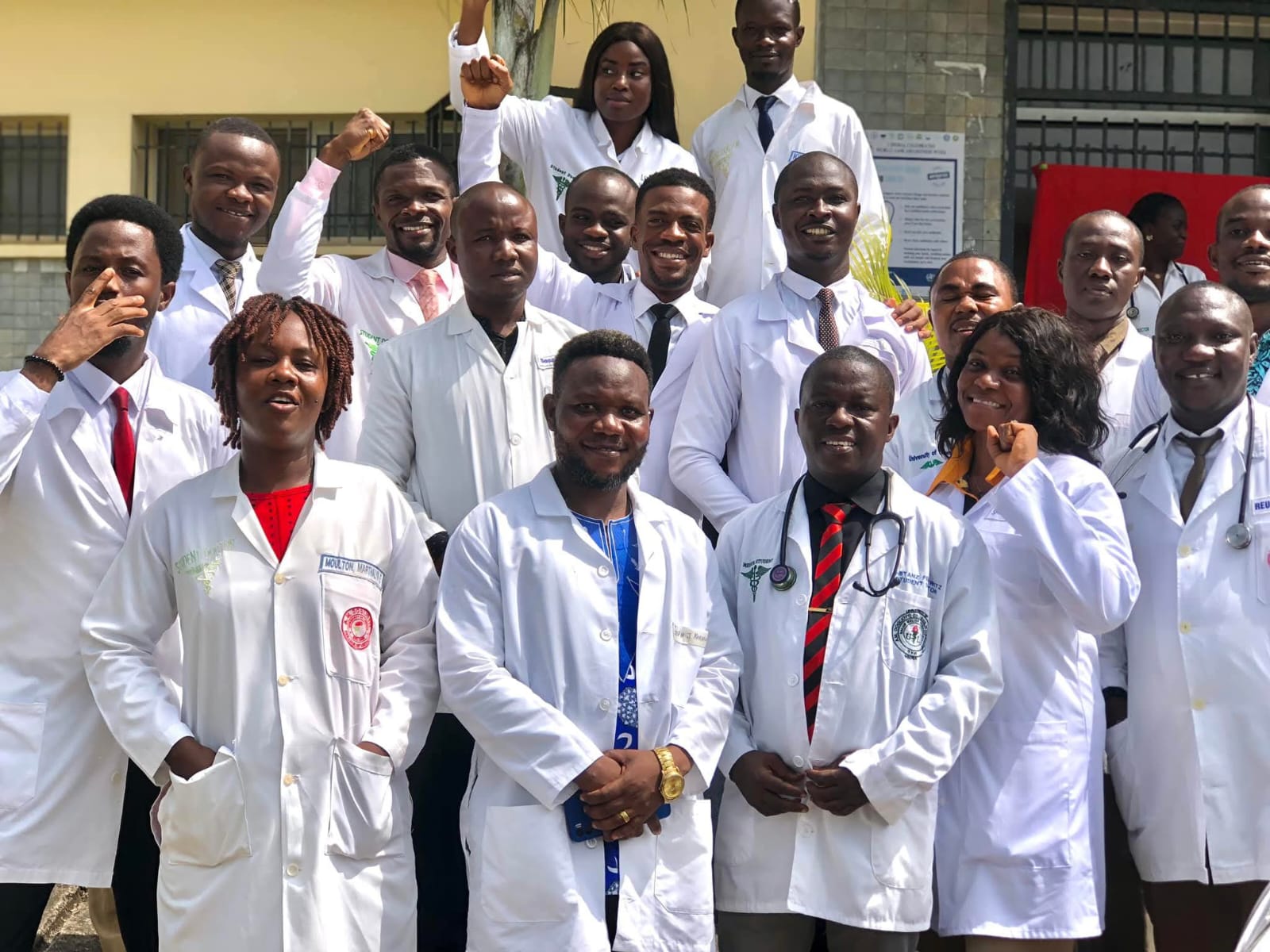
In a significant step toward strengthening its healthcare workforce, the Liberia Medical and Dental Council (LMDC) has deployed 65 intern doctors to major health facilities across the country, reinforcing efforts to improve clinical training and enhance service delivery in a system still recovering from years of strain.
The nationwide deployment includes 40 male and 25 female graduates drawn from both domestic and international medical institutions.
According to LMDC officials, the initiative reflects a strategic push to bridge critical gaps in Liberia’s healthcare system, where physician density remains among the lowest globally estimated at fewer than 0.2 doctors per 1,000 people, compared to the World Health Organization (WHO) recommended threshold of 1 doctor per 1,000 people.
A Diverse and Globally Trained Cohort
The new interns represent a diverse academic background, with 12 graduates trained abroad in countries including Cuba, China, Russia, Ukraine, Sudan, Kenya, The Gambia, and the Philippines. Others completed their studies at Liberia’s premier medical institution, the A.M. Dogliotti College of Medicine.
Health experts note that this mix of international exposure and local training can help strengthen clinical practices and introduce varied approaches to patient care an important factor in modernizing Liberia’s health system.
Strategic Nationwide Deployment
The interns have been assigned to some of Liberia’s most critical referral and regional hospitals. In the capital, placements include the John F. Kennedy Memorial Referral Hospital, ELWA Hospital, St. Joseph’s Catholic Hospital, and the 14 Military Hospital.
Beyond Monrovia, deployments extend to key regional facilities such as J.J. Dossen Hospital in Maryland County, Jackson F. Doe Hospital in Tappita, United Methodist Hospital in Ganta, and Dussa Hospital in Margibi County.
This distribution is designed to ease staffing shortages and improve access to care in underserved regions, where health indicators often lag behind national averages.
Structured Clinical Training Program
The internship program, which spans one year, is a mandatory requirement for full licensure and independent medical practice in Liberia. Interns will rotate through four core clinical disciplines:
Obstetrics and Gynecology
Pediatrics
Internal Medicine
Surgery
The program is divided into three trimesters of approximately three months each. During each phase, interns will be closely supervised by senior consultants and evaluated on clinical competence, professionalism, and ethical conduct.
Accountability and Professional Standards
The LMDC has underscored its commitment to maintaining high standards within the program. Interns who underperform or violate professional ethics may be required to undergo additional training, face reassignment, or repeat specific rotations.
Such measures, officials say, are essential to ensuring that newly licensed doctors meet both national and international standards of medical practice.
Building on Lessons from the Past
Liberia’s healthcare system has undergone significant rebuilding since the devastating 2014–2016 Ebola outbreak, which claimed the lives of nearly 5,000 people in the country and exposed severe weaknesses in the health sector, including workforce shortages and limited training capacity.
Since then, the government and its partners have prioritized investments in human resources for health, infrastructure, and training programs. The deployment of intern doctors is widely seen as a continuation of these efforts.
A Call for Mentorship and Support
The LMDC is urging senior healthcare professionals and hospital administrators to provide strong mentorship and guidance to the interns. Creating a supportive learning environment, the Council emphasized, will be key to developing competent, ethical, and patient-centered physicians.
As Liberia continues its journey toward achieving universal health coverage, initiatives like the nationwide internship deployment are expected to play a critical role in strengthening the healthcare workforce and improving patient outcomes.
With a growing population of over 5.3 million people and increasing demand for quality healthcare services, the success of such programs could determine the pace at which Liberia closes its healthcare delivery gaps and builds a resilient health system for the future.
