
By: Julius Konton
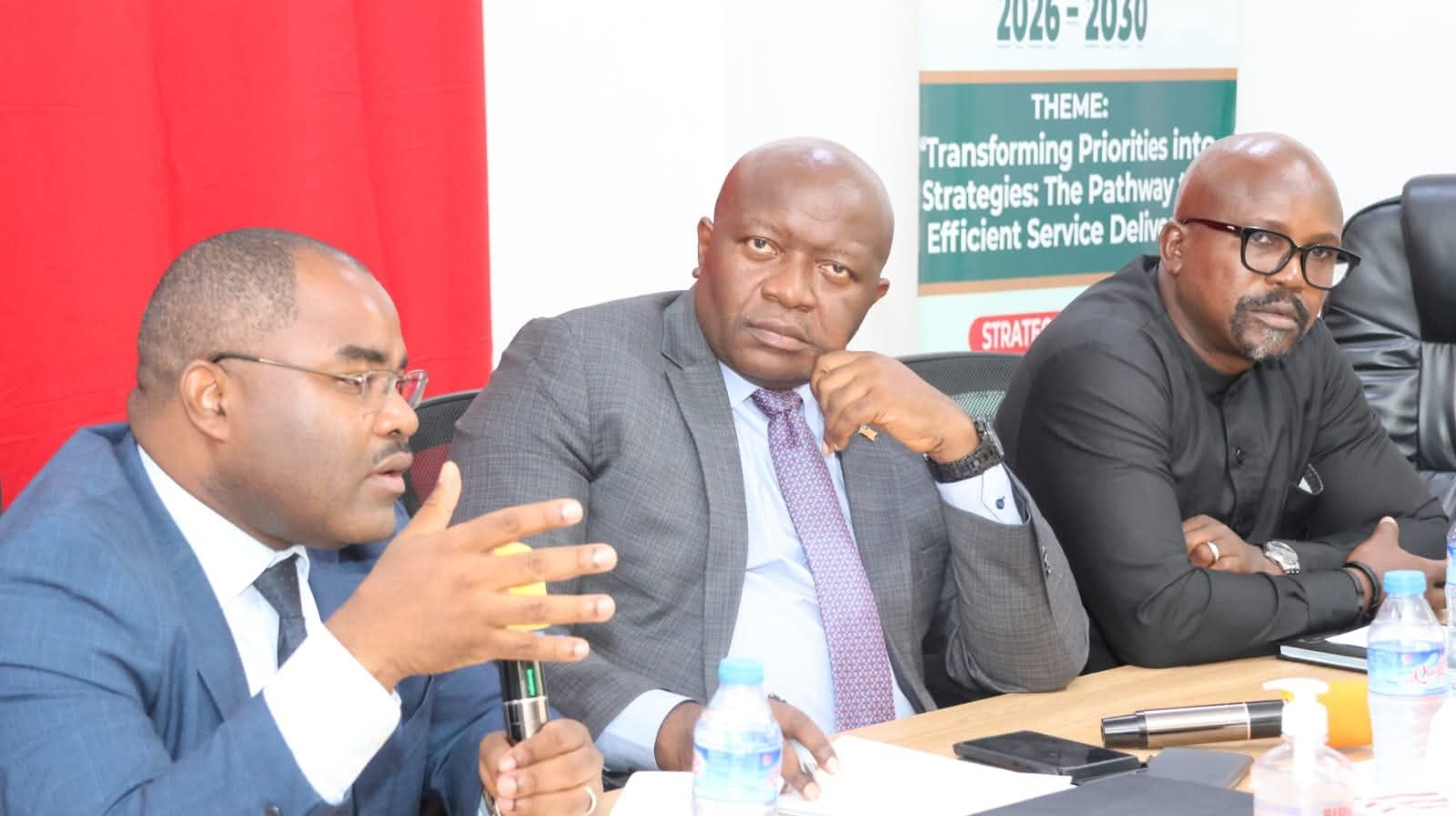
Liberia’s long-standing partnership with the World Bank received a renewed vote of confidence this week as the institution’s Executive Director for Liberia, Zarau Wendeline Kibwe, arrived in Monrovia for high-level discussions focused on accelerating development projects, improving implementation efficiency, and unlocking new investments.
During the strategic meeting with Finance and Development Planning Minister Augustine Kpehe Ngafuan and senior Liberian officials, Kibwe praised Liberia’s resilience in the face of global inflationary pressures, geopolitical instability, and tightening international financial conditions.
The visit comes at a crucial time for Liberia, as the West African nation seeks to expand infrastructure, create jobs, strengthen social services, and sustain economic recovery following years of shocks ranging from the Ebola epidemic and COVID-19 pandemic to global commodity volatility.
World Bank Reviews Impact on Ordinary Liberians
According to officials, Kibwe’s mission is aimed at assessing how World Bank-funded programs are improving the daily lives of Liberians, while identifying obstacles delaying implementation and exploring additional financing opportunities aligned with Liberia’s national development priorities.
Liberia currently benefits from a broad World Bank portfolio spanning roads, agriculture, energy access, education, health, governance reform, and water supply.
The World Bank has historically been one of Liberia’s largest multilateral development partners, supporting reconstruction efforts since the end of the country’s 14-year civil conflict in 2003.
Since then, billions of dollars in concessional financing and grants have flowed into Liberia through the World Bank’s International Development Association (IDA), the institution’s fund for low-income countries.
Finance Minister: Partnership Remains Critical
Speaking at the opening of the meeting, Minister Ngafuan described the Executive Director’s visit as timely and significant, particularly as Liberia faces external economic shocks and persistent fiscal pressures.
“Our partnership with the World Bank remains strong and impactful,” Ngafuan said.
He noted that the institution has played a vital role in helping Liberia navigate economic uncertainty while maintaining development momentum.
Liberia’s economy has shown signs of recovery in recent years.
According to international financial estimates, the country’s GDP growth is projected to remain above 4 percent in the medium term, supported by mining, agriculture, and public investment, although inflation and debt vulnerabilities remain concerns.
Government Targets Faster Delivery of Projects
A major focus of the discussions was the performance of Liberia’s World Bank-financed project portfolio.
Officials reviewed progress but acknowledged persistent delays, procurement bottlenecks, and slow disbursement rates that have hindered full implementation.
Minister Ngafuan revealed that the government is preparing a comprehensive portfolio review to improve efficiency, speed execution, and maximize the impact of donor-funded programs.
Priority attention will be placed on:
Road and transport infrastructure
Public works
Water and sanitation services
Rural access projects
Service delivery systems
Liberia continues to face one of the region’s largest infrastructure deficits, with many rural communities lacking all-weather road access, safe drinking water, and reliable electricity.
Signs of Progress Emerging
Despite the challenges, Ngafuan said Liberia has recorded notable gains in recent months, including:
Improved project implementation rates
Higher fund disbursement levels
Expansion of the project pipeline
Better road connectivity
Increased access to essential public services
Infrastructure remains central to Liberia’s development strategy.
With over 5 million citizens, many living outside urban centers, improved transport links are seen as essential for trade, food security, education access, and healthcare delivery.
World Bank Praises Liberia’s Stability
For his part, Executive Director Kibwe said the visit was intended to deepen engagement with Liberia and better understand the country’s evolving priorities.
He reaffirmed Liberia’s importance as both a shareholder and development partner of the World Bank.
Kibwe also commended the Liberian government for preserving relative macroeconomic stability despite difficult global conditions.
Analysts note that many African economies continue to struggle with currency depreciation, rising debt-service costs, and inflation triggered by supply chain disruptions and conflicts abroad.
Against that backdrop, Kibwe observed that Liberia’s recent performance compares favorably with several countries in the region.
Reforms Needed to Attract Investment
Even with the positive assessment, Kibwe stressed the need for sustained reforms to improve the investment climate, encourage private sector growth, and create jobs especially for Liberia’s youthful population.
Roughly 60 percent of Liberia’s population is under age 25, making job creation one of the country’s most urgent long-term priorities.
Key reform areas include:
Business registration and licensing
Tax administration modernization
Digital public services
Anti-corruption measures
Energy reliability
Trade facilitation
These themes remain central pillars of the World Bank’s support framework for Liberia.
High-Level Delegation Attends Talks
The meeting brought together several top Liberian and World Bank officials, including:
Georgia Wallen, World Bank Country Manager for Liberia
Dr. Plingloh Emmanuel Munyeneh, Senior Advisor to the Executive Director
Henry Saamoi, Executive Governor of the Central Bank of Liberia
Roland Giddings, Minister of Public Works
Rudolph J. Merab Sr., Managing Director of the Forestry Development Authority
The visit signals growing international confidence in Liberia’s reform path under its current administration and may pave the way for fresh development financing in the coming months.
For Liberia, the challenge now is clear: translate international support into faster project delivery, visible infrastructure gains, and jobs that improve the lives of ordinary citizens.
As global economic uncertainty continues, stronger partnerships with institutions such as the World Bank may prove decisive in shaping Liberia’s next chapter of growth.
