
By: Julius Konton
The Government of Liberia, through the Ministry of Youth and Sports, has intensified efforts to expand youth empowerment and grassroots basketball development following the arrival of a high-level international basketball delegation led by the President of the Federation of International Basketball Association (FIBA) Zone-3, Retired Colonel Samuel Ahmedu.
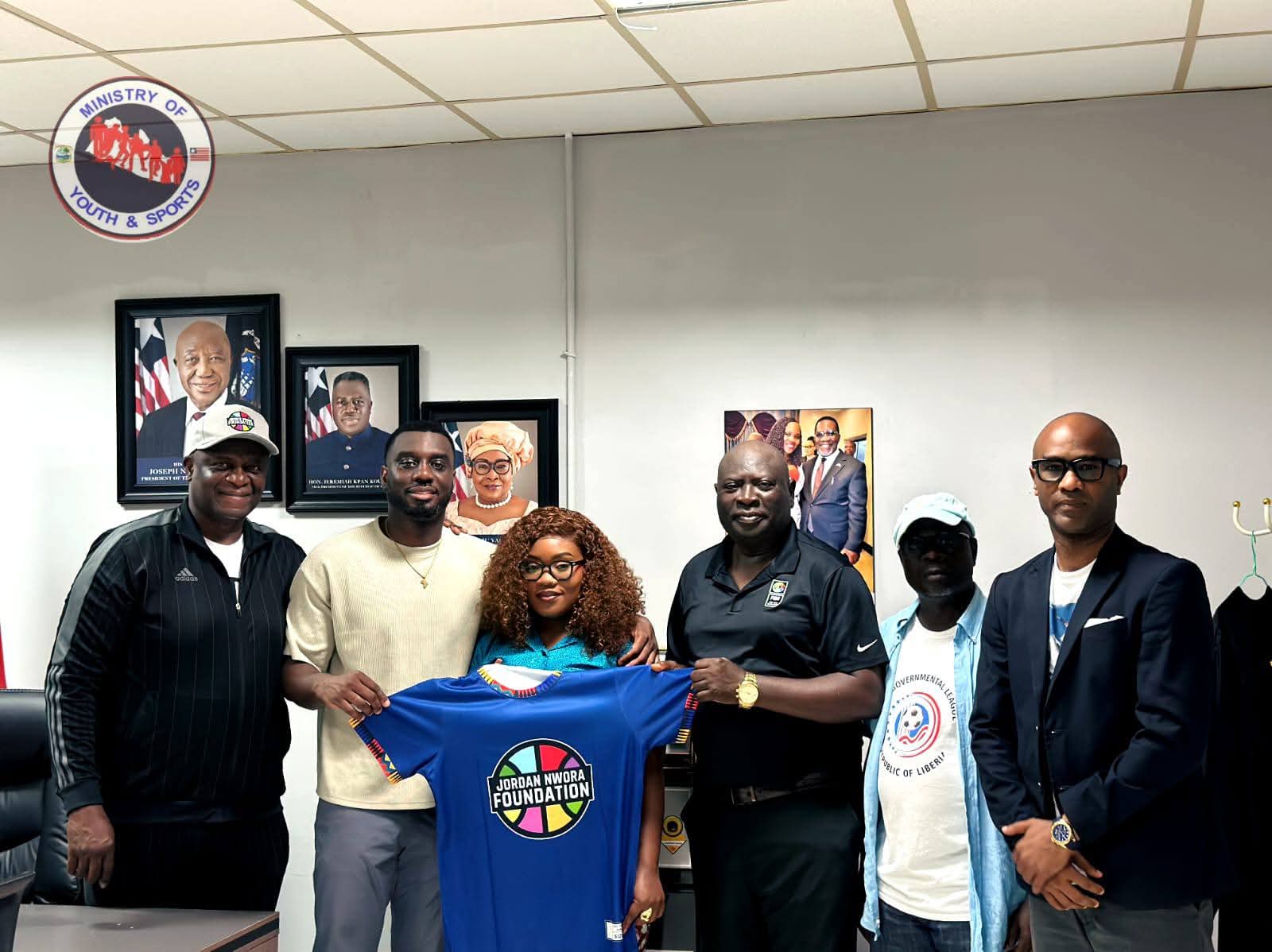
The delegation paid a courtesy visit to Liberia’s Minister of Youth and Sports, Atty. Cornelia W. Kruah, at the Samuel Kanyon Doe Sports Complex in Paynesville, where discussions centered on strengthening basketball structures, nurturing young talent, and creating international opportunities for Liberian athletes.
The visit forms part of a broader regional initiative aimed at developing basketball at the grassroots level across West Africa while using sports as a platform for youth empowerment, education, discipline, and social inclusion.
Accompanying Retired Col. Ahmedu were Head of the Jordan Nwora Foundation, Alex Nwora, and Liberian-born basketball coach Frederick Lymas, currently serving at Shawnee State University in the United States.
Liberia’s Growing Youth Population and Sports Potential
Liberia, a nation of more than 5.5 million people, has one of the youngest populations in Africa, with approximately 63 percent of citizens under the age of 25, according to recent demographic estimates.
Youth unemployment and limited recreational infrastructure continue to pose major challenges, prompting the government and international partners to increasingly view sports development as a critical avenue for economic empowerment and social transformation.
Basketball has steadily grown in popularity across Liberia over the last two decades, particularly among urban youth in Monrovia, Buchanan, Gbarnga, Kakata, and other major cities. However, inadequate sporting facilities, limited funding, and insufficient technical development programs have hindered the country’s competitiveness on the continental stage.
Sports analysts say the latest engagement with FIBA Zone-3 and the Jordan Nwora Foundation could mark an important turning point for the country’s basketball ambitions.
Minister Kruah Praises International Collaboration
Speaking during the meeting, Minister Kruah expressed appreciation to the visiting delegation for selecting Liberia as a beneficiary of the youth basketball development initiative.
According to her, the partnership represents more than a sporting program, describing it as an investment in the future of Liberia’s young people.
“This initiative is not only about basketball development, but also about inspiring hope, discipline, and opportunity among our young people,” Minister Kruah stated.
“We are grateful to the Jordan Nwora Foundation, FIBA Zone-3, and all partners involved for investing in the future of Liberian youth.”
She reaffirmed the Government of Liberia’s commitment to supporting sports-centered empowerment programs capable of creating pathways for scholarships, professional careers, and international exposure for young athletes.
The Minister also pledged sustained collaboration with FIBA Zone-3 leadership and the Jordan Nwora Foundation to ensure that talented Liberian players gain access to mentorship programs, elite training opportunities, and exposure to international basketball standards.
International Basketball Clinic Targets Young Athletes
As part of the visit, the delegation is conducting a four-day basketball clinic for young athletes between the ages of 14 and 17.
The clinic is expected to provide technical basketball training, physical conditioning, mentorship sessions, and talent identification opportunities for dozens of aspiring players from across Liberia.
Organizers say the program is designed not only to improve basketball skills but also to teach leadership, teamwork, discipline, and academic responsibility, values considered essential for athlete development at the international level.
Basketball development experts have long argued that Africa remains one of the world’s most untapped reservoirs of athletic talent. Recent years have seen increasing investments in African basketball through initiatives such as the Basketball Africa League (BAL), NBA Africa programs, and regional FIBA development projects.
Liberia hopes to position itself among emerging basketball nations in West Africa by strengthening youth structures and increasing international partnerships.
Historical Ties Between Liberia and International Basketball
Liberia’s basketball history dates back several decades, with the Liberia Basketball Federation playing a key role in organizing national competitions and youth tournaments since the 1970s.
However, years of civil conflict between 1989 and 2003 severely affected sporting infrastructure and youth programs across the country.
In the post-war era, basketball has gradually regained momentum, with schools, communities, and local clubs helping to revive interest in the sport.
International collaborations such as the latest FIBA Zone-3 initiative are now being viewed as critical to rebuilding competitive sports systems and offering hope to a new generation of athletes.
The involvement of Liberian-born professionals and diaspora coaches, including Coach Frederick Lymas, also reflects growing efforts to reconnect Liberia’s sporting sector with international expertise and mentorship networks.
Government Reaffirms Commitment to Sports Development
The Ministry of Youth and Sports says it remains committed to expanding partnerships with local and international organizations to promote sporting excellence and youth empowerment nationwide.
Officials believe sports can play a vital role in reducing youth violence, unemployment, and social vulnerability while helping to identify and nurture world-class talent capable of representing Liberia on the global stage.
With increasing regional attention on African basketball development, Liberia’s latest collaboration with FIBA Zone-3 and the Jordan Nwora Foundation is being hailed as a strategic step toward building a stronger and more competitive future for the country’s young athletes.
