
By : Julius Konton
Liberia’s government has announced sweeping corrective measures aimed at strengthening public financial management and improving transparency after a major compliance audit exposed weaknesses in the country’s revenue collection and reconciliation systems spanning more than six years.
Finance and Development Planning Minister Augustine Kpehe Ngafuan disclosed that the compliance audit conducted by the General Auditing Commission (GAC) into government revenue collection and reconciliation processes for the period July 1, 2018, through December 31, 2024 marks what he described as a critical milestone in Liberia’s effort to strengthen fiscal transparency, accountability, and public financial integrity.
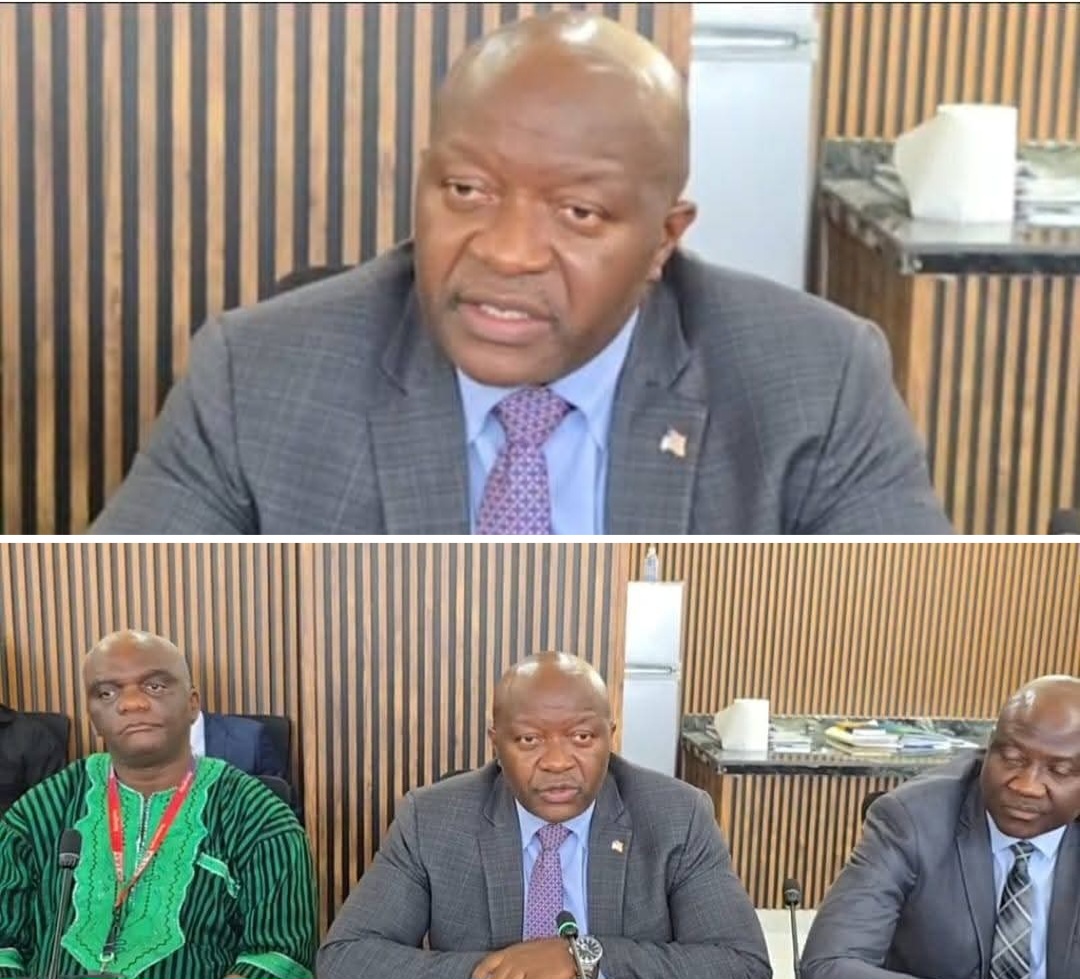
Speaking during a joint press conference attended by Executive Governor of the Central Bank of Liberia, Henry F. Saamoi, and Commissioner-General of the Liberia Revenue Authority, James Dorbor Jallah, Ngafuan said the government was providing context to the audit’s findings while outlining actions already taken and reforms currently underway to close accountability gaps.
Revenue Concerns Triggered Independent Audit
According to Ngafuan, concerns emerged in late 2024 when the Ministry of Finance and Development Planning, the Central Bank of Liberia, and the Liberia Revenue Authority detected discrepancies between revenues recorded in Liberia’s tax administration systems and deposits reflected in government consolidated revenue accounts maintained at the Central Bank.
“As custodians of public trust, we could not ignore these concerns and took immediate and decisive action,” Ngafuan stated.
He explained that on January 6, 2025, with the endorsement of both the LRA and CBL, he formally requested an independent investigation by Liberia’s Auditor General into variances between revenues reported through the Tax Administration System (TAS) and actual deposits reflected as of December 31, 2024.
The minister said his communication emphasized the need for a comprehensive and impartial review capable of identifying the source of discrepancies while strengthening the integrity of Liberia’s revenue chain.
At the time, the Auditor General informed authorities that the GAC was already conducting a broader audit covering 2018–2023, later agreeing to extend the scope to include 2024 due to the sensitivity and significance of the matter.
Though government officials initially expected the audit to conclude by May 2025, additional time was granted to ensure what Ngafuan described as a “thorough, professionally executed review.”
Key Audit Findings Expose Structural Gaps
The audit uncovered what officials characterized as serious operational deficiencies and reconciliation failures within Liberia’s public revenue architecture.
Among the major findings were:
Discrepancies between revenues recorded in Transitory Bank Accounts (TBAs) held at commercial banks and the government’s
General Revenue Account maintained at the Central Bank of Liberia;
Variances between revenues recorded in the Tax Administration System (TAS) and deposits reflected in government accounts;
Differences between billing and payment records in the Automated System for Customs Data (ASYCUDA) and Liberia’s Integrated Tax Administration System;
Inconsistencies between customs-generated receipts and tax reporting systems;
Unauthorized withdrawals from transitory accounts held at commercial banks;
Irregular reversal transactions affecting revenue accounts;
Delayed remittances of public funds from commercial banking institutions to government accounts.
“These findings confirm the existence of systemic weaknesses, reconciliation gaps and operational deficiencies across the revenue collection and settlement chain,” Ngafuan said.
Government Refers Findings for Criminal Review
In one of the government’s strongest accountability responses in recent years, Ngafuan disclosed that President Joseph Nyuma Boakai has been briefed and approved the forwarding of the audit report to the Ministry of Justice of Liberia and the Liberia Anti-Corruption Commission.
The institutions are expected to determine whether the findings suggest fraud or criminal wrongdoing and, where evidence exists, pursue legal action against individuals found culpable during the seven-year audit period.
Government officials stressed that any prosecution would follow technical review and due legal process.
Reforms Already Underway
Even before publication of the final report, authorities began implementing reforms to improve controls and strengthen monitoring mechanisms.
Ngafuan said the Ministry of Finance, the Central Bank, and commercial banks revised banking arrangements governing transitory revenue accounts and collection timelines to improve accountability and speed remittances.
Commercial banks are now required to submit daily revenue sweep reports to the Ministry of Finance and the Central Bank to improve monitoring and reconciliation.
At the operational level, the Liberia Revenue Authority has expanded deployment of the Automated System for Customs Data (ASYCUDA) at major customs and border points to automate customs processing and reduce manual intervention.
The LRA is also scaling up implementation of the Liberia Integrated Tax Administration System (LITAS) across regional tax offices to improve tax administration, revenue tracking, and compliance monitoring.
Officials further disclosed that ASYCUDA has been upgraded to Version 4.4, enabling electronic integration with commercial banks and the Central Bank to facilitate transaction-level validation and reconciliation.
Quarterly reconciliation exercises among core revenue institutions have also been institutionalized to quickly identify discrepancies and resolve reporting gaps.
In addition, the government plans to integrate LITAS, ASYCUDA, the Integrated Financial Management Information System (IFMIS), transitory accounts, and the General Revenue Account at the Central Bank to support real-time transaction reconciliation, a move experts say could significantly reduce leakages and improve transparency.
Private Sector Expertise to Support Modernization
Liberian authorities are also in advanced discussions with specialized private-sector firms to help redesign technological systems governing revenue tracking and reconciliation.
Among firms being considered is John S. Morlu, LLC, led by former Auditor General John S. Morlu II.
Ngafuan explained that the government intentionally delayed finalizing such engagements until publication of the audit report so reforms could be informed by evidence-based findings.
“These entities will help develop technology solutions to strengthen reconciliation processes and address systemic vulnerabilities,” he noted.
Historical Significance for Liberia’s Financial Governance
The minister described the audit as historically significant, noting that comprehensive examinations of government revenue systems are complex and politically sensitive but essential to rebuilding public confidence in state institutions.
Liberia, a nation rebuilding institutions following years of civil conflict and economic disruption, has in recent decades faced recurring governance and public accountability challenges.
According to international governance assessments, improving domestic revenue mobilization remains central to reducing aid dependency and financing public services such as healthcare, education, roads, and energy infrastructure.
Public finance experts note that efficient tax systems are particularly important in developing economies, where government revenues often account for the primary source of national development spending.
Ngafuan commended the professionalism of the GAC audit team and reaffirmed that the Ministry of Finance, the Liberia Revenue Authority, and the Central Bank remain committed to reforms, reconciliation, and accountability.
“We recognize the historical significance of completing this exercise,” he said, praising auditors for conducting what he described as a technically demanding and high-risk review.
As Liberia seeks to improve fiscal discipline and investor confidence, the government says implementation of audit recommendations will remain central to efforts aimed at building a more transparent and accountable public financial system.
