
By : Julius Konton
Liberia’s government has launched an ambitious youth-centered academic and professional initiative aimed at strengthening economic governance, policy innovation, and leadership development among university students, as authorities seek to prepare a new generation of economists and public sector professionals capable of addressing the country’s long-standing development challenges.
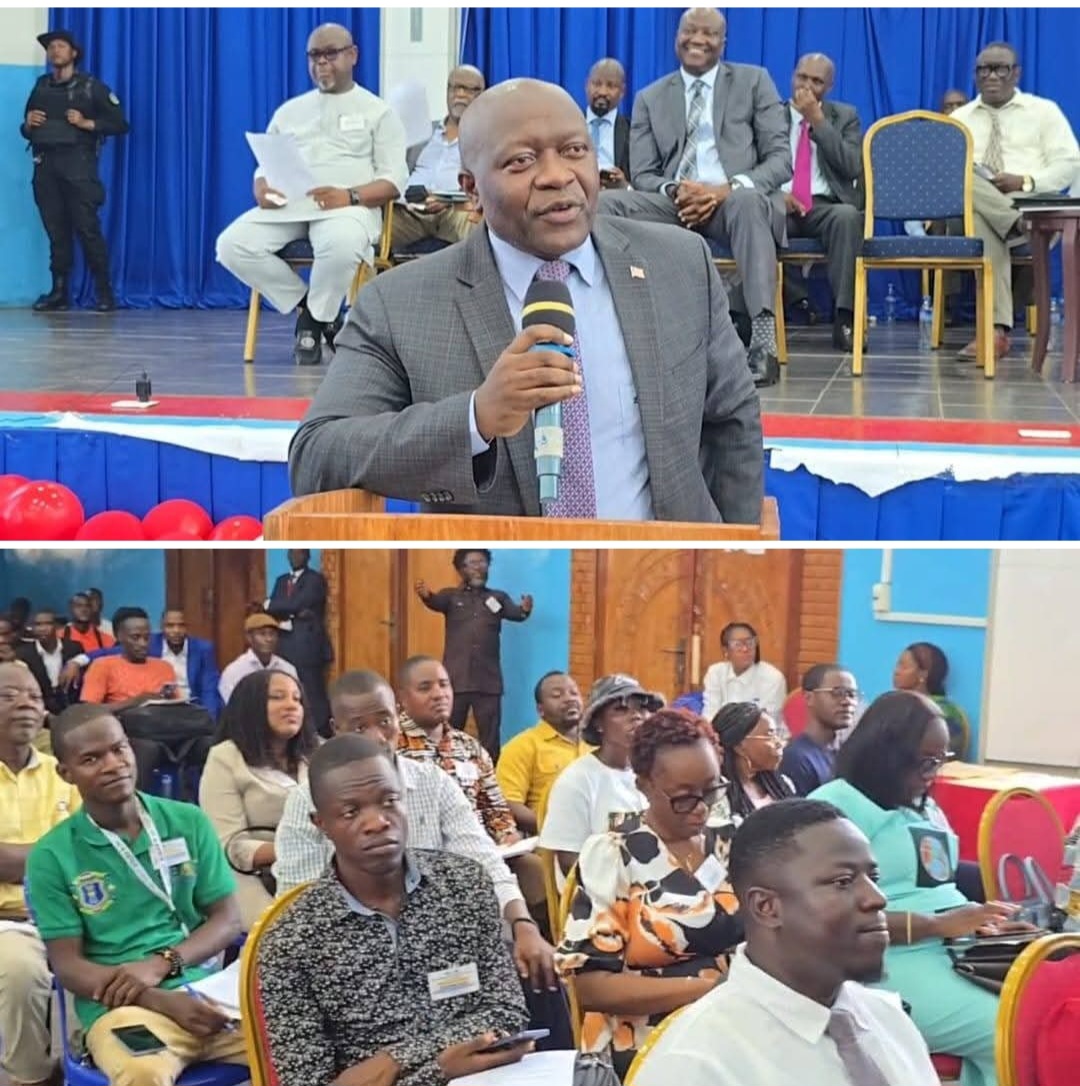
Speaking at the official launch of the Liberia National Economic Students Hub (LNESH) at the main campus of the University of Liberia on Capitol Hill in Monrovia, Finance and Development Planning Minister Augustine Kpehe Ngafuan said the initiative forms part of a broader national effort to build human capital and strengthen Liberia’s economic future through education, mentorship, and practical policy engagement.
Held under the theme, “Collaborating for Solutions: Youth Perspectives on Liberia’s Economic Future,” the launch ceremony brought together senior government officials, academics, students, and policymakers, signaling growing national interest in youth participation in economic governance.
Among attendees were former Executive Governor of the Central Bank of Liberia, J. Mills Jones, current Central Bank Executive Governor Henry F. Saamoi, Liberia Revenue Authority Commissioner-General Dorbor Jallah, officials of the Liberia Institute of Public Administration, faculty members, and students from the Department of Economic Management.
A Platform to Prepare Liberia’s Next Generation of Economic Leaders
Addressing participants, Ngafuan reflected on his student days at the University of Liberia, describing his generation as “greedy for knowledge” despite difficult academic and economic conditions.
“We were challenged,” he said. “Many of us were intelligent, but more importantly, we had hope.”
The finance minister described LNESH as more than a student organization, characterizing it as a strategic platform designed to cultivate future national leaders, economists, researchers, and policy professionals capable of contributing to Liberia’s development agenda.
“This is a place where we prepare the next generation,” Ngafuan told the gathering. “You are the leaders of tomorrow, and you must be prepared for tomorrow’s challenges.”
According to organizers, the hub seeks to expose students from universities across Liberia to fiscal and monetary policy frameworks through structured dialogue, seminars, policy forums, academic debates, and exchanges with international universities.
In its inaugural year, the initiative aims to train more than 500 students, equipping them with the skills to produce policy briefs, fact sheets, and macroeconomic analyses grounded in national economic data.
The initiative is expected to strengthen Liberia’s domestic talent pipeline at a time when policymakers continue to emphasize evidence-based economic planning amid persistent fiscal constraints and development pressures.
Investing in Human Capital Alongside Infrastructure
Ngafuan said the government is making significant investments in critical infrastructure, including roads, electricity, and water systems, but warned that economic transformation cannot be sustained without parallel investments in human capacity.
“We must also deal with soft infrastructure,” he said, referring to education, institutional competence, and workforce development. “We have to prepare men and women. We have to prepare the future.”
Liberia, which emerged from years of civil conflict and the devastating impact of the 2014–2016 Ebola crisis, continues to face substantial economic and social development hurdles.
According to international development assessments, youth unemployment and underemployment remain major concerns, while access to practical professional training remains limited in many sectors.
Government officials increasingly view skills development and youth empowerment as central to achieving sustainable growth and institutional resilience.
Cadet Program to Bridge Theory and Practice
As part of the broader youth development strategy, Ngafuan highlighted the government’s newly launched National Cadet Program, officially introduced in Gbarnga, Bong County.
The program, he disclosed, will deploy approximately 1,100 Liberians for a six-month placement beginning in June across government ministries, agencies, private institutions, and professional sectors.
The objective, he said, is to bridge the gap between classroom theory and workplace realities.
“This initiative is intended to close the divide between theory and practice,” Ngafuan stated, expressing confidence that many participants would justify their inclusion and secure long-term employment opportunities.
He revealed that the cadet initiative has now secured permanent budgetary support under the administration of Joseph Nyuma Boakai and will gradually expand beyond Monrovia and Montserrado County to other parts of the country.
‘Government Is Recruiting People Who Will Hold Pens’
In one of the strongest messages of the event, the finance minister stressed the importance of intellectual leadership in national development, saying Liberia needs professionals who can think critically, formulate policy, and solve complex governance challenges.
“This is a recruitment exercise,” he said. “Government is recruiting people who will hold pens.”
Ngafuan pledged personal involvement in mentoring students through internships and policy exposure opportunities, noting that the Ministry of Finance and Development Planning continues to recruit young professionals while encouraging other government ministries to expand similar opportunities.
He also announced plans for a mentorship program intended to support emerging scholars and future policymakers.
“If the time comes for a battle cry, you should answer,” he remarked. “But when it comes time to produce a policy paper or policy brief, we do not want people running.”
Building a Better Liberia Through Knowledge
The Finance Minister reiterated the government’s commitment to supporting LNESH and mobilizing development partners to sustain the initiative.
He framed the project as part of a larger national vision to build a more skilled, prepared, and economically resilient Liberia.
“There are many good things happening,” Ngafuan said. “Some will only see darkness, but it is our responsibility to continue lighting candles across Liberia.”
For many students attending the launch, the hub represents a rare opportunity to connect academic theory with practical governance experience, a bridge that officials hope will eventually produce a new generation of technocrats capable of shaping Liberia’s economic future.
As Liberia confronts fiscal pressures, infrastructure gaps, unemployment, and global economic uncertainty, policymakers say the country’s long-term success may depend not only on roads and institutions but on the skills, ideas, and leadership capacity of its young people.
