
By: Julius Konton
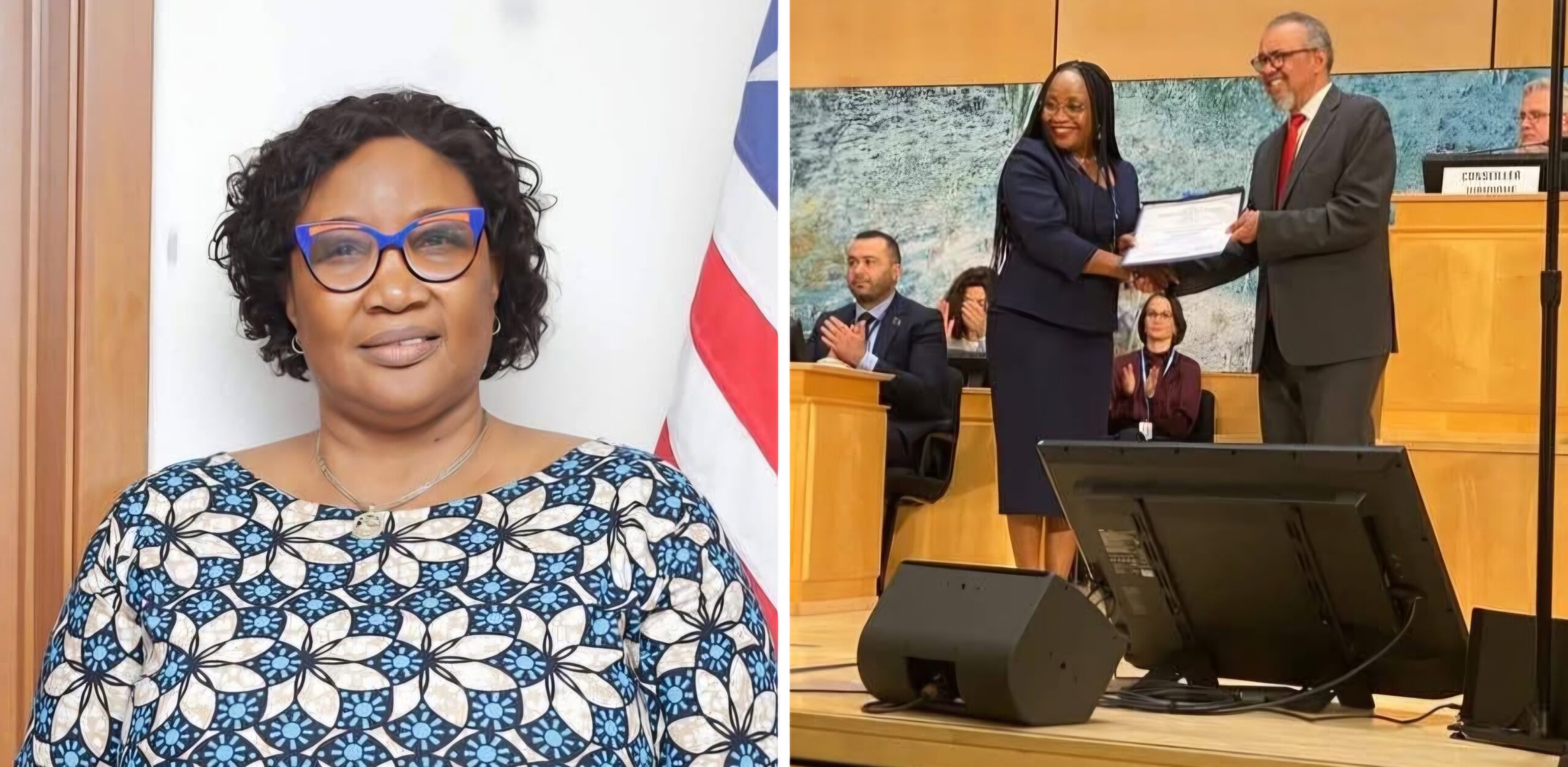
The World Health Organization (WHO) has honored Dr. Louise Mapleh Kpoto, Minister of Health of the Liberia, with a prestigious Certificate of Appreciation in recognition of her exceptional leadership, steadfast commitment, and outstanding contributions to tobacco control and public health advancement.
On the occasion of World No Tobacco Day 2026, The international recognition places Liberia among countries being acknowledged for strengthening efforts to combat tobacco-related harm and advancing policies aimed at safeguarding public health, especially among vulnerable populations and young people.
According to WHO, Dr. Kpoto was named among the 2026 recipients of the organization’s World No Tobacco Day Awards for the African Region, joining a select list of public health leaders and institutions recognized for their contributions to tobacco control.
The award, bestowed under the global observance of World No Tobacco Day held annually on May 31, highlights Dr. Kpoto’s role in promoting healthier communities and supporting measures designed to reduce tobacco use and nicotine addiction.
WHO’s 2026 campaign, themed “Unmasking the Appeal, Countering Tobacco and Nicotine Addiction,” seeks to expose industry tactics that encourage youth addiction and advocates stronger tobacco-control regulations worldwide.
In a symbolic demonstration of national solidarity and institutional commitment, the award was received on behalf of Dr. Kpoto by Julie Fatormah Wiah, Chair on Health at Liberia’s House of Representatives.
Her participation underscored what officials described as a united national resolve to strengthen preventive healthcare, reduce avoidable illnesses, and improve public health outcomes through stronger policy frameworks and awareness initiatives.
A Global Public Health Crisis
Tobacco use remains one of the world’s leading preventable causes of death and disease.
WHO estimates that tobacco-related illnesses claim more than eight million lives annually worldwide, including deaths linked to secondhand smoke exposure, while millions more suffer long-term illnesses such as cardiovascular disease, respiratory disorders, stroke, and cancer.
Since the establishment of World No Tobacco Day in 1987, governments and health institutions have intensified campaigns to reduce smoking prevalence and nicotine addiction.
The urgency of tobacco control has become increasingly pronounced among youth populations.
WHO estimates that approximately 40 million adolescents aged 13–15 globally use tobacco, while 15 million adolescents use electronic cigarettes, with youths in many countries significantly more likely than adults to engage in vaping and nicotine consumption.
These figures have shaped the WHO’s 2026 campaign strategy aimed at exposing deceptive marketing techniques and reducing addiction risks among younger generations.
Liberia’s Growing Public Health Momentum
For Liberia, the recognition signals growing international confidence in the country’s health sector reforms and leadership.
Under Dr. Kpoto’s stewardship, health authorities have increasingly emphasized preventive healthcare, disease awareness, and partnerships with international institutions to strengthen health systems and improve nationwide outcomes.
Public health experts note that tobacco-control measures are not solely about reducing smoking but also about preventing costly long-term illnesses, easing pressure on fragile healthcare systems, and protecting economic productivity.
Studies consistently show that tobacco-related illnesses disproportionately burden low- and middle-income nations, making prevention a crucial policy priority.
The recognition of Dr. Kpoto therefore extends beyond personal achievement; it reflects Liberia’s broader commitment to advancing health security, protecting future generations, and aligning with international efforts to reduce preventable disease and promote healthier living.
As World No Tobacco Day 2026 draws global attention to the dangers of tobacco and nicotine addiction, Liberia’s inclusion among WHO-honored nations serves as a significant milestone in the country’s ongoing journey toward stronger healthcare systems and improved public well-being.
