
By: Julius Konton
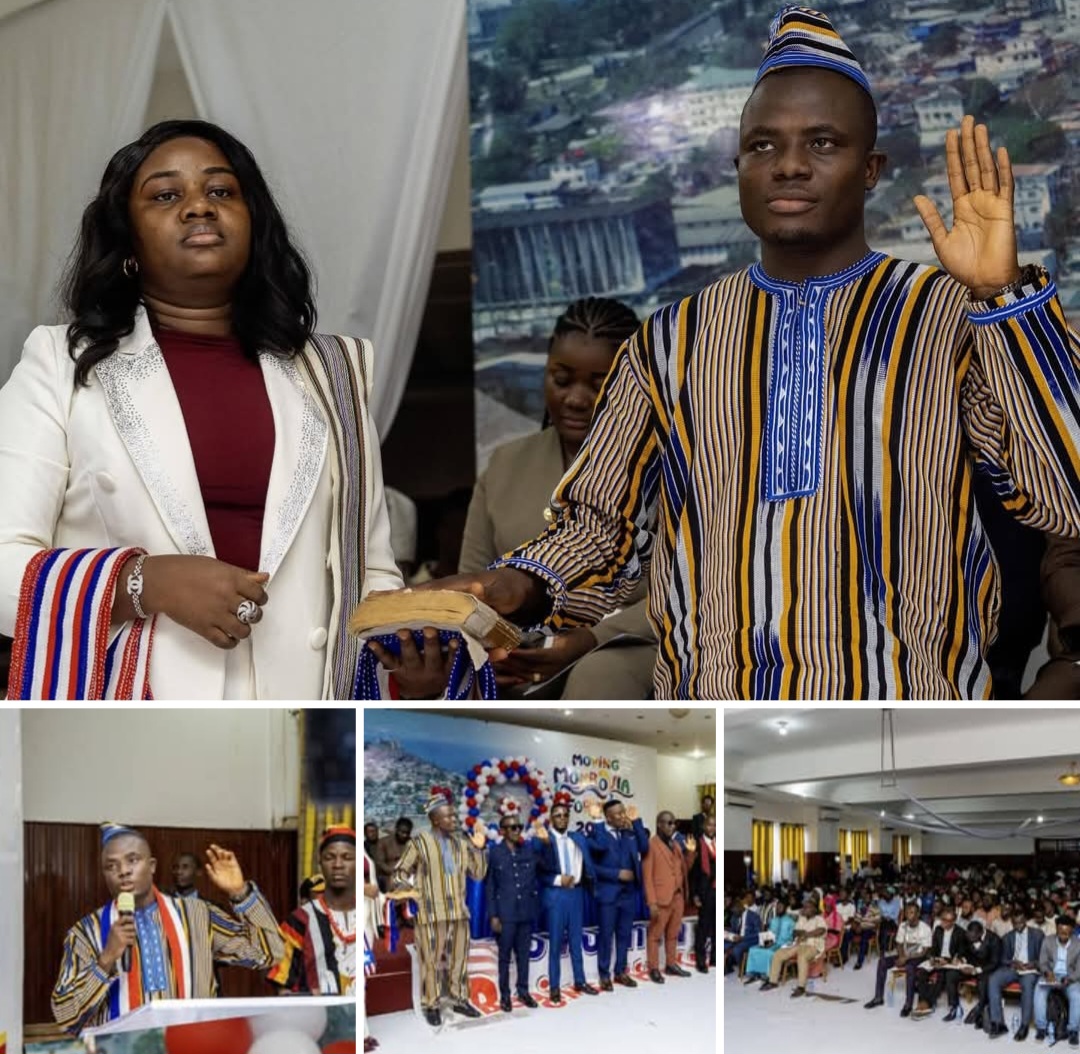
A new chapter in Liberia’s youth leadership has begun as Ernest Duku Jallah and his corps of elected officials were formally inducted into office to lead the Federation of Liberian Youth(FLY), the country’s umbrella youth organization, at a time when Liberia’s young population faces growing economic and social challenges.
Taking the oath of office before youth leaders, civil society actors, and government officials, President Jallah outlined what he described as a “bold and transformative vision” aimed at repositioning FLY as a more effective and accountable institution capable of addressing the needs of Liberia’s youthful population.
Liberia remains one of Africa’s youngest nations, with nearly 63% of its estimated 5.6 million people under the age of 25, according to recent demographic estimates.
Youth unemployment and underemployment continue to pose serious challenges, with national labor reports indicating that over 65% of young Liberians struggle to find stable employment, particularly after graduation.
Against this backdrop, Jallah pledged sweeping reforms.
“We will rebuild the Federation of Liberian Youth into a stronger, more accountable force that truly serves young people.
We will fix the internal dysfunction and reconnect FLY to youth across Liberia.
We will build a real school-to-work pathway to confront youth unemployment,” Jallah declared during his induction address.
The Federation of Liberian Youth, established decades ago as the leading advocacy body for youth development and participation, has historically played a central role in promoting youth voices in governance, peacebuilding, and national development.
However, in recent years, critics have raised concerns about institutional inefficiencies and limited grassroots engagement.
Jallah’s administration is now promising to reverse that trend.
Among his flagship initiatives is a nationwide youth employment strategy centered on agriculture, vocational training, and entrepreneurship.
In what he termed a “Drugs to Jobs” national campaign, Jallah said his leadership intends to tackle Liberia’s growing drug abuse crisis by redirecting vulnerable youth into farming cooperatives and productive labor opportunities.
Drug abuse, particularly the rise of kush and synthetic substances, has become a major national concern in Liberia.
Health authorities estimate that thousands of young people are currently battling substance addiction, with the crisis contributing to increased crime, school dropout rates, and social instability.
“We will turn the fight against drugs into a national movement by creating opportunities through youth farms and productive work,” he said.
In the education sector, Jallah also announced plans to advocate for Liberia’s first Youth Delegation to the United Nations, a move aimed at amplifying the voices of young Liberians on the global stage.
Additionally, he disclosed plans for what he described as the most ambitious study-abroad initiative in FLY’s history, designed to expand educational opportunities and build a globally competitive generation of Liberian youth.
One of the most ambitious pillars of his administration, however, is the proposed construction of a National Youth Center, a permanent hub for innovation, leadership training, and youth empowerment.
If realized, the center would serve as a landmark institution for skills development, entrepreneurship incubation, and civic engagement.
“This is not about one leadership. It is about all of us. And the work begins now,” Jallah emphasized.
While expressing gratitude to supporters, campaign staff, and youth leaders who backed his rise to the presidency, Jallah reminded the gathering that the transition into office marks the beginning of a greater responsibility.
“This is not a moment for celebration alone; it is a moment for responsibility,” he concluded.
Political observers say Jallah’s tenure will be closely watched, especially as Liberia continues implementing youth-focused policies under the government’s national development framework.
For many young Liberians, the expectations are high and so are the stakes.
With youth making up the backbone of Liberia’s population and future workforce, the success or failure of FLY’s new leadership could significantly influence the country’s social and economic trajectory in the years ahead.
