
By: Julius Konton
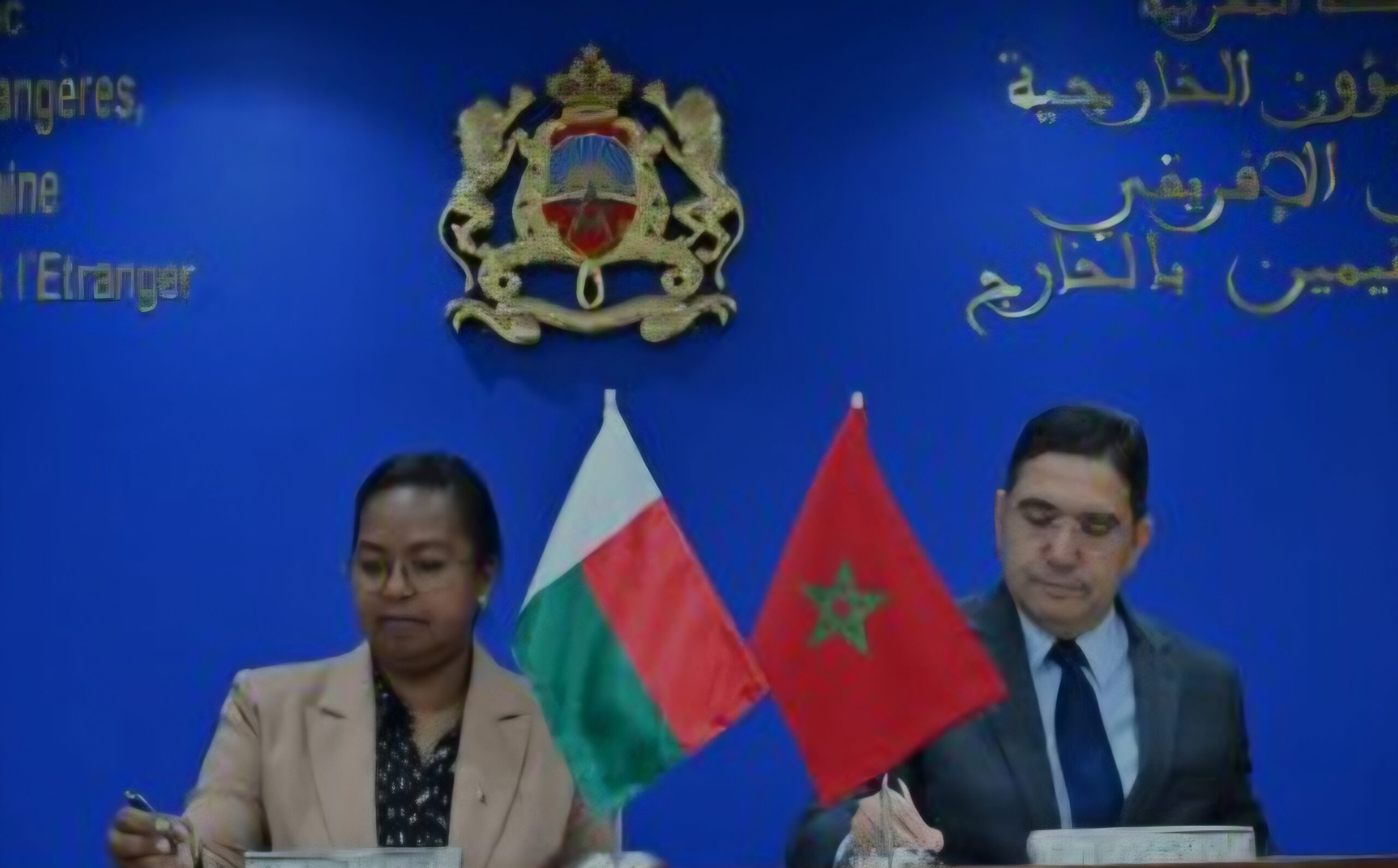
Madagascar has commended Morocco’s growing role in advancing African development, with Malagasy Foreign Minister Alice N’Diaye praising the leadership and continental vision of King Mohammed VI during high-level diplomatic engagements in Rabat.
Speaking following bilateral talks with Morocco’s Foreign Minister Nasser Bourita on Tuesday, N’Diaye applauded what she described as the monarch’s far-reaching commitment to Africa’s socio-economic transformation, peace, and regional cooperation.
In a joint communiqué issued after the discussions, the Malagasy foreign minister expressed appreciation for Morocco’s expanding development partnerships on the continent and highlighted the enduring impact of King Mohammed VI’s 2016 state visit to Madagascar, which she said marked a turning point in strengthening bilateral relations between the two African nations.
N’Diaye underscored that the visit had produced “strong, concrete and measurable” outcomes, particularly through projects initiated under royal directives and implemented by the Mohammed VI Foundation for Sustainable Development in sectors including education, healthcare, vocational training and broader human development.
The minister noted that such interventions have contributed significantly to improving livelihoods and strengthening local institutional capacity in Madagascar, an island nation of nearly 31 million people in the Indian Ocean that continues to face major development challenges, including poverty, healthcare access gaps and infrastructure deficits.
According to international development estimates, more than two-thirds of Madagascar’s population lives below the poverty line, while access to education and healthcare remains uneven, particularly in rural areas.
Against this backdrop, development cooperation and technical partnerships have become increasingly vital to national progress.
N’Diaye described Morocco’s engagement as a practical demonstration of African solidarity through South-South cooperation, a model emphasizing collaboration among developing nations to accelerate growth, transfer expertise and reduce dependence on traditional donor systems.
She further praised King Mohammed VI’s leadership in championing development-centered diplomacy across Africa, particularly initiatives designed to promote peace, regional integration, sustainable economic opportunities and shared prosperity.
“Morocco’s approach reflects a concrete commitment to African development through partnership, capacity-building and human-centered investments,” the communiqué suggested, highlighting Morocco’s increasing diplomatic and economic influence across the continent.
Over the past two decades, Morocco has strengthened ties with several African states through investments in banking, telecommunications, agriculture, renewable energy, education and religious diplomacy.
Rabat has also expanded scholarship opportunities for African students and deepened cooperation frameworks with governments across West, Central and East Africa.
Morocco formally rejoined the African Union in 2017 after a 33-year absence, signaling a renewed push toward continental engagement and integration.
Since then, the North African kingdom has positioned itself as an advocate for intra-African investment, migration cooperation and sustainable development partnerships.
For Madagascar, enhanced relations with Morocco may provide additional opportunities for development financing, technical cooperation and institutional strengthening as the country seeks to modernize critical sectors and accelerate socio-economic growth.
The diplomatic engagement in Rabat also reflects a broader trend of strengthening African-to-African partnerships aimed at fostering resilience, reducing inequality and advancing a shared vision of continental prosperity amid global economic uncertainty.
As bilateral ties deepen, analysts say Morocco and Madagascar’s growing cooperation could serve as an example of increasingly pragmatic and development-focused diplomacy emerging across Africa.
