
By: Julius Konton
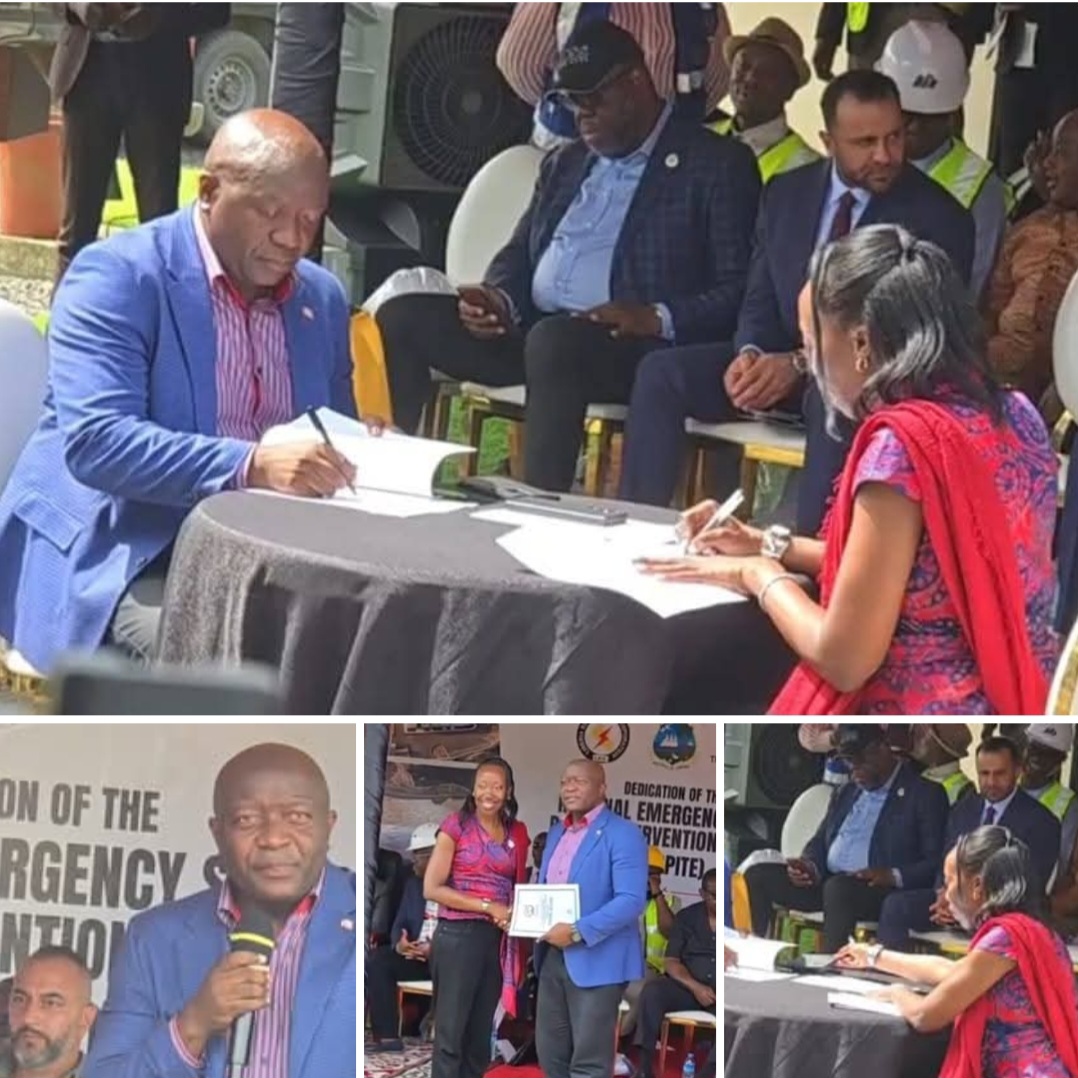
In a significant boost to Liberia’s development agenda, the Government of Liberia has signed three major financing agreements with the World Bank valued at approximately US$125 million, targeting critical investments in digital transformation, energy expansion, and road infrastructure.
The agreements, signed in Monrovia, represent one of the latest efforts by the administration of President Joseph Nyuma Boakai to address longstanding infrastructure deficits that have constrained economic growth, regional integration, and public service delivery across the country.
The financing package comprises three strategic projects aimed at improving connectivity, expanding access to reliable electricity, and enhancing transportation networks, particularly in underserved regions.
Digital Transformation Gets Major Boost
The first agreement, valued at US$50 million, falls under the West Africa Regional Digital Integration Program (WARDIP), a regional initiative designed to accelerate digital inclusion and strengthen technological infrastructure across participating West African nations.
Liberia continues to face significant digital challenges despite growing mobile phone penetration.
According to international telecommunications data, internet access in Liberia remains below global averages, while broadband infrastructure remains limited outside major urban centers.
The project is expected to:
Expand broadband access nationwide;
Improve digital connectivity in rural and underserved communities;
Strengthen cybersecurity systems and digital governance;
Promote digital entrepreneurship and innovation;
Enhance e-commerce and digital financial services;
Facilitate regional digital integration and cross-border trade.
Development experts say improved digital infrastructure could significantly increase economic productivity, attract investment, and create opportunities for young Liberians in the technology sector.
US$57 Million to Strengthen Energy Security
The second agreement provides US$57 million in additional financing for the Regional Emergency Solar Power Intervention Project (RESPITE).
The funding is expected to support the expansion of the Mount Coffee Hydropower Plant, Liberia’s largest hydroelectric facility, while also financing the deployment of modern battery energy storage systems to improve electricity reliability.
Liberia has historically struggled with one of Africa’s lowest electricity access rates.
During the country’s post-war reconstruction period, access to electricity remained below 20 percent nationally, with rural electrification levels even lower.
Although substantial progress has been made in recent years through investments in generation and transmission infrastructure, demand continues to outpace supply, especially in urban areas.
Energy analysts believe the additional financing could help stabilize power distribution, reduce outages, and support Liberia’s long-term objective of expanding affordable electricity access to households and businesses.
Road Project Targets Southeastern Connectivity
The third agreement supports additional financing for the South Eastern Corridor Road Asset Management Project, focusing on the construction and upgrading of the approximately 100-kilometer Ganta-Zwedru Highway.
The southeastern region has historically suffered from poor road conditions, particularly during the rainy season when transportation becomes difficult and costly.
The project is expected to:
Improve regional connectivity;
Reduce travel times between major economic centers;
Lower transportation costs for businesses and commuters;
Facilitate trade and agricultural market access;
Improve access to healthcare, education, and public services.
Infrastructure specialists note that improved road networks are critical to unlocking economic opportunities in Liberia’s agricultural and mining sectors, particularly in counties located far from the capital.
“A Great Day for Liberia”
Speaking during the signing ceremony, Finance and Development Planning Minister Augustine Kpehe Ngafuan described the occasion as a significant milestone for the country.
“This marks a great day for Liberia,” Minister Ngafuan declared, expressing appreciation to the World Bank for what he characterized as a longstanding and dependable partnership.
“We want to say thanks to the World Bank, which has been a good partner in both difficult and prosperous times,” he stated.
The minister emphasized that investments in roads and energy address some of Liberia’s most fundamental development challenges.
“When government is talking about roads and energy, it is dealing with problems at the root level,” he said.
Energy Sector to Remain a National Priority
Ngafuan further disclosed that the energy sector will continue to occupy a prominent position in the national budget as government seeks to meet growing electricity demand.
“The energy sector will be a permanent resident in the budget, and it will take bigger spaces,” he emphasized.
“We are continuing to do more.”
His remarks underscore the administration’s commitment to expanding energy infrastructure as a foundation for industrial growth, private-sector development, and improved living standards.
The finance minister also praised Mohammed M. Sheriff and the management team of the Liberia Electricity Corporation for their efforts in improving electricity service delivery.
He encouraged the utility to intensify its work amid increasing demand for reliable power across the country.
“The Paradox of Excellence”
In a notable reflection on public expectations of government performance, Ngafuan remarked that President Boakai faces what he described as the “paradox of excellence.”
“When people expect that you can score A’s, they do not tolerate when you score B’s,” the minister observed.
“They are judging you by your high standards.”
The comment appeared to highlight the growing expectations surrounding the Boakai administration’s governance and development agenda since assuming office.
Development Through Unity
Concluding his remarks, Ngafuan stressed that national unity remains essential to achieving sustainable development.
“The best way to develop Liberia is to unite the people,” he said.
His statement comes as Liberia continues efforts to accelerate economic recovery, strengthen institutions, and attract investment while addressing infrastructure gaps that have persisted since the country’s civil conflicts ended more than two decades ago.
With the latest US$125 million financing package, Liberia moves a step closer toward addressing critical deficits in digital connectivity, electricity generation, and transportation infrastructure, three sectors widely regarded as essential pillars for achieving inclusive economic growth and regional competitiveness in the years ahead.
The World Bank remains one of Liberia’s largest development partners, supporting projects in infrastructure, education, health, governance, agriculture, and social protection.
Since the end of Liberia’s civil war in 2003, the institution has committed hundreds of millions of dollars toward the country’s reconstruction and long-term development efforts.
