
By: Julius Konton
Liberia has taken a significant step toward addressing its long-standing electricity challenges with the commissioning of a US$16 million, 20-megawatt solar photovoltaic power plant at the Mount Coffee Hydropower Complex, a project that government officials say will strengthen national energy security, expand electricity access, and accelerate economic growth.
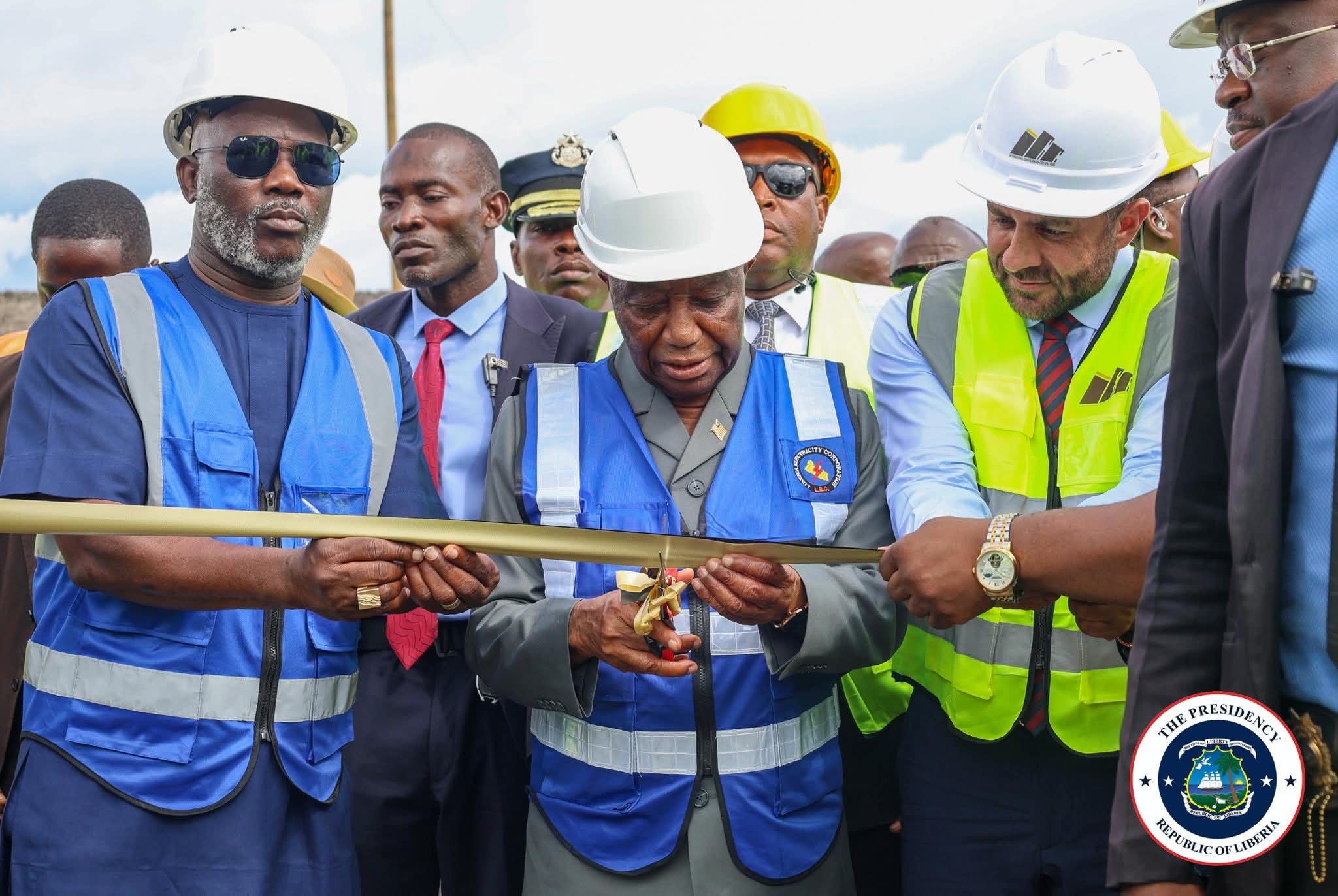
President Joseph Nyuma Boakai Sr. officially dedicated the facility describing it as a transformative investment that aligns with his administration’s broader vision of modernizing Liberia’s infrastructure and creating the conditions necessary for industrialization and private-sector expansion.
The solar power facility, developed under the Regional Emergency Solar Power Intervention (RESPITE) program, represents one of the most significant renewable energy investments in Liberia’s recent history and marks a major milestone in the country’s transition toward cleaner and more sustainable sources of power.
The commissioning ceremony comes less than two years after President Boakai broke ground for the project on October 11, 2024, underscoring what government officials characterized as the administration’s commitment to delivering critical infrastructure projects on schedule.
Tackling Liberia’s Historic Energy Deficit
For decades, inadequate electricity supply has remained one of Liberia’s most persistent development challenges.
According to international development reports, Liberia has historically recorded one of the lowest electricity access rates in the world. Despite improvements in recent years, millions of Liberians still lack reliable access to electricity, particularly in rural communities where electrification rates remain significantly below urban centers.
The country’s civil conflict between 1989 and 2003 devastated much of its energy infrastructure, leaving Liberia heavily dependent on expensive diesel-generated electricity.
The destruction of the original Mount Coffee Hydropower Plant during the civil war contributed to years of power shortages that constrained economic recovery and industrial growth.
The rehabilitation of the Mount Coffee Hydropower Plant, completed in 2018, restored approximately 88 megawatts of generation capacity and became the backbone of Liberia’s electricity system.
However, seasonal fluctuations in water levels and growing national demand have continued to expose vulnerabilities in the country’s energy supply.
The newly commissioned solar facility is expected to complement hydropower generation by diversifying Liberia’s energy mix and enhancing electricity availability during periods when hydropower output declines.
Boakai: Reliable Electricity Is Essential for National Development
Speaking before government officials, development partners, energy sector stakeholders, and community representatives, President Boakai emphasized that affordable and dependable electricity remains fundamental to Liberia’s economic transformation.
He noted that insufficient power supply has historically discouraged investment, increased production costs, constrained industrial activity, and limited the delivery of essential public services.
“Reliable electricity is not merely a utility; it is the foundation upon which modern economies are built,” the President stated.
According to President Boakai, the new solar plant will support hospitals, schools, businesses, agricultural enterprises, mining operations, manufacturing facilities, and emerging digital industries while contributing to broader efforts aimed at improving living standards for Liberians.
He described the project as a strategic investment that will create employment opportunities, strengthen public safety, encourage entrepreneurship, and enhance national competitiveness.
Additional $57 Million Financing to Expand Capacity
In a major announcement during the ceremony, President Boakai disclosed that Liberia secured an additional US$57 million financing package from the World Bank in March 2026 to further strengthen the country’s energy infrastructure.
The funding will support:
Expansion of solar generation capacity from 20 megawatts to 30 megawatts;
Installation of a 12-megawatt Battery Energy Storage System (BESS);
Additional upgrades and modernization works at the Mount Coffee Hydropower Complex;
Improvements designed to enhance grid reliability and energy resilience.
Battery storage technology is increasingly viewed as a critical component of modern renewable energy systems because it allows excess solar energy generated during daylight hours to be stored and utilized during peak demand periods or at night.
Energy experts say the planned battery system could significantly improve Liberia’s ability to integrate renewable energy into its national grid while reducing dependence on costly thermal generation.
Mount Coffee Expansion Plans Gain Momentum
President Boakai further revealed that the government has already restored 22 megawatts of previously lost generation capacity at Mount Coffee.
Beyond the solar investment, authorities are advancing plans to expand the hydropower facility by an additional 42 megawatts, a move that could substantially increase Liberia’s overall electricity generation capacity.
If completed, the combined solar and hydropower expansion projects would represent one of the largest energy sector investments undertaken in Liberia since the reconstruction period following the country’s civil conflict.
The expansion is expected to support rising electricity demand generated by urbanization, population growth, industrial development, and increased economic activity.
Supporting the ARREST Agenda for Inclusive Development
The solar project forms part of President Boakai’s broader ARREST Agenda for Inclusive Development, a national development framework prioritizing Agriculture, Roads, Rule of Law, Education, Sanitation, and Tourism, alongside critical infrastructure investments.
The administration has identified energy as a cornerstone of economic transformation, arguing that increased electricity generation is essential for attracting foreign direct investment, expanding manufacturing, supporting value-added production, and fostering a vibrant 24-hour economy.
Government officials say ongoing investments in roads, ports, telecommunications, water systems, and electricity are designed to position Liberia as a competitive destination for regional and international investors.
Regional Initiative to Accelerate Renewable Energy
The project was developed under the Regional Emergency Solar Power Intervention (RESPITE) initiative, launched in April 2022 through collaboration between the World Bank and the governments of Liberia and Sierra Leone.
RESPITE was designed to address chronic electricity shortages across West Africa while accelerating the deployment of renewable energy technologies capable of reducing greenhouse gas emissions and improving energy reliability.
The initiative aligns with broader continental goals under the African Union’s Agenda 2063 and international commitments aimed at expanding clean energy access across Sub-Saharan Africa, where more than 500 million people still lack access to electricity.
Development partners have increasingly emphasized renewable energy as a cost-effective solution for addressing Africa’s power deficit while supporting climate resilience and sustainable economic growth.
The commissioning of the Mount Coffee solar photovoltaic plant marks a significant milestone in Liberia’s ongoing energy transition and reflects growing confidence in renewable energy as a catalyst for development.
While substantial challenges remain in expanding electricity access nationwide, particularly in rural areas, the project represents a tangible step toward reducing power shortages, lowering energy costs, and strengthening the country’s economic foundations.
As Liberia seeks to modernize its infrastructure and attract investment, the success of projects such as the Mount Coffee Solar Power Plant may serve as a critical indicator of the nation’s ability to transform its development aspirations into measurable progress.
For many Liberians, the facility symbolizes more than a new source of electricity, it represents renewed hope for a future powered by reliable energy, economic opportunity, and sustainable growth.
