
By: Julius Konton
A senior Liberian government official and representative of the West African Tax Administration Forum (WATAF) has delivered an emotional and inspiring address at the conclusion of a Human Resource Management (HRM) training programme in Abuja, paying tribute to Nigeria’s historic role in restoring peace to Liberia while highlighting the importance of investing in human capital development across Africa.
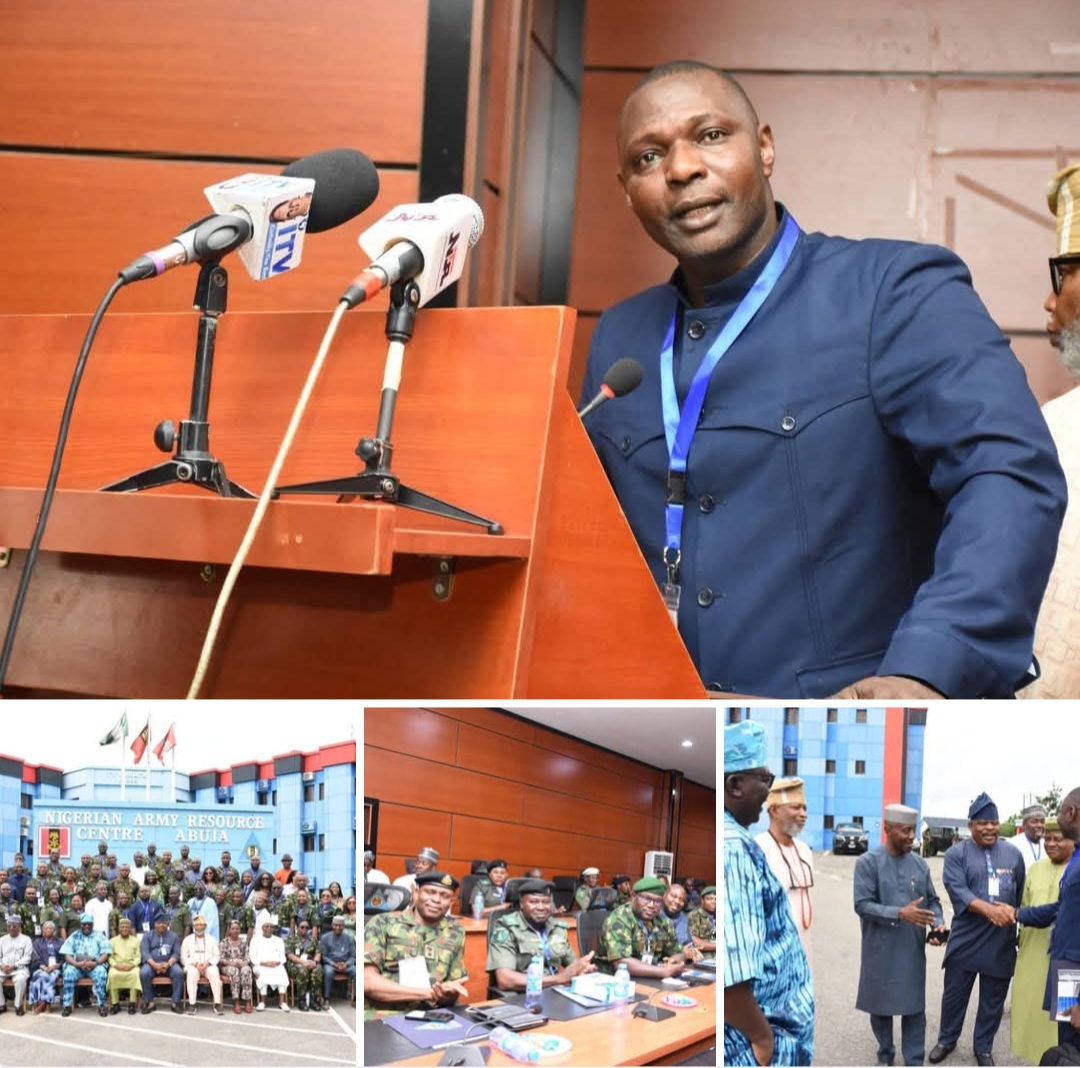
Speaking on behalf of participants during the graduation ceremony at the Nigerian Army Resource Centre (NARC), Danicius Kaihenneh Sengbeh, Manager of Communication, Media and Public Affairs at the Liberia Revenue Authority (LRA) and representative of the West African Tax Administration Forum (WATAF), described the five-day programme as a transformative experience that strengthened leadership capacity, professional competence, and regional cooperation.
The event brought together participants from the military, government institutions, civil society organizations, international agencies, and private-sector institutions from across the region.
A Tribute Rooted in History
In one of the most poignant moments of his address, Sengbeh reflected on Liberia’s painful history and expressed profound gratitude to Nigeria for its contributions to peace during Liberia’s devastating civil conflicts.
“I come from Liberia, a survivor of one of West Africa’s most brutal civil wars; a war in which Nigeria helped broker peace, and where Nigerian soldiers died just to bring peace,” he said.
His remarks referenced Nigeria’s pivotal role through the Economic Community of West African States Monitoring Group (ECOMOG), which deployed thousands of peacekeepers during Liberia’s civil wars between 1989 and 2003.
The conflict claimed an estimated 250,000 lives, displaced more than one million people, devastated infrastructure, and severely weakened state institutions.
Nigeria emerged as one of the largest contributors of troops and resources to regional peacekeeping efforts, helping pave the way for Liberia’s democratic recovery and reconstruction.
“Never again must we study war not just in Liberia, but anywhere in West Africa,” Sengbeh declared, drawing applause from participants and dignitaries.
WATAF’s Role in Strengthening Regional Institutions
Sengbeh represented the West African Tax Administration Forum (WATAF), a regional body established in 2011 to strengthen tax administration systems and domestic revenue mobilization across West Africa.
WATAF serves as a platform for collaboration among tax authorities, promoting knowledge sharing, technical assistance, capacity building, tax policy reforms, and strategic partnerships aimed at improving public finance management.
As African governments increasingly focus on domestic resource mobilization to finance development priorities, organizations such as WATAF have become critical to strengthening fiscal sustainability, transparency, and economic resilience.
According to international financial institutions, improved tax administration remains one of the most effective mechanisms for African countries to reduce dependence on external aid and increase funding for infrastructure, healthcare, education, and social protection programmes.
“A Hospital of Knowledge”
Using a creative and memorable analogy, Sengbeh likened the Nigerian Army Resource Centre to a “hospital of knowledge,” where participants underwent professional treatment aimed at addressing weaknesses in human resource management.
“When we arrived here on Monday, many of us thought we had simply come for a training programme.
But as the week progressed, we discovered that we had actually been admitted into a hospital,” he said.
In his metaphor, facilitators became skilled doctors diagnosing professional challenges and prescribing practical solutions.
Participants received intensive instruction in critical HR disciplines, including:
Recruitment and talent acquisition
Performance management
Records and information management
Workplace culture development
Conflict resolution
Staff development strategies
Diversity and inclusion
Emotional intelligence
Leadership and organizational effectiveness
The Liberian delegate joked that unlike traditional hospitals, no participant requested an early discharge.
“Every morning, we willingly reported for another injection of knowledge.
Some participants even received double and triple doses, and remarkably, nobody complained of an overdose,” he remarked.
Building Human Capital for Africa’s Future
Experts increasingly recognize human capital development as one of the strongest drivers of economic growth and institutional effectiveness.
According to the World Bank, investments in education, leadership development, workforce skills, and institutional capacity can significantly improve productivity and governance outcomes across developing economies.
The Nigerian Army Resource Centre has become one of Nigeria’s leading strategic institutions for leadership training, policy research, and professional development, attracting participants from across Africa and beyond.
Sengbeh noted that the lessons learned during the programme would continue to influence participants long after graduation.
“The injections administered by healthcare workers may last for days, but the injections administered by our facilitators will last for years,” he said.
Networking: The Hidden Curriculum
Beyond the formal training sessions, Sengbeh highlighted networking as one of the programme’s most valuable outcomes.
Over the course of the week, participants forged new professional relationships, reconnected with former colleagues, exchanged ideas, and established networks that could support future collaborations across sectors and national borders.
“Perhaps years from now, we may not remember every slide or every note, but we will remember the people we met here,” he said.
Analysts note that professional networks play an increasingly important role in regional integration efforts, helping to facilitate knowledge transfer, innovation, and cross-border cooperation throughout West Africa.
Appreciation for Excellence
On behalf of all participants, Sengbeh expressed gratitude to the programme’s facilitators, management team, organizers, and support staff.
He commended the Nigerian Army Resource Centre for creating an environment that fosters learning, excellence, and leadership development, emphasizing that people remain the most valuable asset of any institution.
He also humorously acknowledged the contribution of the catering team, describing them as the “nutrition department” of the hospital of knowledge.
“They ensured that the only thing growing faster than our appetite was our knowledge,” he said.
Ambassadors of Knowledge
As the programme concluded, Sengbeh challenged participants to become ambassadors of the lessons learned during the training.
“We leave carrying certificates, knowledge, confidence, and friendships that may last a lifetime,” he told the audience.
“We came, we learned, we connected, and we grew.”
He encouraged graduates to return to their organizations with renewed commitment, stronger professional networks, and practical tools for improving institutional performance.
Declaring the symbolic discharge of all participants from the “Hospital of Human Resource Management,” Sengbeh concluded:
“We are leaving healthier professionally, wiser, stronger, and fully vaccinated against poor human resource management practices.”
The ceremony ended with a standing ovation, underscoring the growing importance of leadership development, regional cooperation, and human capital investment in advancing Africa’s development agenda.
