
By: Julius Konton
The Government of Liberia is confronting what officials describe as a significant migration challenge after a joint assessment mission reported that approximately 140,000 Burkinabè nationals have settled in the country’s southeastern region, raising concerns about national security, resource allocation, social cohesion, and humanitarian management.
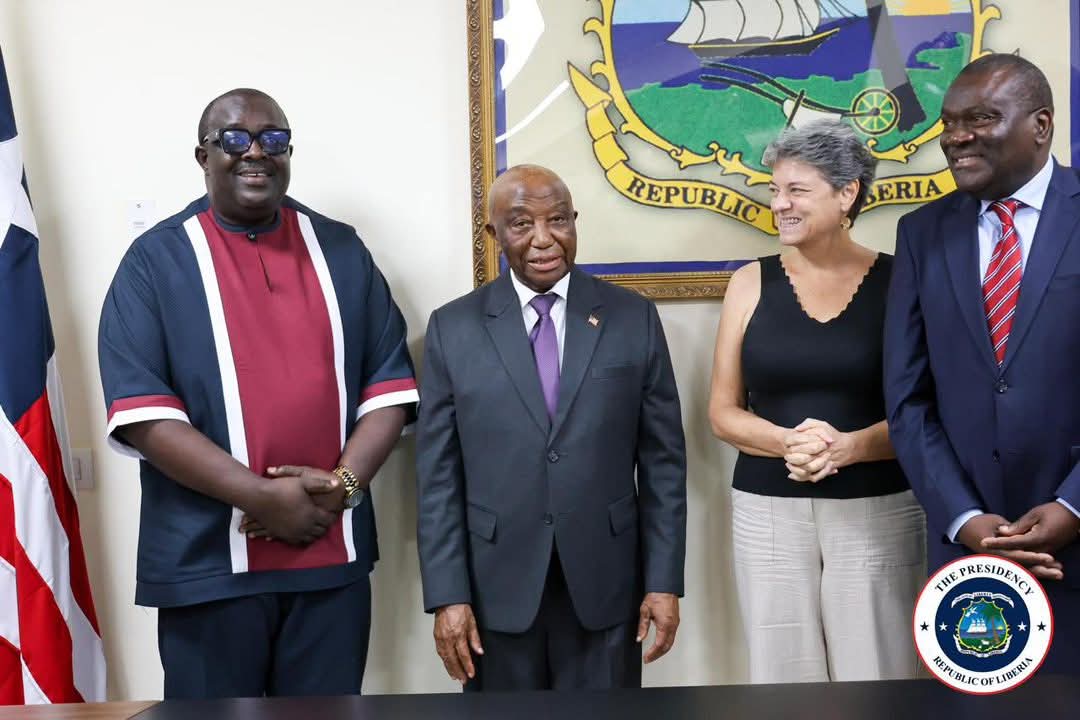
The findings were formally presented to President Joseph Nyuma Boakai by the Executive Director of the Liberia Refugee Repatriation and Resettlement Commission, Jeror Cole Bangalu, during a high-level meeting at the Executive Mansion in Monrovia.
The report, developed through a collaborative assessment involving international development partners and Liberian authorities, warns that the rapid increase in Burkinabè migration into Grand Gedeh County and River Gee County could place unprecedented pressure on already fragile local infrastructure and public services.
According to the assessment, most migrants are engaged in artisanal mining, small-scale agriculture, and informal economic activities, sectors that have increasingly attracted foreign labor due to Liberia’s abundant natural resources and vast arable land.
A Growing Regional Migration Trend
The reported influx reflects broader migration patterns unfolding across West Africa. Over the past decade, political instability, economic hardship, climate-related challenges, and security threats in parts of the Sahel region have contributed to increased cross-border population movements.
Burkina Faso has experienced significant internal displacement in recent years as armed conflicts and extremist violence have disrupted livelihoods and weakened economic opportunities.
International humanitarian agencies estimate that millions of people across the Sahel continue to face varying degrees of displacement, food insecurity, and economic vulnerability.
Liberia, traditionally known for hosting refugees during regional crises and benefiting from regional mobility agreements under the Economic Community of West African States, now finds itself managing one of the most significant migration situations reported in its southeastern corridor in recent history.
If verified, the estimated 140,000 Burkinabè residents would represent approximately 2.5 percent of Liberia’s national population, which is projected at around 5.5 million people.
Security and Humanitarian Concerns
Presenting the findings, Cllr. Bangalu described the situation as a matter requiring urgent national attention.
“Without a coordinated response, this situation could overwhelm communities already facing limited infrastructure and services,” he warned.
The report highlights concerns regarding:
Increased pressure on health facilities;
Growing demand for educational services;
Competition for land and natural resources;
Challenges in migration management and documentation;
Potential security vulnerabilities along border regions;
Environmental degradation linked to mining and settlement expansion.
Local authorities have reportedly observed rapid population growth in several communities, creating strains on water systems, sanitation infrastructure, housing availability, and social services.
Experts note that while migration can contribute positively to economic growth through labor participation and investment, unmanaged population movements can also generate tensions between host communities and newcomers when public services are insufficient.
President Boakai Orders Cabinet Deliberation
Following the presentation, President Boakai directed that the report be elevated to Cabinet level for comprehensive review and policy consideration.
The move signals the government’s intention to treat the issue as both a national development and security priority.
Officials are expected to examine recommendations relating to migration management, community support programs, registration systems, border governance, and enhanced cooperation with international partners.
Analysts say Liberia’s response will likely require balancing its longstanding humanitarian commitments with the practical realities of maintaining social stability and protecting national interests.
International Partners Join Response Effort
The assessment mission brought together a broad coalition of national and international stakeholders, including:
The French Embassy in Liberia;
United Nations Population Fund;
United Nations Human Rights Office;
International Organization for Migration;
The Liberia Immigration Service.
Among those attending the presentation were Isabelle Le Guellec, Elijah F. Rufus, Mady Biaye, Christian Mukosa, and Lenaud Serge Desire.
Cllr. Bangalu praised the collaborative effort and emphasized that successful implementation of the report’s recommendations will require substantial financial and technical support.
Donor Engagement and Long-Term Strategy
The LRRRC Executive Director disclosed that a stakeholder conference involving donor institutions and development partners is expected to be convened in the coming months to review the findings and identify support mechanisms.
He stressed that while some interventions require immediate action, sustainable solutions will depend on a combination of national budgetary commitments, international assistance, and coordinated regional cooperation.
Policy experts suggest that Liberia may need to strengthen migration monitoring systems, invest in host-community development, and establish comprehensive data collection mechanisms to better understand the demographic and economic implications of the migration trend.
The report places a spotlight on one of the most complex policy challenges facing Liberia in 2026: how to manage a rapidly evolving migration situation while preserving national security, supporting local communities, and upholding regional and international humanitarian obligations.
As Cabinet deliberations begin and international partners prepare for further consultations, the government’s next steps could shape Liberia’s migration management framework for years to come.
For now, officials are urging coordinated action, warning that delays could deepen pressure on communities already struggling with limited infrastructure, unemployment, and development deficits across southeastern Liberia.
