
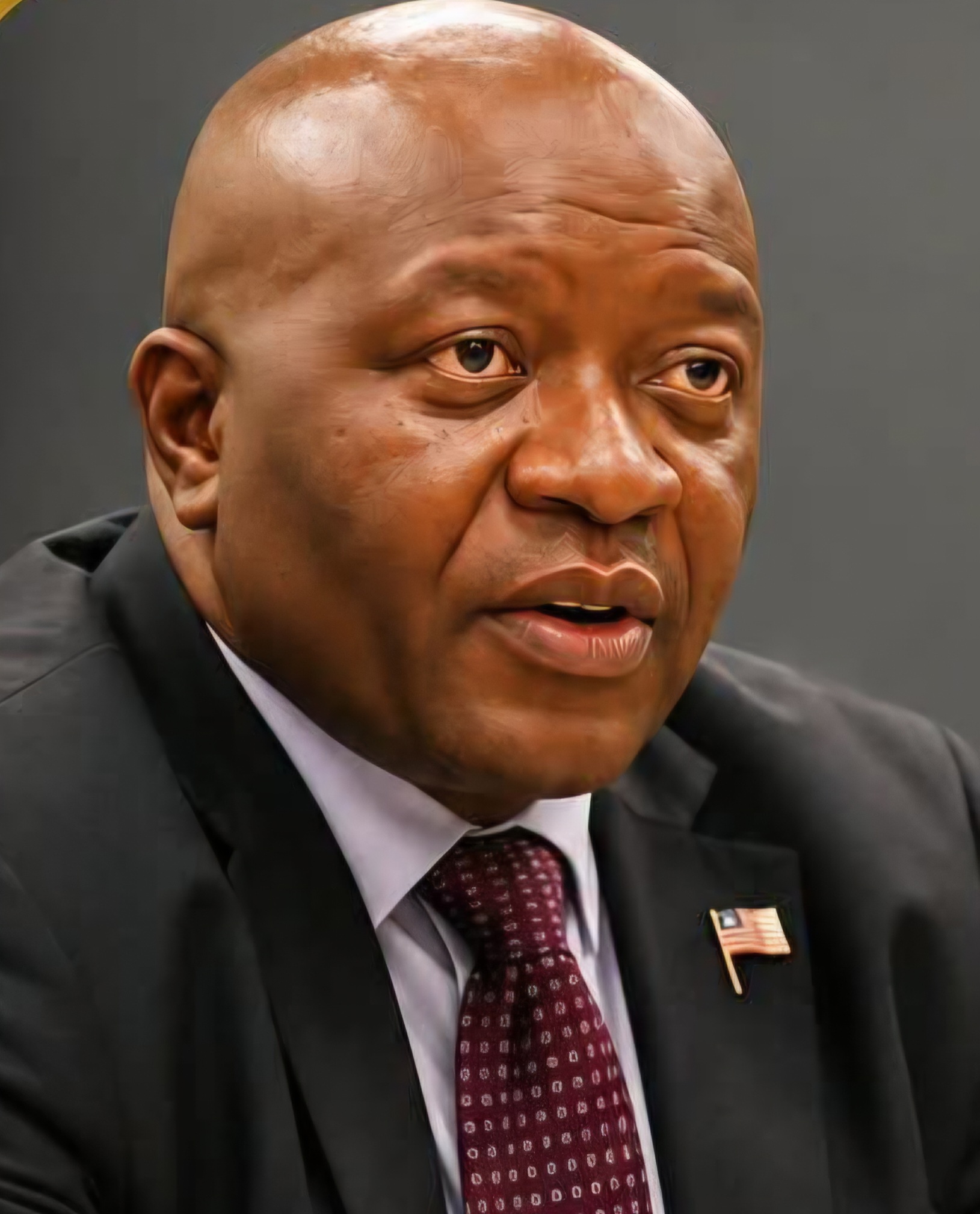
By: Julius Konton
In a rare and growing wave of public commendation, scores of Liberian civil servants are praising Finance and Development Planning Minister Augustine Kpehe Ngafuan, describing him as one of the most effective finance ministers in the country’s post-war history, citing his record of timely salary payments, fiscal discipline, and sweeping economic reforms.
For many government workers, the consistent payment of salaries over the last two years marks a significant departure from years of uncertainty, delays, and liquidity frustrations that once plagued Liberia’s public payroll system.
Civil servants interviewed across Monrovia and several counties said Minister Ngafuan’s stewardship has restored confidence in Liberia’s financial management architecture.
“We want to appreciate Minister Ngafuan and his team,” said Thomas Johnson, a public sector worker. “Since he took over, salaries have been regular and predictable.
During previous years, especially under the former administration, we often received salary alerts but could only withdraw US$100 at a time due to banking restrictions.
That created hardship for families. Today, that burden has eased.”
Liberia’s civil service remains one of the largest sectors of formal employment, with recent Civil Service Agency (CSA) records showing the workforce expanded from 60,900 in 2024 to over 63,130 employees in 2025.
Analysts say maintaining regular payroll for such a vast workforce requires significant fiscal coordination and liquidity management.
Ngafuan’s tenure has coincided with a series of landmark economic decisions. In 2026, he presented Liberia’s first-ever national budget exceeding US$1.2 billion officially pegged at US$1.249 billion, the largest in the nation’s history.
The record budget represents a sharp increase from the US$738 million national budget in 2018, reflecting nearly 70 percent growth over eight years.
Economic experts say the expansion signals stronger domestic revenue mobilization and growing donor confidence.
Under Ngafuan’s leadership, Liberia’s economy has shown notable resilience.
The International Monetary Fund (IMF) projected Liberia’s growth at 5.1 percent in 2025, driven by stronger mining exports, agriculture, and infrastructure spending.
Inflation, once a major concern during the economic downturn of 2019–2021, has gradually stabilized, while public expenditure management has improved.
Beyond payroll reforms, Ngafuan has accelerated digital modernization within the Ministry of Finance and Development Planning.
His recent launch of the Electronic Document Management System (EDMS) is being described as a transformative step toward reducing bureaucracy, improving audit trails, and strengthening transparency in government spending.
The EDMS is expected to digitize thousands of financial records, minimizing the risk of document loss and significantly reducing delays in budget execution and compliance reporting.
Historically, Liberia’s public financial management system has struggled with inefficiencies dating back to the post-civil war reconstruction period, when donor dependency and weak institutional controls hampered government operations.
However, observers argue that recent reforms suggest a gradual shift toward stronger institutional accountability.
Political analysts note that salary regularity, though often overlooked, is one of the clearest indicators of fiscal health and governance stability.
“Timely salary payment is not just an administrative function; it reflects cash flow confidence, institutional credibility, and economic order,” said one Monrovia-based economist.
As President Joseph Nyuma Boakai’s administration pushes its ARREST Agenda for Inclusive Development, Ngafuan’s role remains central to financing major national priorities, including road infrastructure, education, agriculture, and healthcare.
For thousands of civil servants, however, the impact of the reforms is felt most directly in their homes.
For the first time in years, many say they can now plan their household budgets, meet school fees, and support their families without fear of sudden salary disruptions.
In a country where public trust in government institutions has often been fragile, Minister Ngafuan’s growing popularity among civil servants may signal more than appreciation, it could represent a broader shift in confidence in Liberia’s economic governance.
