
By: Julius Konton
The Government of Liberia has officially launched its long-anticipated National Cadet Program, a flagship youth empowerment initiative aimed at bridging the gap between higher education and employment for more than 1,000 university graduates and graduating seniors across the country.
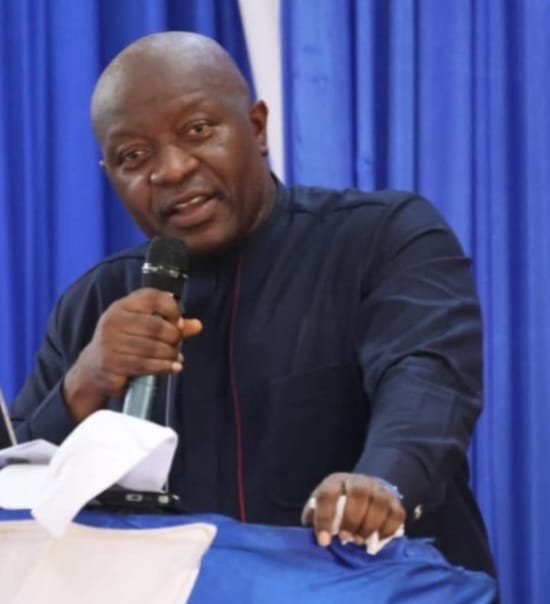
The program, unveiled in Gbarnga, Bong County by Liberia’s Minister of Finance and Development Planning, Augustine Kpehe Ngafuan, represents one of the most ambitious public-sector youth employment interventions undertaken by the government of President Joseph Nyuma Boakai since taking office in 2024.
Addressing government officials, development partners, students, and parents during the launch ceremony organized by the Ministry of Youth and Sports, Ngafuan described the cadet initiative as a transformative investment in Liberia’s human capital and national development agenda.
“This program is about hope, opportunity, discipline, integrity, and practical experience,” the Finance Minister declared. “It is about preparing Liberia’s young people not merely to seek jobs, but to become productive professionals capable of leading national transformation.”
The six-month initiative will place cadets in government ministries, state-owned enterprises, and private institutions where participants will gain workplace experience, technical exposure, and professional mentorship intended to improve employability in a country where youth unemployment and underemployment remain major economic challenges.
A Nation Seeking Solutions to Youth Unemployment
Liberia, a nation of approximately 5.5 million people, has one of the youngest populations in Africa, with more than 60 percent of citizens under the age of 35.
According to international labor estimates and development assessments, unemployment and underemployment among young Liberians continue to pose significant social and economic risks, particularly among university graduates entering an already constrained labor market.
Analysts say the National Cadet Program could become a critical intervention in helping graduates transition from academic theory to workplace practice.
Ngafuan reflected personally on the importance of internship and cadet opportunities, recounting his own formative experience as an intern at the Liberia Petroleum Refining Company in 1988 while attending the Booker Washington Institute.
He credited that experience with helping shape his professional discipline, technical competence, and eventual success in public service and international development.
“Practical exposure changes lives,” he said. “The lessons learned in the workplace often become the foundation for future leadership.”
Government Expands Youth Empowerment Strategy
The launch of the cadet program forms part of a broader youth empowerment agenda being pursued by the Boakai administration.
Ngafuan highlighted the government-backed Youth Entrepreneurship Investment Bank (YEIB), an ambitious US$18 million initiative launched in partnership with former Akinwumi Adesina and the African Development Bank in July 2025.
The YEIB initiative aims to support approximately 30,000 youth-led businesses and create more than 100,000 jobs through financing, technical training, and entrepreneurial support services.
According to the Finance Minister, the project is expected to become fully operational within weeks following the completion of recruitment for project management personnel.
“This administration believes Liberia’s youth must become creators of wealth, innovation, and opportunity,” Ngafuan stated.
ECOWAS Youth and Sports Center Relocates to Liberia
In another major announcement, the Finance Minister disclosed that Liberia had successfully secured the relocation of the ECOWAS Youth and Sports Center from Burkina Faso to Monrovia.
The regional center is expected to coordinate youth and sports development activities across the Economic Community of West African States (ECOWAS), potentially generating employment opportunities and expanding Liberia’s regional influence.
Ngafuan revealed that the Liberian government had already financed the acquisition, rehabilitation, and furnishing of the center’s future headquarters in Monrovia ahead of its official dedication.
Political observers view the relocation as a diplomatic victory for Liberia and a signal of improving international confidence in the country’s governance and institutional stability.
Economic Growth and Expanding National Budget
In one of the most politically significant portions of his address, Ngafuan mounted a robust defense of the Boakai administration’s economic record amid mounting criticism from opposition voices.
The Finance Minister announced that Liberia’s national budget had expanded dramatically from US$738 million to US$1.3 billion within “two years, three months, and 24 days” of the administration taking office.
According to Ngafuan, the increase was driven primarily by stronger domestic revenue mobilization, improved tax administration, and anti-corruption measures designed to close revenue leakages.
He contrasted the current administration’s fiscal performance with previous years marked by recurrent “recast budgets” caused by revenue shortfalls.
“Today we are discussing supplementary budgets because revenues are increasing,” he declared, drawing applause from attendees.
The additional revenues, he said, are helping finance new recruitment into the armed forces, police, immigration services, healthcare, and education sectors.
Infrastructure Push Across Liberia
Ngafuan also pointed to major infrastructure and public service investments underway across Liberia.
He cited ongoing road projects linking southeastern counties including Zwedru, Fish Town, and Harper, as well as highway rehabilitation projects connecting Monrovia to Bo Waterside and other regional corridors.
The government is additionally investing in educational infrastructure, with plans to construct or rehabilitate more than 100 schools nationwide, including institutions under the Monrovia Consolidated School System.
Electricity access expansion projects in Monrovia, Buchanan, and communities along the Roberts International Airport highway were also highlighted as evidence of growing economic activity.
Healthcare workers at the C.B. Dunbar Hospital were specifically referenced by the minister as beneficiaries of recent salary and incentive increases for critical public-sector professionals.
“Liberia Is Going Forward”
Throughout the speech, Ngafuan repeatedly rejected assertions that Liberia’s development trajectory is declining.
Using the analogy of a long-distance journey from Red Light in Monrovia to Gbarnga, he argued that while the country has not yet reached its destination, significant progress has already been achieved.
“The fact remains stubborn,” he declared. “Liberia is not where it used to be. Today is better than yesterday, and tomorrow will be better than today.”
He acknowledged that Liberia continues to face serious inherited infrastructure deficits, economic constraints, and governance challenges but insisted that the country is steadily advancing despite turbulence.
“The development journey is not a 100-meter sprint,” he said. “It is a marathon through difficult terrain.”
Advice to Liberia’s Young Cadets
In one of the speech’s most emotional moments, Ngafuan urged the cadets to embrace humility, discipline, teamwork, patriotism, and integrity as they prepare to enter professional life.
Drawing from a speech he delivered to young professionals in 2013, he warned graduates that academic excellence alone does not automatically guarantee workplace success.
“Being an honor-roll student does not automatically transform someone into an honor-roll professional,” he cautioned.
He encouraged participants to become agents of positive change in every institution they enter.
“Where you find darkness, spread your light. Where you find hopelessness, share hope. Where you find corruption, demonstrate honesty and integrity,” he told the cadets.
A Defining Test for Liberia’s Youth Agenda
The National Cadet Program is expected to become an important test of the Boakai administration’s broader youth development strategy and public-sector reform efforts.
Development experts note that Liberia’s long-term economic recovery will depend heavily on investments in education, skills development, entrepreneurship, and institutional capacity-building following decades of civil conflict, economic instability, and governance challenges.
If effectively implemented, analysts say the cadet initiative could help reduce graduate unemployment, improve workforce readiness, and strengthen confidence among young Liberians seeking meaningful economic opportunities.
As the ceremony concluded in Gbarnga, hundreds of cadets stood to applause while the program was officially declared launched, a symbolic moment many attendees described as one of cautious optimism for Liberia’s next generation.
