
Salary Review, Pension Overhaul and Procurement Shake-Up Top Liberia’s Reform Agenda
By : Julius Konton
Liberia’s Finance and Development Planning Minister Augustine Kpehe Ngafuan has defended President Joseph Nyuma Boakai’s administration against criticism over the pace of development, arguing that the government should be assessed against the time it has actually spent in office, available resources and the scale of reforms now underway.
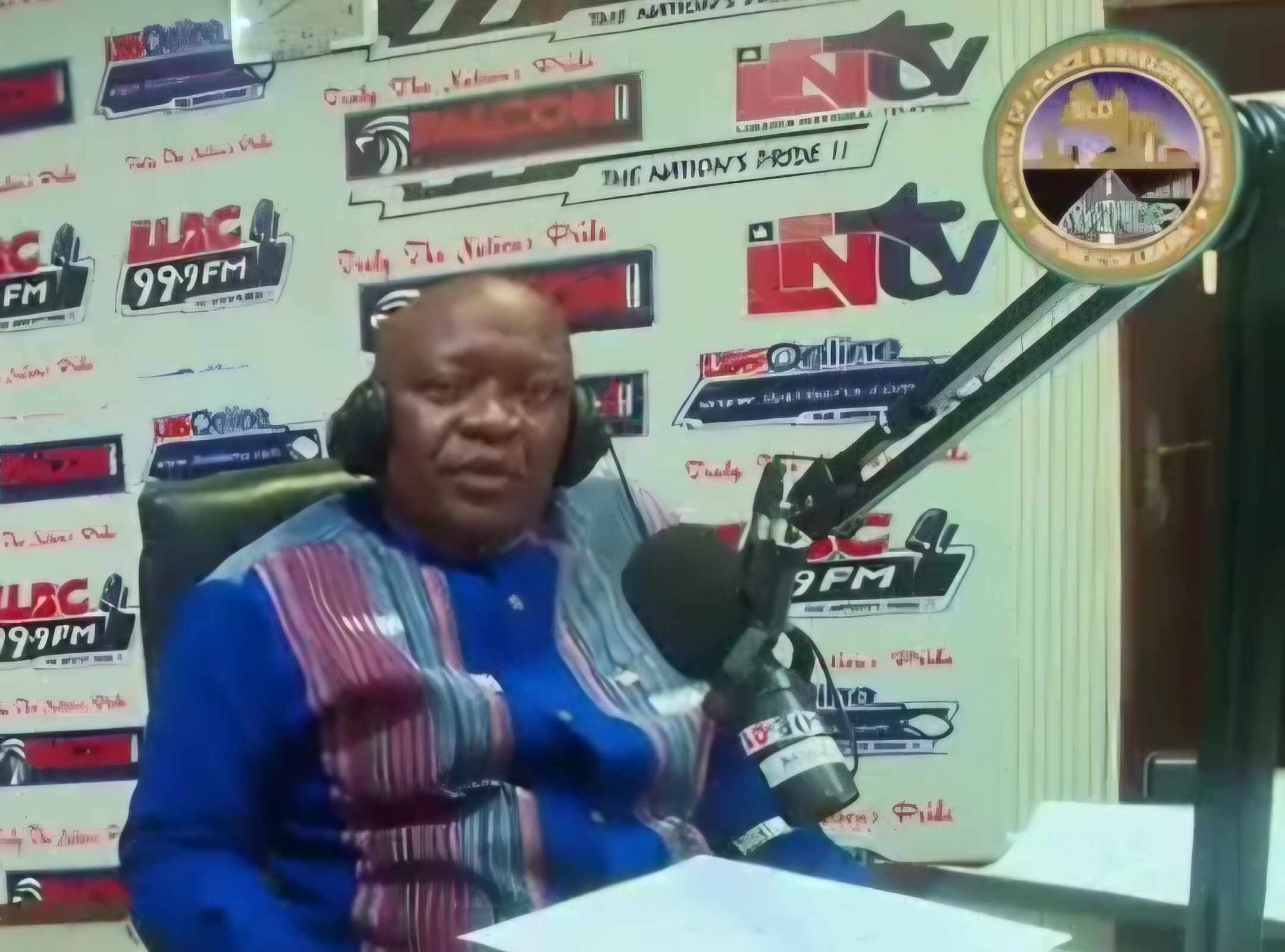
Speaking on the state broadcaster ELBC, Ngafuan said the administration had not yet reached the halfway point of its mandate and was already pursuing reforms spanning public-sector wages, pensions, procurement, education, health, infrastructure and electricity.
“People make the mistake of trying to grade the government as if it has been in office for five or six years. We have not even reached the halfway point,” Ngafuan said.
His comments come as Liberia manages one of the largest national budgets in its history.
The FY2026 budget was approved at approximately US$1.249 billion, up from an initial draft of about US$1.211 billion.
The final appropriation represented an increase of roughly US$38.6 million over the draft submitted to lawmakers.
The size of the budget, however, has intensified public expectations over whether increased appropriations will translate into visible improvements in public services and household welfare.
Health, Education and Infrastructure
Ngafuan cited investments in health, education and infrastructure as evidence of what he described as gradual but measurable progress.
Among the projects he referenced is the rehabilitation and reconstruction of C.H. Rennie Hospital in Kakata, including work on the facility’s roof and improvements to surrounding urban infrastructure.
The minister also said government is preparing to rehabilitate, construct and equip more than 100 schools, with a particular emphasis on foundational education.
For Ngafuan, the investment in public education has a personal dimension.
He said he was educated largely through Liberia’s public-school system, citing Boatswain Junior High School, Booker Washington Institute and the University of Liberia as institutions that contributed to his education.
He said the government therefore has a responsibility to strengthen public schools and expand access to quality education for children across the country.
The education push comes against a broader development challenge: Liberia continues to face significant infrastructure and human-capital constraints after years of civil conflict, economic shocks and underinvestment in public services.
Salary Review Moves to Centre Stage
Public-sector salaries remain one of the most politically and economically sensitive issues confronting the government.
Ngafuan said President Boakai has established a Salary Structure Review Committee, chaired by the Director-General of the Civil Service Agency, with the Ministry of Finance and Development Planning and the Ministry of State participating in the process.
The minister stopped short of promising an across-the-board salary increase, saying any adjustment would have to be based on Liberia’s revenue position and broader economic conditions.
“The numbers, based on the revenue situation, will determine what will be done at the appropriate time,” he said.
Ngafuan said government has already implemented targeted compensation measures in some sectors, particularly health, where certain workers received substantial increases beginning in 2025.
He added that compensation issues are also being examined for security personnel, integrity institutions, the judiciary and other specialized categories of public servants.
Among the institutions receiving attention, he said, are the General Auditing Commission, Liberia Anti-Corruption Commission and Public Procurement and Concessions Commission.
The approach suggests that the government is attempting to combine wage reform with a broader review of Liberia’s public-service pay structure rather than making isolated salary adjustments.
Retirement security emerged as another major component of the proposed reform agenda.
Ngafuan acknowledged concerns among workers approaching retirement, particularly where questions have arisen over whether required social-security contributions have been consistently remitted to the National Social Security and Welfare Corporation (NASSCORP).
“Individuals reaching retirement in some places dread retirement. We intend to change that. We want a situation where people will look forward to retirement,” he said.
Liberia’s National Pension Scheme is a contributory system covering eligible public- and private-sector employees.
NASSCORP says employers and insured workers each contribute 4% of monthly earnings, making the standard National Pension Scheme contribution rate 8%.
Under the existing framework, retirement pension eligibility depends on age, retirement from active employment and the required number of monthly contributions.
For workers born in 1980 or later, NASSCORP currently lists 144 monthly contributions as the minimum contribution requirement for a retirement pension.
The Civil Service Agency says the pension system is administered in collaboration with NASSCORP and that retirement processing is linked to employee records, payroll information and contribution histories.
Ngafuan indicated that government is considering a more comprehensive approach to pension administration and contribution compliance, with further announcements expected as discussions progress.
The issue is not entirely new. Liberia’s public audit records have previously highlighted the importance of ensuring that employee social-security deductions are properly remitted and documented.
Ngafuan also entered the debate over Liberia’s minimum wage, arguing that the country’s statutory wage floor compares favorably with those in some neighboring economies.
He said Liberia’s minimum wage is higher than those of Ghana, Sierra Leone and Nigeria.
However, direct cross-country comparisons require caution because the countries use different wage structures, working-hour calculations and sectoral arrangements.
Available 2026 data show that Liberia’s statutory minimum wages remain differentiated by category. WageIndicator, for example, lists US$5.50 per day for unskilled labourers and US$3.50 per day for domestic or casual workers, based on the applicable wage framework.
Nigeria’s statutory national minimum wage is ₦70,000 per month, while Ghana’s 2026 national daily minimum wage is listed at GH¢21.77 per day.
Sierra Leone, meanwhile, announced an increase in its national minimum wage from NLe800 to NLe1,200, effective April 2026.
Because minimum wages are expressed using different time periods and may cover different categories of workers, simple dollar-for-dollar comparisons can be misleading.
Ngafuan nonetheless acknowledged that Liberia must continue working to improve workers’ earnings while taking account of the country’s fiscal capacity and economic conditions.
The minister strongly defended the size of Liberia’s FY2026 budget, rejecting suggestions that a larger appropriation necessarily means government is accumulating funds without implementing projects.
The approved FY2026 budget stands at about US$1.249 billion, compared with the initial proposal of approximately US$1.211 billion.
Ngafuan said the additional fiscal space is intended to support priority sectors including education, health, public works and public broadcasting.
“We are not raising the budget and keeping money somewhere to wash the money,” he said.
But the minister also acknowledged a fundamental problem confronting Liberia’s public-finance system: having money appropriated in the national budget does not automatically mean projects will be implemented.
“It is one thing to have money in the budget, and it is another thing for entities to spend the money properly,” he said.
That distinction is critical for Liberia, where the effectiveness of public spending depends not only on the size of appropriations but also on procurement capacity, project management, institutional coordination and accountability.
Ngafuan said government is preparing additional measures to address delays and bottlenecks in public procurement.
The government has already moved toward electronic procurement, but the minister said the transition to technology has not eliminated all challenges.
Instead, some new operational problems have emerged alongside the benefits of digitization.
He said practical measures aimed at accelerating procurement are expected to be announced, potentially within weeks.
The objective, he suggested, is to ensure that appropriated funds can move more efficiently from the national budget into actual projects and services without compromising transparency, competition or accountability.
For a government seeking to demonstrate tangible results from a budget exceeding US$1.2 billion, procurement efficiency is likely to remain a critical test.
Energy is another area in which the government is seeking to expand service delivery, particularly in rural communities.
Ngafuan cited projects in River Gee, Grand Kru and Sinoe, as well as ongoing efforts around Greenville and other locations.
He said budgetary resources have been allocated while the Rural and Renewable Energy Agency (RREA) continues work on expanding electricity access.
The wider national picture illustrates the scale of the challenge.
World Bank data have previously put Liberia’s electricity access at about 32.7% of the population, with urban access substantially higher than rural access.
The Bank also reported that the Liberia Electricity Corporation’s customer base increased from about 142,947 customers in 2021 to 282,505 in 2023.
Regional electricity projects are also changing Liberia’s energy landscape.
The World Bank says transmission and distribution investments across West Africa, including projects involving Liberia, have helped connect millions of people to electricity services between 2019 and 2025.
In June 2026, the World Bank approved a US$200 million financing package under the first phase of the US$853 million Regional DARES programme to expand renewable-energy access in Liberia and three other West and Central African countries.
Ngafuan described Liberia’s electrification drive as a nationwide effort intended to bring power to additional communities.
The Finance Minister also disclosed plans for President Boakai to chair a meeting of the government’s Economic Management Team.
The meeting is expected to bring together key economic policymakers, including the Central Bank governor, to examine current economic conditions, the national budget and measures aimed at strengthening economic performance.
The discussions come as Liberia seeks to balance competing pressures: financing infrastructure and social services, improving public-sector compensation, maintaining fiscal discipline and expanding domestic revenue.
The government is also pursuing the ARREST Agenda for Inclusive Development, its principal development framework, while seeking external financing for major infrastructure and development programmes.
Recent financing initiatives include a US$30 million BADEA agreement for the 50-kilometre Salayea-Konia road in Lofa County, alongside a US$700,000 grant supporting health-service improvements along the Gbarnga-Voinjama corridor.
For Ngafuan, the central argument is that Liberia’s progress should be measured not simply by political expectations but by the reforms and investments being implemented over time.
The challenge, however, is increasingly one of execution.
A larger budget provides government with greater fiscal capacity, but the ultimate measure of success will be whether appropriated resources are converted into functioning schools, better hospitals, reliable electricity, improved roads, competitive salaries, secure pensions and faster public services.
Ngafuan rejected criticism that the government is merely talking about reform.
“For someone to say that this is not progress and that the minister is just talking is unfair. I don’t talk just because I want to talk. We have been working,” he said.
The coming months will therefore place greater emphasis on implementation. With salary restructuring, pension administration, procurement reform and infrastructure investment all competing for government attention, the Boakai administration faces the task of demonstrating that Liberia’s expanding fiscal envelope can produce measurable improvements in the daily lives of citizens.
