
By: Julius Konton
Liberia’s diaspora has been challenged to move beyond traditional charitable contributions and embrace long-term investments in education, institutions, entrepreneurship and human capital development as the United Bassa Organizations in the Americas (UNIBOA) marked its 35th National Convention.
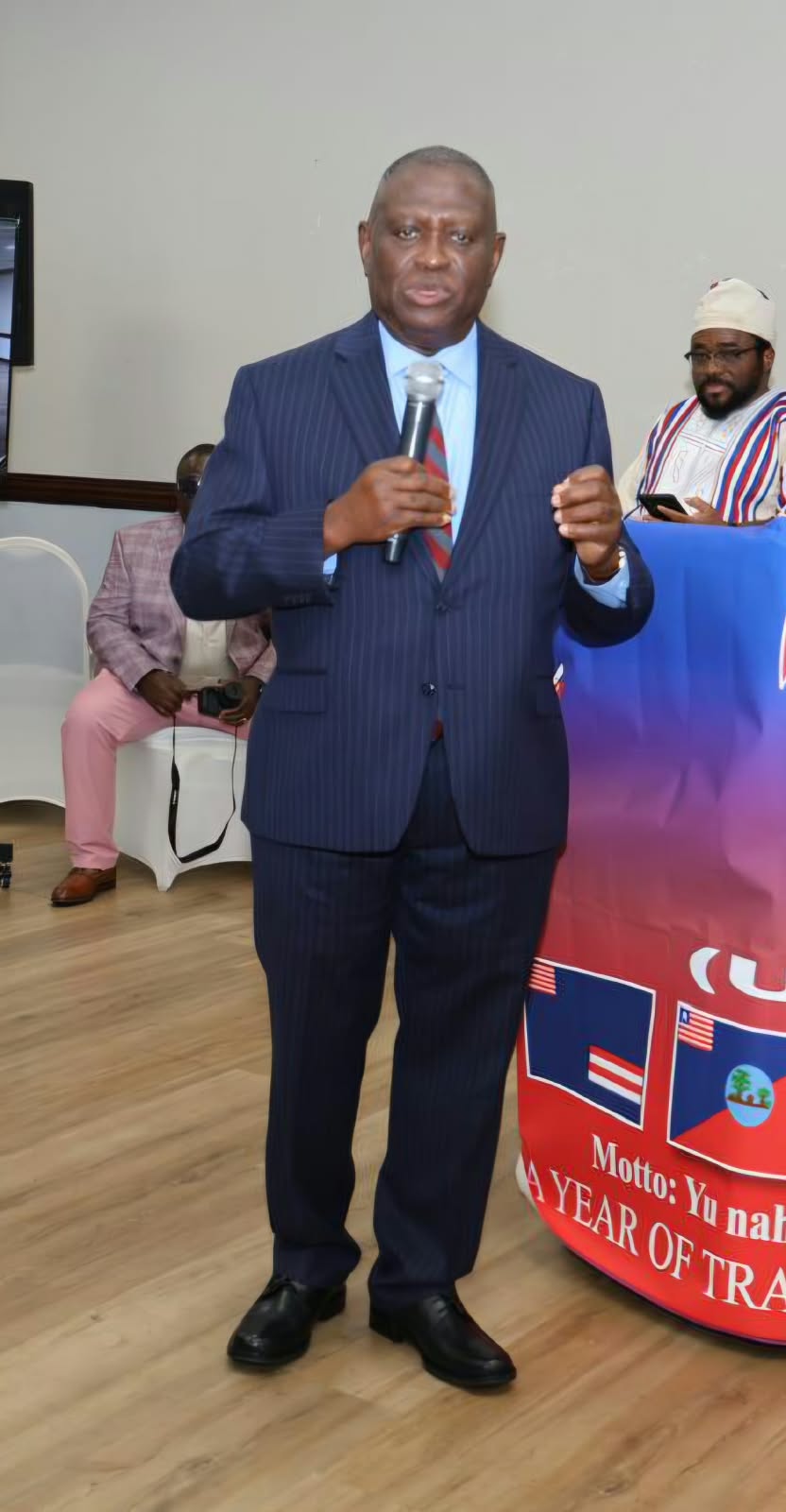
Emmanuel Nuku Reeves, Deputy Commissioner of the Liberia Maritime Authority, delivered the keynote address at the convention, urging Bassa communities in the Americas to translate their collective resources, professional expertise and international networks into sustainable development opportunities for Liberia.
Speaking under the theme “Today’s Success Is Inspired by Building Tomorrow Milestones,” Reeves said the 35-year history of UNIBOA should serve not only as an occasion for celebration but also as a platform for defining the organization’s next generation of contributions to Liberia.
He called on the association to build what he described as “milestones” capable of benefiting generations yet unborn, including a major scholarship endowment, professional development programs, institutional partnerships and investments that create employment and expand economic opportunities.
The UNIBOA convention was held in Louisville, Kentucky, bringing together Bassa citizens and supporters from across the United States and other parts of the Americas.
According to the organization’s official convention information, the gathering included business sessions, elections, a cultural and heritage night, a queen contest, and a national fundraising ball and banquet.
Reeves said UNIBOA’s three-and-a-half decades of existence demonstrate the potential of organized diaspora communities to influence development at home.
He highlighted the organization’s reported contributions to education through scholarships, healthcare initiatives and medical supplies, as well as its role in preserving Bassa culture, traditions, language and identity among Liberians living outside the country.
“These contributions are not merely acts of generosity,” Reeves said, describing them as “monuments of service” that demonstrate what can happen when citizens unite around a common purpose.
The deputy commissioner argued, however, that the next phase of diaspora engagement should be broader than philanthropy.
He called for investments in intellectual capital, institutions, leadership development, technology, entrepreneurship and job creation, saying such initiatives could have a more enduring effect on Liberia’s economy than short-term donations alone.
Under his proposed model, UNIBOA would establish a substantial scholarship endowment capable of continuously supporting deserving Liberian students pursuing disciplines such as medicine, engineering, law, technology, education and business.
Such an initiative, he argued, could eventually produce a professional network capable of addressing development challenges in Grand Bassa and other parts of Liberia.
The appeal comes as Liberia continues to face significant development and human-capital challenges.
World Bank data put Liberia’s gross domestic product at approximately US$4.78 billion in 2024, with GDP per capita at about US$851.50.
The economy grew by approximately 4% in 2024, while personal remittances received by Liberia were equivalent to 21.3% of GDP, underscoring the importance of the Liberian diaspora to household incomes and the wider economy.
The country’s demographic needs are also substantial. Liberia’s 2022 Population and Housing Census recorded a population of approximately 5.25 million people, including about 293,689 residents in Grand Bassa County.
The figures provide context for Reeves’ argument that diaspora engagement could play a larger role in financing education, enterprise and community development.
Rather than treating remittances and donations solely as household or emergency support, he encouraged Liberians abroad to consider how their resources could generate productive assets, businesses, skills and institutions.
Reeves also connected his appeal to Liberia’s national development priorities under the government’s ARREST Agenda for Inclusive Development, which focuses on Agriculture, Roads, Rule of Law, Education, Sanitation and Tourism.
The government launched the ARREST Agenda and the 15 County Development Agendas in January 2025 in Buchanan, Grand Bassa County, presenting the framework as Liberia’s current national development plan and linking it to the country’s longer-term Vision 2030 objectives.
The government’s development framework seeks to diversify the economy, improve infrastructure and expand investment in human capital.
In its national development planning, the government has identified more than 370 interventions across agriculture, infrastructure, energy, tourism, governance, education, health and sanitation, while targeting annual economic growth above 5%.
The agriculture component of the agenda is already being implemented through the National Agriculture Development Plan 2024–2030, popularly branded the “Liberians Feed Yourselves” agenda, which aims to increase domestic food production and reduce dependence on food imports.
Reeves said the diaspora should see these national priorities not simply as government responsibilities but as opportunities for citizens at home and abroad to participate in national transformation.
During his address, Reeves announced a US$15,000 contribution to UNIBOA, describing the donation as part of the customary support for the organization and its programs.
The contribution came as delegates gathered to celebrate UNIBOA’s 35 years of organizational activity and to discuss the association’s future direction.
For Reeves, however, the larger challenge is institutional: ensuring that contributions made today produce measurable opportunities tomorrow.
He encouraged UNIBOA members to consider creating mechanisms through which diaspora resources could be pooled and strategically invested rather than deployed only on individual projects or annual activities.
Grand Bassa and the Wider National Picture
Grand Bassa holds particular significance in Liberia’s economic history.
Its capital, Buchanan, has long been associated with Liberia’s mining, agricultural and port activities, making the county an important component of the country’s economic infrastructure.
The government’s decision to launch the ARREST Agenda and County Development Agendas in Buchanan in January 2025 also placed Grand Bassa at the center of a national conversation about decentralization and county-level development.
Reeves argued that this environment creates an opportunity for Bassa organizations abroad to develop initiatives that complement national development efforts without replacing the responsibilities of government.
He urged the diaspora to build partnerships capable of attracting capital, technology and expertise into Liberia.
The keynote speaker also pointed to the rapid transformation of the global economy, warning that artificial intelligence, digital technology, climate change and increasing international competition are changing the nature of work and development.
For Liberia, he said, preparing young people for that future will require greater emphasis on education, technical skills, innovation and entrepreneurship.
“The future belongs increasingly to societies that prepare intentionally for it,” Reeves told the gathering.
He challenged UNIBOA to transform its annual convention from primarily a ceremonial gathering into a strategic forum where members can develop investment proposals, establish partnerships, identify development priorities and create measurable programs.
Reeves’ message reflects a broader question confronting African countries with large overseas communities: how can diaspora resources be transformed from consumption and short-term assistance into long-term development capital?
Liberia’s remittance figures illustrate the scale of that opportunity. With remittances equivalent to more than one-fifth of GDP in 2024, the diaspora already represents a major economic constituency.
The challenge, therefore, is not necessarily whether Liberians abroad contribute to their homeland, but how those contributions can be organized to produce greater and more sustainable development outcomes.
Reeves proposed a future in which diaspora organizations help finance scholarships, establish businesses, mentor young professionals, support innovation and develop institutions capable of surviving beyond individual leaders.
He said the objective should be to create opportunities that allow future generations to inherit functioning institutions rather than simply stories of past achievements.
As he closed his address, Reeves called on UNIBOA members to use the organization’s 35th anniversary as a turning point.
He urged members to remain united, strengthen partnerships and invest in people, arguing that the most important legacy of an organization is not the number of events it holds but the lives and institutions it transforms.
“The future is calling,” Reeves said. “History is watching. Our homeland is expecting. The next generation is waiting.”
He called on the Bassa diaspora to respond through vision, courage and service, saying the ultimate measure of UNIBOA’s legacy should be whether its work converts opportunities into progress and service into lasting institutions.
The 35th National Convention therefore closed not merely as a celebration of three and a half decades of organizational history, but as a call for the next chapter of diaspora engagement one centered on education, investment, institutional development and a stronger connection between Liberia and its citizens abroad.
For UNIBOA, the challenge now is to turn the convention’s theme into measurable action: building today’s success around milestones that can still serve Liberia tomorrow.
