
By: Julius Konton
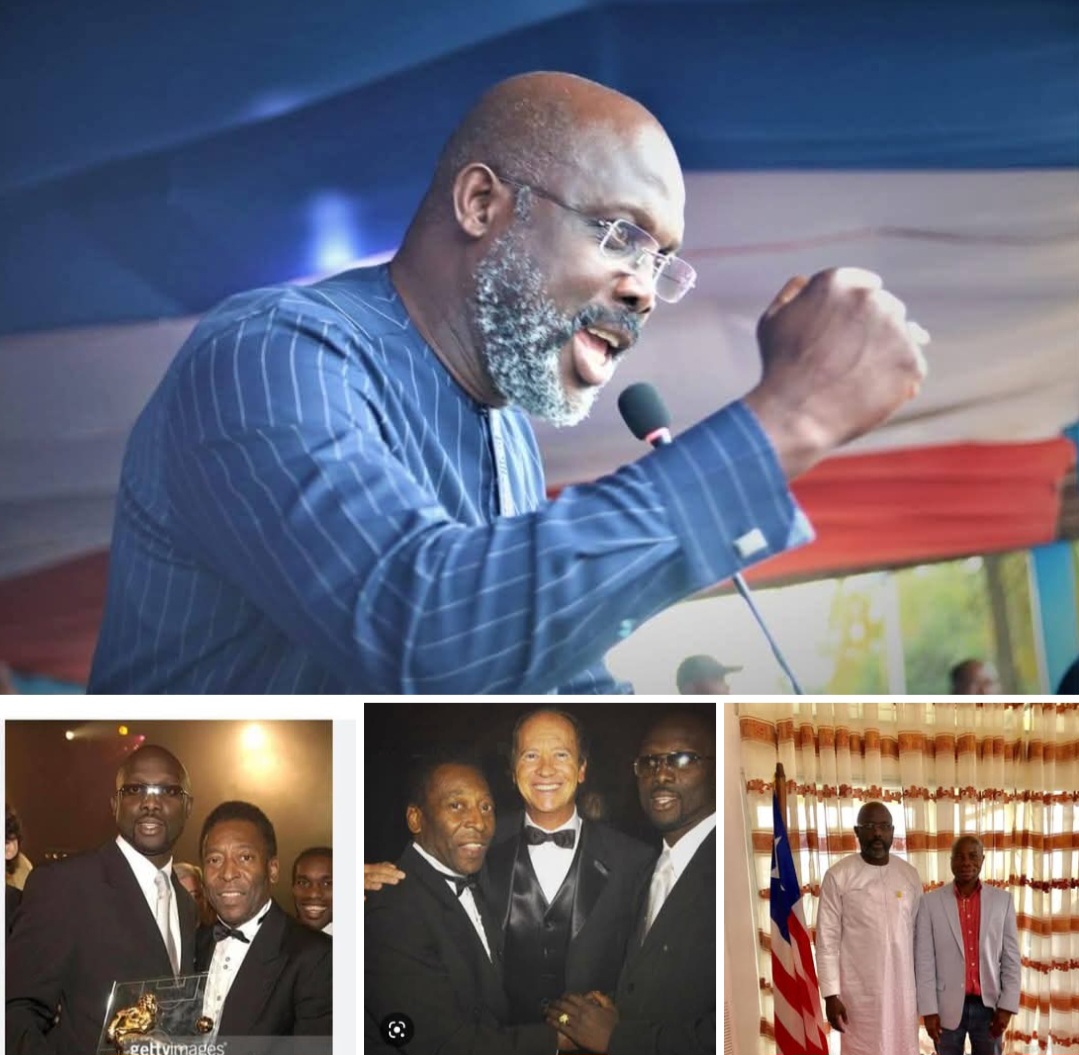
A renewed debate over the history of Liberia’s national football team, the Lone Star, has once again brought into public discourse the role played by former World Footballer of the Year and former Liberian President, , in sustaining the country’s football ambitions during some of its most difficult years.
The discussion resurfaced following comments reportedly attributed to former Lone Star and St. Joseph Warriors goalkeeper, Louis Crayton suggesting that former Liberian President Charles Taylor financed the national team during Liberia’s 2002 FIFA World Cup qualifying campaign.
Crayton reportedly referenced former Liberia Football Association (LFA) President Edwin Snowe and former national team players as witnesses to those claims.
However, the comments have triggered counterarguments from football stakeholders, Sports Journalists and historians and one of such is Isaac Solo Kelgbeh , former Secretary General of the Sports Writers Association of Liberia and former Sports Editor of Inquirer Newspaper who insist that while government interventions occasionally supported the team, George Weah’s personal sacrifices and financial contributions to Liberia’s football ecosystem remain historically documented and publicly acknowledged.
Liberia’s Football Context: A Team Surviving Through Crisis
According to him, To understand the debate, one must revisit Liberia’s turbulent football history.
Solo historicized that throughout the 1990s and early 2000s, Liberia’s football system operated under extraordinary constraints as the country battled civil instability, weak institutions, financial hardship, and infrastructural collapse.
During this period he explained that Liberia’s football federation struggled with inadequate funding, irregular logistics, poor preparation, and inconsistent player welfare.
Unlike wealthier African football nations such as Morocvo, Egypt, Nigeria, South Africa, among others , Liberia depended heavily on individual interventions and external goodwill to sustain football development.
Football analysts note that the Lone Star frequently encountered challenges ranging from unpaid player allowances and poor travel arrangements to inadequate sporting equipment and disrupted training camps.
Within that environment, Mr. Kelgbeh narrated that Weah, the former global football icon became more than just a player, he became financier, organizer, motivator, recruiter, and ambassador for the national team.
The Weah Factor: Financing a Football Dream
Historical accounts from players, administrators, and football observers indicate that beginning in the mid-1990s, George Weah played a central role in supporting Liberia’s football ambitions.
He pointed out that by 1994, Weah was widely credited with facilitating travel arrangements for Europe-based Liberian players, organizing national team camps, purchasing football equipment, coordinating communication among players abroad, and helping finance preparations for major competitions.
Among Liberia’s most celebrated football achievements was qualification for the 1996 African Cup of Nations (AFCON) in South Africa, a landmark moment in the nation’s sporting history.
The former SWAL’s Secretary General re-emphasized that Weah maintain his financial backing significantly contributed to that campaign.
Liberia later qualified for the 2002 Africa Cup of Nations in Mali, marking only the country’s second AFCON appearance.
For a nation emerging from years of instability, qualification itself represented a symbolic victory, he added.
At the time, Liberia’s football administration reportedly struggled to mobilize sufficient resources, forcing players and officials to rely on emergency interventions.
Revisiting the 1999–2002 Period
Questions have also emerged regarding why attention is concentrated specifically on the 2002 World Cup qualifying campaign rather than the broader football period stretching from 1999 to 2002, during which multiple national team players including Louis Crayton were active participants.
Crayton, who became associated with the Lone Star setup in the late 1990s, officially debuted in June 1999 against after being part of Liberia’s preparations during the same period.
He stressed that accounts surrounding Liberia’s April 9, 1999 fixture in Annaba against suggest that concerns over football equipment forced emergency interventions.
According to football insiders, boots used by players were reportedly procured through George Weah’s local management structure, led at the time by Sylvester Williams, popularly known as “Careca,” after equipment purchased by the delegation proved unsuitable for the playing conditions.
Several former players and observers also point to instances during away fixtures including matches where emergency financial interventions allegedly helped players navigate logistical and welfare concerns.
Critics and defenders alike acknowledge that player compensation during that era was often inconsistent, with promised payments delayed due to federation cash-flow shortages.
“Black Sunday” and Liberia’s Golden Football Memory
Speaking further he stated that one of Liberia’s most iconic football achievements came on January 28, 2000, when the Lone Star stunned the Black Stars of Ghana with a memorable 3–1 victory in Accra.
The victory remains deeply symbolic in Liberian football history and is still remembered in football circles as a defining upset.
Supporters of Weah note that around this period, incentives for foreign-based players reportedly increased, with discussions surrounding appearance fees reaching approximately US$5,000 per player during key matches.
“Yet football administrators of the time acknowledged that implementation remained inconsistent due to financial limitations.
At times, match-day gate receipts reportedly became essential to settling arrears owed to players”, he noted.
Mali 2002: A Tournament Nearly Lost to Financial Crisis
Liberia’s qualification for the 2002 Africa Cup of Nations in Mali represented another historic milestone but also exposed serious institutional vulnerabilities.
According to multiple football accounts, George Weah reportedly financed the team’s early training camp in Côte d’Ivoire before preparations shifted to Mali.
Solo explained that during the tournament itself, Liberia allegedly came close to boycotting its opening fixture because of funding shortages and unresolved logistical challenges.
Public frustration at home grew rapidly.
In Monrovia, football supporters reportedly organized fundraising efforts to support the national team an extraordinary display of patriotism in one of Africa’s most economically challenged post-war environments.
Football insiders further claim that Weah and former football administrator Edwin Melvin Snowe Jr. appealed to then FIFA President Sepp Blatter for early access to a portion of Liberia’s FIFA development funding, reportedly amounting to approximately US$250,000, to help stabilize the team’s participation.
Football, Politics and the Weight of Legacy
The debate surrounding George Weah’s football legacy increasingly intersects with Liberia’s political divisions.
Since transitioning from football legend to national leader, Weah’s legacy has become deeply contested, with supporters praising his sacrifices and detractors questioning aspects of his governance and leadership.
Yet even among critics, few dispute the historic magnitude of his football achievements.
Weah remains the only African footballer to win the FIFA World Player of the Year, the Ballon d’Or, and the European Footballer of the Year award in the same year, 1995, an accomplishment that elevated Liberia onto the global sporting map.
For many Liberians, the issue is not whether others contributed to the Lone Star, but whether historical memory should minimize Weah’s role in moments when Liberia’s football survival often depended on extraordinary personal interventions.
“History may ultimately judge that George Weah did not win every war, whether in football, politics, or national leadership.
But for many supporters and sports observers, he undeniably won critical battles that helped preserve national pride and sustain Liberia’s football aspirations during some of the country’s most difficult years”, Mr. Kelgbeh maintained.
