
By: Julius Konton
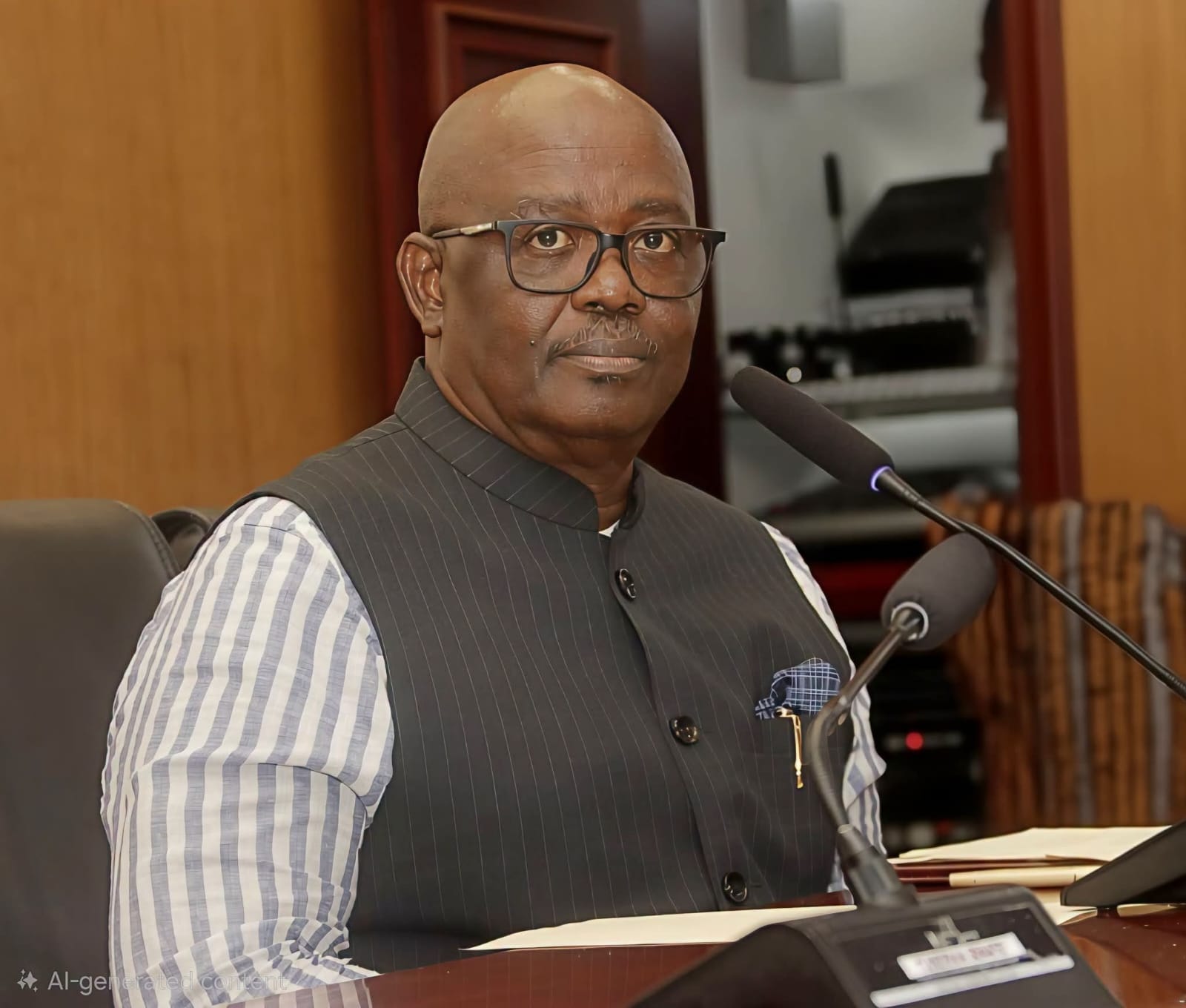
The Executive Director of Liberia’s Rural and Renewable Energy Agency (RREA), Samuel Bocay Nagbe, has formally apologized to the Liberian Senate, withdrawing earlier remarks in which he accused the Legislature of interfering with the Government of Liberia’s investigation into the reported US$19 million narcotics seizure at Roberts International Airport (RIA).
The apology, contained in an official letter addressed to the Senate, represents a significant step toward easing tensions between the Executive and Legislative branches amid one of Liberia’s most closely watched criminal investigations.
Nagbe acknowledged that his previous public statement failed to accurately recognize the Senate’s constitutional mandate and legislative oversight responsibilities.
“I write with profound respect and humility to convey my sincere and unreserved apology to the Honorable Liberian Senate for the public statement I made that the Senate was interfering with the ongoing investigation being conducted under the authority of the Government of Liberia into the reported US$19 million drug seizure at Roberts International Airport,” Nagbe stated.
The RREA Executive Director admitted that, after careful reflection, his comments did not properly reflect the constitutional role of the Senate and accepted full responsibility for the statement.
“I deeply regret making that statement and sincerely apologize to this Honorable Body, its distinguished members, and the Liberian people for any misunderstanding or concern my comments may have caused,” he wrote.
Nagbe emphasized that he holds the Liberian Senate in the highest regard as a co-equal branch of government and acknowledged that legislative oversight is an essential feature of Liberia’s democratic governance.
He affirmed that the Senate’s oversight authority is firmly grounded in the Constitution and plays a critical role in promoting transparency, accountability, and good governance.
Accordingly, he formally withdrew the portion of his previous statement suggesting that the Senate had improperly interfered with the investigation.
“It was never my intention to diminish the authority, integrity, or constitutional responsibilities of this distinguished institution,” the letter stated.
Nagbe further appealed to lawmakers to accept his apology in the spirit in which it was offered, pledging to continue working constructively with all constitutional institutions in support of national unity, the rule of law, and democratic governance.
The apology comes against the backdrop of an ongoing investigation into the reported US$19 million narcotics seizure at Roberts International Airport, a case that has generated widespread public interest and renewed concerns over transnational drug trafficking in West Africa.
Liberia has increasingly strengthened its anti-narcotics enforcement efforts in recent years through cooperation with regional and international partners.
According to the United Nations Office on Drugs and Crime (UNODC), West Africa continues to serve as a significant transit corridor for cocaine and other illicit drugs destined for European and global markets, making institutional cooperation and effective oversight essential in combating organized crime.
The Senate has exercised its constitutional oversight authority by seeking updates and accountability regarding the investigation, consistent with its legislative mandate under Liberia’s 1986 Constitution.
Political observers say Nagbe’s apology could help restore confidence between the Executive and Legislative branches, reinforcing the importance of mutual respect among Liberia’s democratic institutions.
The letter concludes with a reaffirmation of his commitment to the Constitution and the people of Liberia.
“I remain committed to working constructively with all constitutional institutions in a manner that promotes mutual respect, accountability, the rule of law, and the national interest.
It is my sincere hope that this apology will contribute to restoring confidence and bringing this matter to an amicable resolution in the best interests of the Republic of Liberia.”
The public apology is widely viewed as an important gesture toward preserving institutional integrity and strengthening democratic governance at a time when Liberia continues to advance reforms aimed at enhancing transparency, accountability, and public confidence in state institutions
