
By: Julius Konton
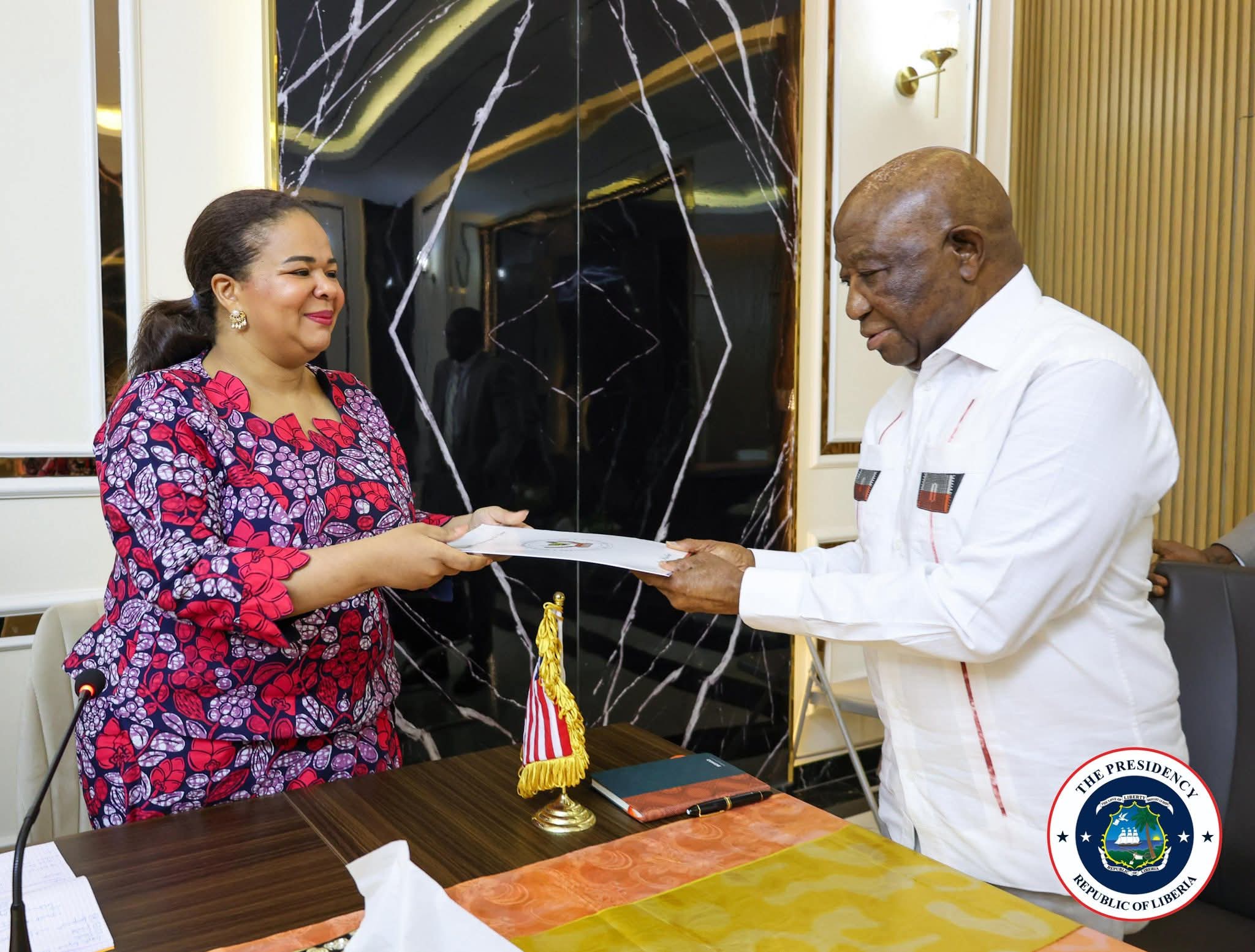
Joseph Nyuma Boakai has reaffirmed Liberia’s commitment to strengthening bilateral relations with the Democratic Republic of the Congo, following a high-level diplomatic meeting with Congolese Foreign Minister Thérèse Kayikwamba Wagner at the Executive Mansion in Monrovia.
The meeting , comes at a critical time when African nations are increasingly seeking stronger regional partnerships to unlock economic growth, improve infrastructure connectivity, and maximize the continent’s vast natural resource potential.
Minister Wagner led a senior delegation that included Marie-Hélène Okitundu Ayaki Omba, Christian Ndinda Diluanzodila, and Valentin Albert Makongo.
At the center of the discussions were strategic issues surrounding natural resources management, trade expansion, transport infrastructure, agriculture, and aviation connectivity, with both governments signaling interest in enhancing economic diplomacy.
President Boakai emphasized that direct engagement among African leaders remains essential to the continent’s transformation, noting that stronger political cooperation could accelerate implementation of the African Continental Free Trade Area (AfCFTA) the world’s largest free trade bloc by membership, covering 54 African countries with a combined GDP of over US$3.4 trillion.
“Africa’s future depends on meaningful partnerships among ourselves. We must continue to engage directly, build trust, and create opportunities for our people,” President Boakai reportedly told the delegation.
Strategic Resource Diplomacy
The Liberia-DRC talks are particularly significant given both countries’ abundant mineral wealth.
Liberia holds significant deposits of iron ore, gold, diamonds, and critical minerals, while the DRC remains one of Africa’s richest mineral economies, accounting for approximately 70% of global cobalt production and possessing vast reserves of copper, lithium, coltan, and gold.
Analysts say cooperation between the two countries could strengthen regional value chains, particularly as global demand for battery minerals continues to surge amid the green energy transition.
According to the World Bank, Africa possesses nearly 30% of the world’s mineral reserves, yet intra-African trade remains below 18%, compared to 68% in Europe and 59% in Asia, underscoring the need for stronger economic partnerships.
Aviation and U.S. Connectivity in Focus
One of the more notable areas of discussion was the possibility of expanding aviation links, including prospects for direct flights to the United States, an issue with broader implications for trade, tourism, and diaspora engagement.
Liberia currently depends heavily on transit hubs in Europe and neighboring African countries for intercontinental travel, while the DRC’s aviation sector has been undergoing reforms aimed at expanding international connectivity.
Industry experts estimate that improved air links across Africa could boost continental GDP by over US$4 billion annually and create thousands of jobs.
Liberia’s Emerging Global Influence
President Boakai also highlighted Liberia’s upcoming role on the United Nations Security Council, describing it as an opportunity to amplify African voices on peace, security, and development.
Liberia’s election to the Council marks a significant diplomatic milestone, especially as the nation seeks to reposition itself on the global stage after decades of civil conflict and post-war reconstruction.
Liberian Foreign Minister Sara Beysolow Nyanti said the visit represents a major boost in relations between Monrovia and Kinshasa.
“This engagement will further cement the historic and cordial ties between Liberia and the Democratic Republic of Congo,” she said.
Historical and Continental Context
Liberia and the DRC share historical parallels as nations rich in resources yet shaped by conflict and institutional rebuilding.
While Liberia emerged from a 14-year civil war in 2003, the DRC has endured decades of political instability despite being one of Africa’s largest economies by natural wealth.
Both countries are now pushing reform agendas focused on governance, infrastructure, and economic diversification.
Speaking after the meeting, Minister Wagner described the discussions as “fruitful” and praised President Boakai’s vision.
“The guidance we received was motivating and will push us further in advancing our bilateral agenda,” she said.
Political observers view the Monrovia meeting as part of a broader trend of African nations seeking to build stronger South-South alliances amid shifting global economic and geopolitical dynamics.
With Africa projected to reach 2.5 billion people by 2050, leaders increasingly argue that stronger inter-African cooperation will determine whether the continent can transform its demographic growth into economic prosperity.
