
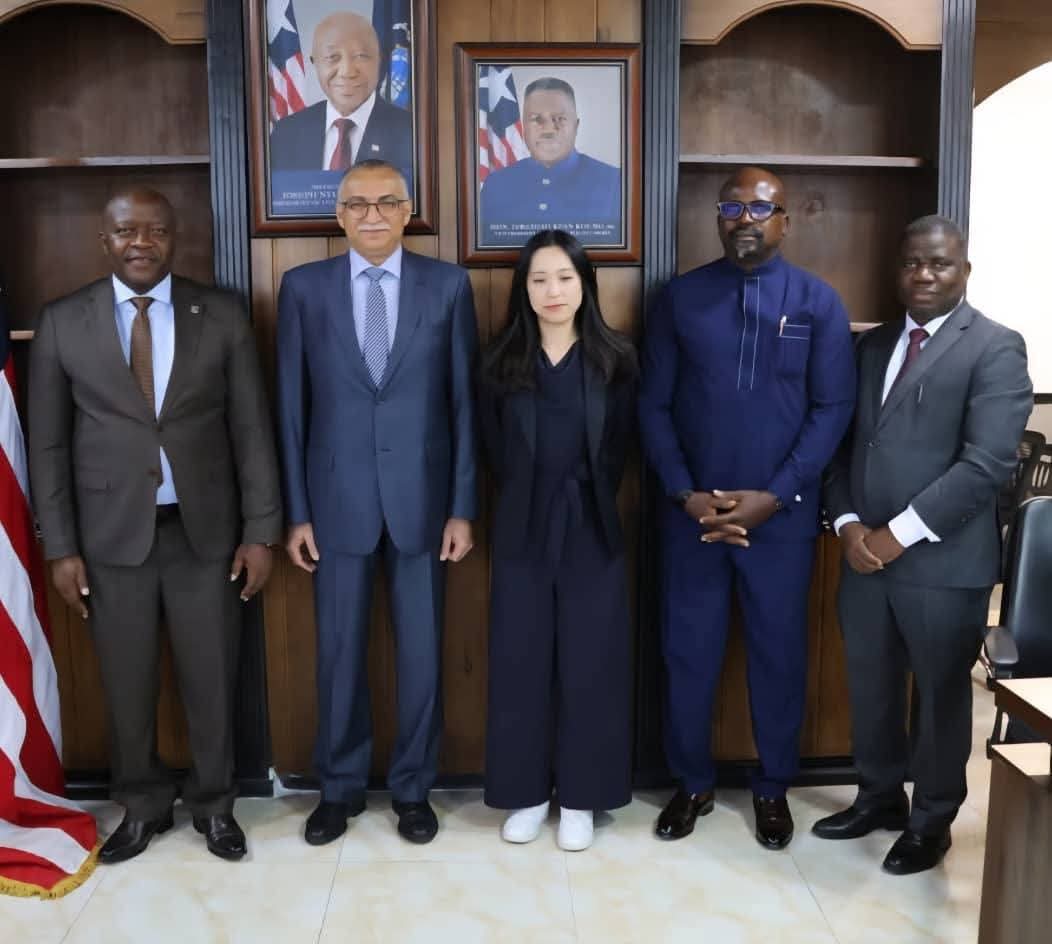
By: Julius Konton
A high-level Liberian government delegation held crucial talks today with a visiting OPEC Fund for International Development (OFID) mission led by Mourad Bouaou, Director of Portfolio Management for the Public Sector, focusing on accelerating and expanding financing for the Gbarnga–Mendikorma Highway, one of Liberia’s most important regional transport corridors.
The meeting brought together Finance and Development Planning Minister Augustine Kpehe Ngafuan and Public Works Minister Roland Lafayette Giddings, both of whom emphasized the government’s commitment to delivering the long-delayed project amid increasing demand for improved road connectivity in northern Liberia.
The OPEC Fund remains one of the major original Arab lenders supporting the highway part of the broader Trans-West African Highway Network, which connects Liberia to Guinea and Sierra Leone and supports over 120 million people across the subregion.
Over the last decade, Arab lenders including OFID, the Saudi Fund, and the Kuwaiti fund have collectively injected more than US$500 million into Liberia’s infrastructure portfolio, according to Ministry of Finance estimates.
During the meeting, the ministers and the OPEC Fund delegation reviewed progress on the Salayea segment, a critical stretch of the 256-kilometer Gbarnga–Mendikorma corridor.
The section has experienced delays linked to funding gaps, weather disruptions, and technical adjustments.
Minister Ngafuan noted that accelerating its implementation could enhance agricultural trade for more than 280,000 residents in Lofa and Bong counties.
Mr. Bouaou reaffirmed the Fund’s interest in maintaining momentum on the project, stressing the need for coordinated action among all financing partners to ensure timely delivery.
A major highlight of the discussions was the Government of Liberia’s appeal for new financing from the OPEC Fund and other Arab lending institutions for the Salayea–Konia–Voinjama segment, which could cost an estimated US$120–150 million, based on Public Works assessments.
Minister Giddings stated that completing the road would significantly reduce travel time between Gbarnga and Voinjama from 9 hours to less than 4 hours, boosting trade, access to health services, and movement of goods across the Mano River Union region.
The delegation also discussed the Voinjama–Mendikorma leg, which is expected to be financed under the PAVITO Agreement, currently before the National Legislature for ratification.
Once approved, this final section will unlock direct road access from Liberia to Guinea through the Mendikorma border, facilitating cross-border commerce expected to grow by 30% over the next five years, according to preliminary Ministry of Commerce forecasts.
Minister Ngafuan reiterated the Boakai administration’s commitment to restoring Liberia’s infrastructure backbone, saying the highway remains a top priority due to its economic and regional integration potential.
“This project is not just a road; it is a lifeline for agriculture, trade, and mobility for thousands of citizens. Our partnership with OPEC Fund and other Arab lenders is vital in ensuring its completion,” he said.
OFID Director Bouaou praised Liberia’s renewed engagement and expressed optimism about the next stages of collaboration.
