
By: Julius Konton
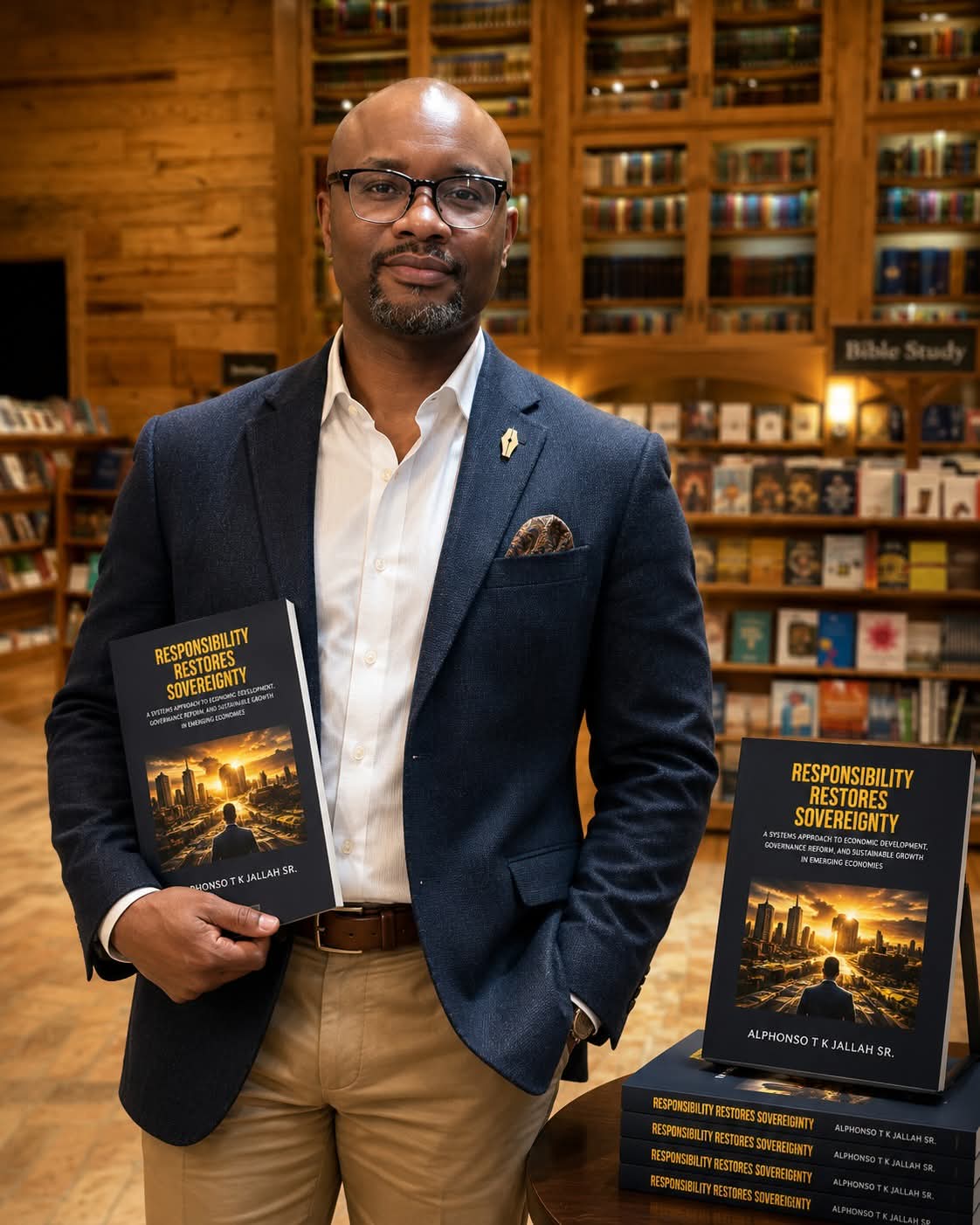
Liberian activist, author, and development advocate Alphonso T.K. Jallah Sr., who is based in the United States, has officially announced the publication of his latest book, Responsibility Restores Sovereignty: A Systems Approach to Economic Development, Governance Reform, and Sustainable Growth in Emerging Economies, a thought-provoking work that challenges individuals, institutions, and governments to embrace responsibility as the cornerstone of national progress.
Although the book is now available worldwide through Amazon Kindle, Jallah disclosed that its official public launch is scheduled for December 18, 2026, when he intends to formally present the vision behind the publication and engage readers, policymakers, entrepreneurs, students, and development practitioners in a broader conversation on leadership, governance, and sustainable national transformation.
Describing the publication as “a dream born from experience, service, and a vision for transformation,” Jallah said the book reflects years of research, observation, professional experience, and an unwavering commitment to advancing meaningful development across Liberia, Africa, and other emerging economies.
“The official launch will provide an opportunity to introduce the philosophy behind the book and inspire constructive dialogue on responsibility, leadership, and the future of nation-building,” he said.
Rather than focusing solely on the publication itself, Jallah emphasized that the book’s greatest value lies in its message.
“This is not just about publishing another book,” he noted. “It is about encouraging responsibility, self-reliance, ethical leadership, and a renewed mindset capable of transforming individuals, institutions, and nations.”
According to the author, Responsibility Restores Sovereignty presents a practical framework for addressing some of the most pressing development challenges confronting emerging economies.
The publication examines how stronger institutions, accountable governance, sound economic policies, and citizen responsibility can collectively drive sustainable growth and long-term national prosperity.
Among the major themes explored in the book are strengthening governance systems and public institutions, promoting transparency and accountability, encouraging entrepreneurship and innovation, improving public sector effectiveness, and creating inclusive and sustainable economic growth across Africa and other developing regions.
Development experts have long argued that effective institutions and accountable governance remain essential ingredients for economic growth.
According to the World Bank, countries with stronger institutions generally experience higher investment levels, improved public service delivery, and more sustainable economic development.
Similarly, the United Nations Sustainable Development Goals (SDGs) identify good governance, strong institutions, innovation, and inclusive economic growth among the critical pillars for achieving long-term prosperity by 2030.
Drawing from these realities, Jallah believes nations do not achieve lasting success through chance or natural resources alone.
“This work represents years of observation, experience, sacrifice, and a deep conviction that nations do not rise by accident, they rise through responsibility,” he asserted.
The author described the publication as a contribution to an ongoing global conversation about Africa’s development and the role citizens, governments, and institutions must play in shaping a better future.
“This is more than a book,” he emphasized. “It is a contribution to the conversation about the future we must build together.”
Jallah encouraged readers around the world to download the Kindle edition, share the publication with leaders, entrepreneurs, educators, students, policymakers, and development professionals, and leave honest reviews to stimulate wider discussions on governance and nation-building.
Expressing appreciation to those who supported his journey, the author thanked his family, friends, colleagues, and well-wishers for their encouragement and confidence in his vision.
“To my family, friends, colleagues, and everyone who has been part of this journey, thank you for your unwavering encouragement. This milestone is only the beginning,” he said.
As Liberia and many African countries continue to pursue governance reforms, economic diversification, youth empowerment, and institutional strengthening, Jallah believes the principles outlined in his book offer timely insights into the importance of individual and collective responsibility.
He concluded with what he considers the central message of the publication: “Responsibility is not merely a choice, it is the foundation upon which great nations are built.”
