
By: Julius Konton
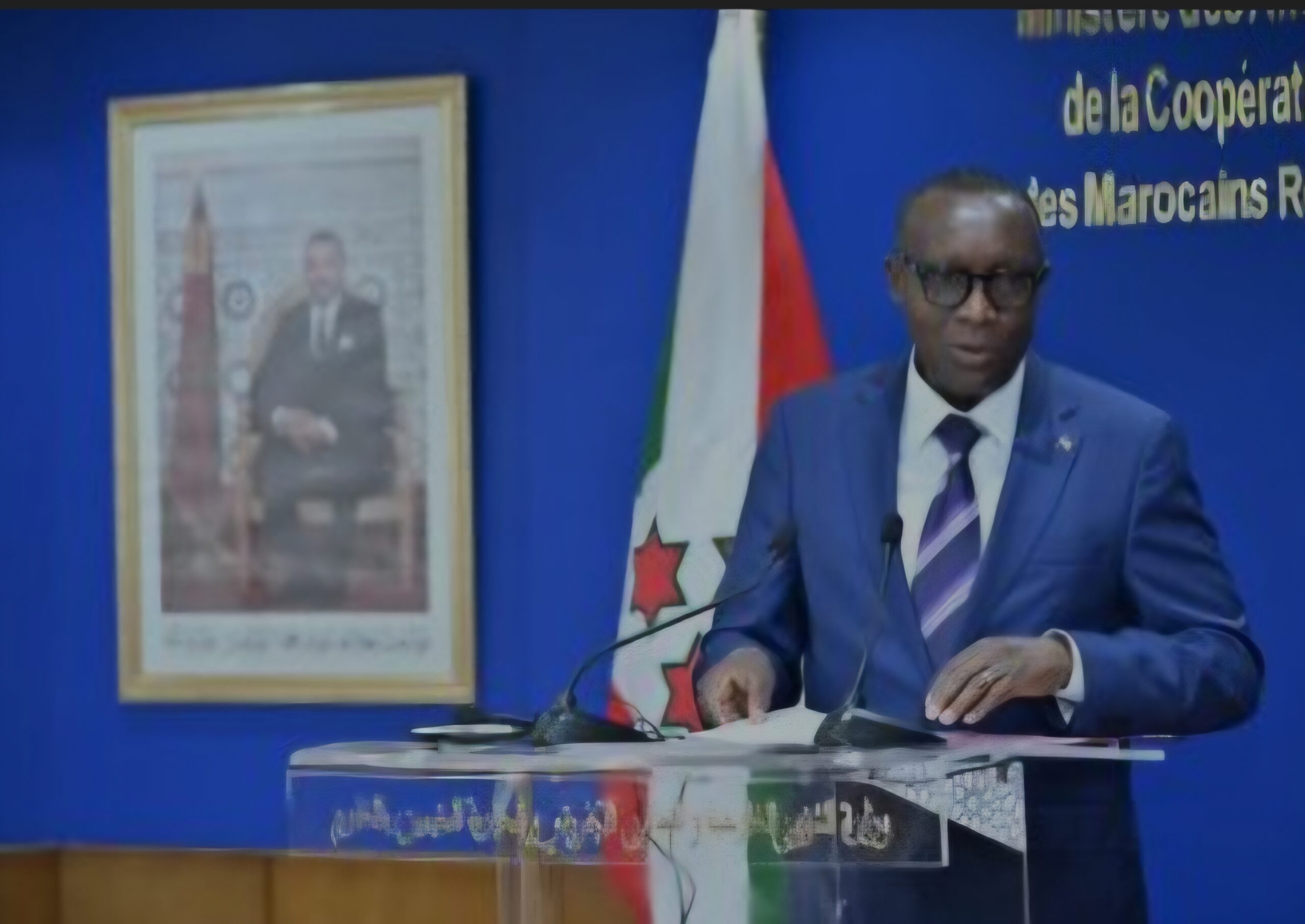
Burundi’s Minister of Foreign Affairs, Regional Integration and Development Cooperation, Édouard Bizimana, has praised Morocco’s growing diplomatic and developmental footprint across Africa, describing the Kingdom’s strategic initiatives as a reflection of the “enlightened and visionary leadership” of Mohammed VI.
Speaking during high-level bilateral talks in Rabat with Morocco’s Foreign Minister Nasser Bourita, Bizimana commended Rabat’s long-standing commitment to strengthening African integration, economic cooperation, and regional stability.
The meeting comes at a time when Africa is intensifying efforts to improve intra-continental trade and infrastructure under the African Union’s Agenda 2063, a blueprint designed to transform Africa into a global economic powerhouse by 2063.
Bizimana specifically highlighted the significance of Morocco’s Atlantic African States Process, an ambitious initiative launched by King Mohammed VI to transform the Atlantic coast of Africa into a strategic geoeconomic corridor aimed at enhancing trade, maritime security, and political cooperation.
The Atlantic African corridor spans over 23 coastal African countries, representing a combined population of more than 500 million people and contributing nearly 55% of Africa’s maritime trade potential, according to regional economic estimates.
Analysts say the initiative could significantly boost the implementation of the African Continental Free Trade Area, which is projected by the World Bank to lift 30 million Africans out of extreme poverty by 2035.
“This initiative positions the African Atlantic space as a major geostrategic framework capable of driving peace, stability, and shared prosperity across the continent,” Bizimana emphasized.
Sahel Access Initiative Gains Recognition
The Burundian diplomat also praised Morocco’s groundbreaking Royal Initiative for the Sahel, designed to provide landlocked Sahel nations access to the Atlantic Ocean through modern transport and communication infrastructure.
The Sahel region home to over 100 million people across countries such as Mali, Burkina Faso, Niger, and Chad has long faced economic isolation due to poor access to international trade routes.
According to the United Nations, over 80% of exports from landlocked African nations face elevated transport costs, often reducing competitiveness on the global market.
Experts believe Morocco’s initiative could help lower logistics costs by as much as 30%, improve regional supply chains, and strengthen economic resilience in one of Africa’s most fragile regions.
Morocco’s Growing Influence in Africa
Since returning to the African Union in 2017 after a 33-year absence, Morocco has intensified diplomatic and economic engagement across the continent.
The Kingdom has signed over 1,000 bilateral agreements with African countries in sectors including agriculture, banking, energy, telecommunications, and infrastructure.
Morocco has also emerged as one of Africa’s top investors, ranking among the leading intra-African investors, particularly in West and Central Africa, where Moroccan financial institutions and telecom companies have expanded aggressively.
Political observers say Burundi’s endorsement reflects growing continental confidence in Morocco’s role as a bridge between Africa, Europe, and the Atlantic world.
The Rabat meeting is expected to further strengthen bilateral relations between Morocco and Burundi while reinforcing broader efforts toward African unity, connectivity, and sustainable development.
As Africa continues to confront security threats, climate vulnerabilities, and infrastructure deficits, Morocco’s strategic initiatives are increasingly being viewed as a model for regional cooperation and long-term economic transformation.
