
By: Julius Konton
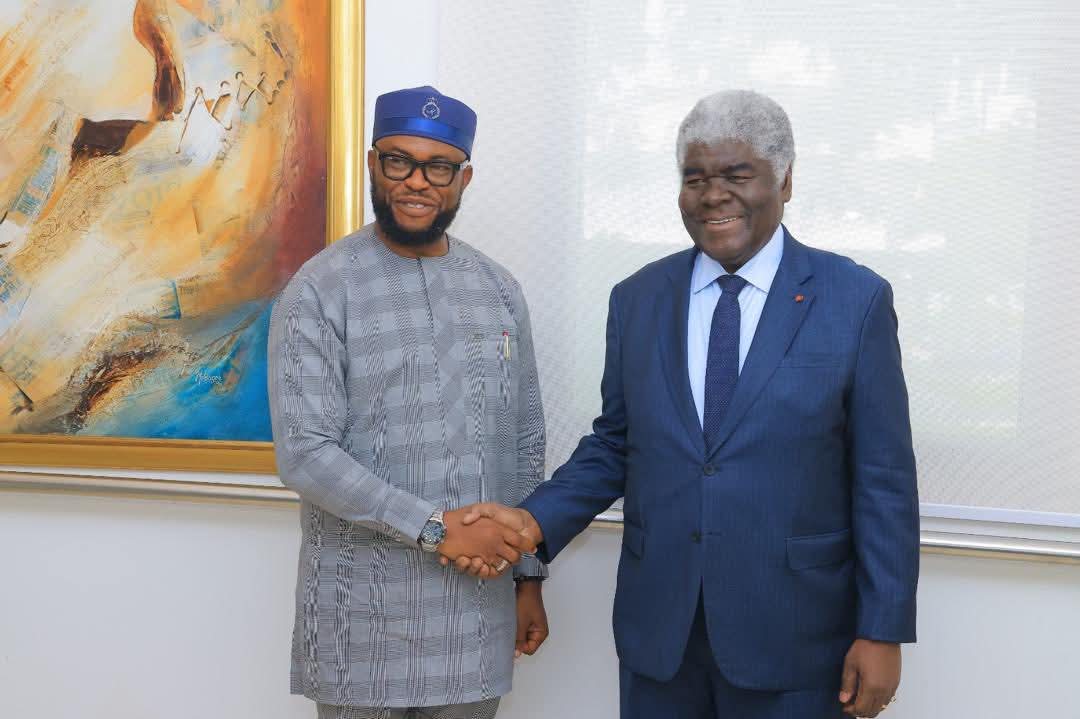
In a move reflecting renewed momentum in regional diplomacy and institutional cooperation in West Africa, Liberia’s Civil Service Agency (CSA) Director-General, Dr. Josiah F. Joekai Jr., has held high-level discussions with the Prime Minister of Côte d’Ivoire, Robert Beugré Mambé, conveying a message of goodwill and strategic cooperation from Liberian President Joseph Nyuma Boakai Sr.
The diplomatic engagement, held at the Office of the Prime Minister in Abidjan, formed part of Dr. Joekai’s official activities surrounding the 3rd High-Level Meeting of the Health and Public Service Network of Africa (HaPSNA), currently hosted by Côte d’Ivoire.
The meeting highlighted growing efforts by African governments to strengthen public administration, healthcare systems, and regional partnerships at a time when countries across the continent continue to confront shared governance and development challenges.
According to officials, Dr. Joekai delivered President Boakai’s warm greetings and message of solidarity to Ivorian President Alassane Dramane Ouattara through Prime Minister Mambé, emphasizing Liberia’s commitment to deepening bilateral relations and promoting stronger collaboration in human health, civil service governance, and sustainable development.
Speaking during the meeting, Dr. Joekai underscored Liberia’s appreciation for the longstanding friendship between the two neighboring nations and praised Côte d’Ivoire for hosting the continental policy gathering.
“I am truly honored to be here, Mr. Prime Minister. I bring warm greetings from His Excellency Joseph Nyuma Boakai Sr., President of the Republic of Liberia, who has asked me to convey his best wishes to his brother, His Excellency Alassane Dramane Ouattara, President of the Republic of Côte d’Ivoire,” Dr. Joekai stated.
He further commended the Government and people of Côte d’Ivoire for facilitating the 3rd High-Level Meeting of HaPSNA, describing the platform as critical for fostering innovative solutions to improve health systems and public-sector performance across Africa.
The discussions also reflected a broader regional reality: as West African nations pursue stronger economic and political integration, governments increasingly view effective public administration and resilient healthcare systems as central pillars for sustainable growth, national stability, and social development.
Liberia and Côte d’Ivoire share a long and interconnected history shaped by geography, trade, migration, diplomacy, and periods of regional insecurity.
Their relationship has become increasingly strategic in recent years, particularly through cross-border cooperation, peacebuilding efforts, infrastructure development, and regional economic integration within West Africa.
Prime Minister Mambé welcomed Dr. Joekai and reaffirmed Côte d’Ivoire’s commitment to strengthening ties with Liberia, stressing the importance of sustained collaboration in critical sectors including healthcare, governance reform, institutional strengthening, and public service delivery.
The Ivorian leader further assured the Liberian delegation that President Boakai’s message would be conveyed to President Ouattara while extending goodwill and best wishes to the Liberian Head of State.
Observers say the diplomatic engagement signals renewed emphasis by both governments on practical regional cooperation at a time when African states are seeking more efficient governance systems to respond to growing populations, youth unemployment, healthcare demands, and public-sector modernization.
The meeting also aligns with broader continental conversations surrounding workforce development and institutional reform, particularly in the health sector where African countries continue to face shortages of trained personnel and uneven access to healthcare services.
Dr. Joekai was accompanied during the high-level engagement by Willye Mai Tolbert King, Liberia’s Ambassador Extraordinary and Plenipotentiary to the Republic of Côte d’Ivoire.
Analysts note that beyond diplomatic symbolism, the discussions in Abidjan reinforce a growing recognition among West African leaders that stronger bilateral partnerships, effective institutions, and coordinated regional responses remain essential to addressing shared development priorities and improving the lives of millions across the sub-region.
