
By: Julius Konton
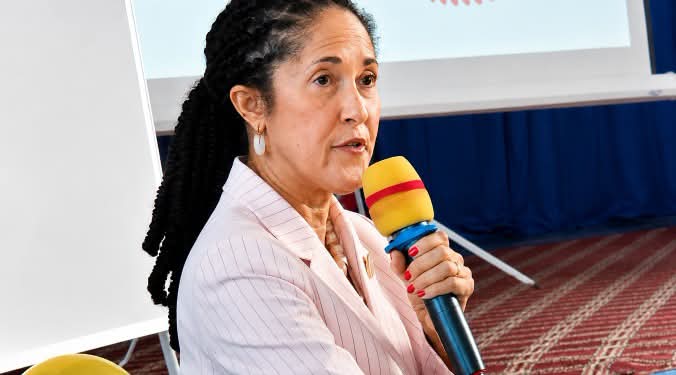
The University of Liberia has entered a potentially decisive phase in its long-running institutional crisis, with President Layli Maparyan announcing that the university will reopen on August 25, 2026, while unveiling a broad reform package aimed at addressing faculty and staff grievances over pensions, salary disparities, transportation, human-resource policies and deteriorating infrastructure.
In a strongly worded statement addressed to the University of Liberia Faculty and Staff Association (ULFASA) and the wider university community, Maparyan acknowledged that many of the complaints behind the current labor dispute are rooted in problems that have accumulated over decades.
She described the situation not simply as an employment dispute but as a crisis involving institutional dignity, equity, accountability and the future of Liberia’s national university.
“The University of Liberia has struggled with systemic challenges,” Maparyan said, acknowledging that conditions at the institution have at times been “deplorable.”
Her message, however, was accompanied by a firm directive: the university must reopen its doors on August 25, and faculty and staff are expected to return to work.
The declaration places the administration and university workers at a critical crossroads between longstanding demands for improved working conditions and the urgent need to protect students from further disruption to their academic programs.
The stakes are particularly high because the University of Liberia is not an ordinary higher-education institution.
Its institutional history stretches back to 1862, when it was founded as Liberia College.
It became a full university in 1951, making its institutional lineage more than 160 years old.
The university says its first building was supported through donations from the New York Colonization Society and the Trustees of Donations for Education in Liberia, with the cornerstone laid in 1858.
Liberia College opened with just seven students, according to the university’s historical account an extraordinarily small beginning compared with the scale and national responsibilities of the institution today.
The university now operates across multiple campuses, including Capitol Hill, Fendall, the Medical School campus and Starz-Sinje in Grand Cape Mount County.
Its historical significance is therefore difficult to separate from Liberia’s broader state-building project.
For generations, UL has supplied professionals to Liberia’s public service, education, legal, medical, business and political sectors.
Its present crisis consequently raises a larger question: Can Liberia’s flagship public university modernize its internal systems quickly enough to meet the demands of a 21st-century economy?
One of the most sensitive issues raised by faculty and staff concerns retirement security.
Maparyan announced that the University of Liberia, the National Social Security and Welfare Corporation (NASSCORP) and the Ministry of Finance and Development Planning (MFDP) reached a consensus on the amount required to bring the university into compliance with its outstanding social-security obligations.
According to the president, the Government of Liberia has agreed to pay the amount in full.
The announcement has potentially significant implications for retired and retiring university employees.
Maparyan said NASSCORP has consequently agreed to begin enrolling eligible UL retirees and providing the pensions to which they are legally entitled.
The pension issue is more than an accounting matter.
For employees who have spent decades in public service, unpaid or unresolved statutory contributions can translate into uncertainty at the point when income security becomes most important.
The proposed settlement therefore represents one of the administration’s most consequential commitments in its attempt to rebuild trust with university workers.
Another major grievance involves allegations of unequal compensation for employees performing comparable work.
Maparyan said the administration has accepted data supplied by the University of Liberia Staff Association and subsequently updated the analysis with newer payroll information.
The administration’s review, she said, identified the financial requirement necessary to move employees within the same job categories toward the highest modal salary applicable to their respective positions.
Rather than implementing an immediate adjustment outside the normal budget process, the administration intends to incorporate the proposed salary improvements into the FY2027 budget proposal.
The administration is also undertaking a role-documentation exercise expected to be completed by August 31, 2026.
Under the proposed framework, salary ranges would be tied to factors including:
Educational qualifications;
Professional credentials;
Seniority;
Job responsibilities;
Performance; and
Clearly documented position classifications.
The stated objective is to establish a system in which employees performing comparable work are treated consistently.
The administration also says faculty and staff representatives will have an opportunity to review and comment on the framework before implementation.
If successfully executed, the reform could represent a significant departure from discretionary or poorly documented compensation practices, one of the recurring governance problems confronting institutions where personnel structures have evolved over many years.
Transportation is another area in which the administration says government intervention is underway.
According to Maparyan, the Government of Liberia is procuring new buses for University of Liberia students, faculty and staff through the National Transportation Authority (NTA) following an initiative associated with President Joseph Nyuma Boakai and approval by the National Legislature.
The NTA has reportedly confirmed that the buses are 62-seater vehicles ordered from India, with delivery expected before the end of 2026.
The administration plans to conduct a transportation-demand survey in September to determine where students and employees are concentrated and use that information to design routes.
ULFA, ULSA and student leaders are expected to review the proposed routes before they are finalized.
The transportation component is significant because access to reliable commuting options can affect attendance, punctuality and the ability of students and employees to participate consistently in university activities.
The university’s institutional restructuring is also extending into human-resource management.
Maparyan said the UL Board of Trustees approved a new Human Resources Manual on July 15, 2026, with the document taking effect on August 1.
The new framework provides for annual internal reviews and comprehensive reviews every three years.
More significantly, the Board has commissioned independent first-year assessments by an external human-resources expert and the Civil Service Agency, according to the president.
The administration intends to distribute the manual electronically to employees through their official UL email accounts and provide hard copies to relevant administrative and representative bodies.
Beginning in August and continuing through December, the HR Office will conduct monthly training sessions on implementation.
From 2027, the workshops are expected to move to a semester-based schedule.
The administration also plans to establish a physical suggestion box outside the HR Office, creating an additional mechanism through which employees can submit concerns.
Perhaps the most visible element of the reform agenda is the proposed campus infrastructure program.
According to Maparyan, the FY2026 allocation includes US$6.3 million for university infrastructure.
Of that amount:
US$2.2 million is earmarked for construction of a new 25-classroom building at Fendall Campus.
The remaining US$4.1 million is intended for renovation and rehabilitation works at the Capitol Hill, Dogliotti and Starz-Sinje facilities.
The planned Fendall building is expected to serve a dual purpose.
In the short term, it would provide temporary “swing space” while major facilities including the A/B Building, Science College and Engineering College undergo renovation.
In the longer term, the facility would add permanent teaching capacity at one of UL’s most heavily used campuses.
Taken together, the proposed US$6.3 million infrastructure package would represent a substantial public investment in an institution that has long faced criticism over aging classrooms, laboratories and administrative facilities.
But the challenge will extend beyond construction.
For a university with more than a century and a half of history, modernization will require not only buildings but also sustainable maintenance systems, reliable financing, modern laboratories, digital infrastructure and stronger academic governance.
Despite announcing concessions and reforms, Maparyan’s message contains a hard line.
The Board of Trustees, she said, has directed that the university reopen on August 25, with faculty and staff expected to return to work.
That deadline is likely to become the most contentious component of the administration’s position.
For university employees, returning to work without immediate resolution of every grievance could be interpreted as a difficult compromise.
For the administration, however, continued closure risks inflicting further damage on students whose academic schedules have already been disrupted.
Maparyan therefore framed the return to work not as surrender by employees but as a commitment to students.
“Every day our gates remain closed, a young Liberian’s future is put on hold,” she argued.
That argument places students at the center of the dispute.
The consequences of prolonged disruption at a national university extend beyond delayed classes.
Academic interruptions can affect graduation timelines, professional licensing schedules, employment opportunities and the pipeline of skilled workers entering critical sectors.
Liberia already faces substantial human-capital constraints.
The country depends heavily on universities and professional institutions to produce teachers, nurses, doctors, lawyers, engineers, economists, administrators and other specialists needed to support economic transformation.
The University of Liberia’s own historical mission was built around precisely that national objective: creating the human capacity required for public and private life.
The contradiction is therefore stark.
A university created more than a century and a half ago to strengthen the republic’s human capital is now being forced to confront internal institutional weaknesses that could undermine the very mission for which it was established.
Perhaps the most politically sensitive section of Maparyan’s statement concerns institutional culture.
The president argued that UL must move away from what she characterized as an “anything goes” environment in which rules are treated as optional.
She linked weak institutional discipline to favoritism, inconsistent promotion practices, inefficient resource management and disruptions to the academic calendar.
Her proposed solution is a stronger culture of accountability.
The language represents more than an administrative reform agenda. It amounts to a challenge to the university community to reconsider the relationship between employee rights and institutional responsibilities.
The administration’s position is essentially that improved working conditions must be accompanied by improved performance, compliance and accountability.
That proposition, however, will require careful implementation.
A successful university cannot rely on discipline alone.
It must simultaneously demonstrate that rules are applied fairly, that promotions are merit-based, that salaries are transparent, and that administrators themselves are accountable.
Otherwise, calls for discipline could deepen rather than resolve existing mistrust.
Faith, Ethics and the Case for Order
Maparyan also invoked Liberia’s religious traditions to make a broader argument for institutional order.
Drawing on Christian, Islamic and Bahá’í teachings, she presented accountability and discipline as moral principles rather than merely administrative requirements.
Her Christian reference was to 1 Corinthians 14:40, emphasizing the principle that things should be done “decently and in order.”
She also invoked the Islamic concept of Muhasabah, or self-accountability, alongside the Qur’anic emphasis on justice.
From the Bahá’í tradition, she cited teachings emphasizing personal accountability and the relationship between liberty and responsible conduct.
For a religiously diverse society such as Liberia, the message was designed to connect institutional reform to values that transcend political and administrative disagreements.
Yet the central principle remains secular as well as spiritual: a public institution cannot function effectively without rules, accountability, transparency and mutual responsibility.
The University of Liberia’s present confrontation is ultimately larger than a dispute between administrators and employees.
It is a test of whether one of Liberia’s oldest national institutions can transition from decades of accumulated institutional problems toward a modern governance model.
The administration has placed several concrete commitments on the table:
NASSCORP: Government payment of the amount identified as necessary to bring UL into compliance.
Salary reform: A planned FY2027 adjustment aimed at addressing documented disparities.
Human resources: Implementation and independent review of a new HR Manual.
Transportation: Procurement of new 62-seat buses and development of data-driven routes.
Infrastructure: A reported US$6.3 million FY2026 campus investment, including a new 25-classroom Fendall facility.
Reopening: August 25, 2026.
The challenge now shifts from announcement to implementation.
For faculty and staff, the credibility of the administration will depend on whether promised reforms materialize within clearly defined timelines.
For the administration, credibility will also depend on whether employees return to their responsibilities and whether the university can enforce institutional standards consistently and fairly.
For students, the ultimate measure will be much simpler: Can the University of Liberia provide a stable academic calendar, functional classrooms, qualified instructors and a credible pathway to graduation?
Maparyan has described the moment as a turning point.
That description is not without historical weight.
The University of Liberia has survived political transitions, economic crises, civil conflict and generations of institutional change.
Its transformation from Liberia College in 1862 into a national university in 1951 reflects the country’s long-standing belief that education is central to national development.
Now, 164 years after the founding of Liberia College, the institution faces a different kind of challenge: rebuilding internal trust while modernizing its physical and administrative foundations.
The August 25 reopening will therefore be more than a date on the academic calendar.
It will be the first major test of whether the administration’s promises can translate into measurable reforms and whether faculty, staff, students and government can collectively move Liberia’s flagship university from confrontation toward stability.
The central question is no longer simply whether UL will reopen.
It is whether the reopening will mark the beginning of a genuinely different university.
As Maparyan put it, the objective is not to return to the old environment, but to build an institution where fairness, accountability, transparency, professional excellence and academic stability become the foundation of the University of Liberia’s next chapter.
