
By: Julius Konton
Morocco’s Foreign Minister, Nasser Bourita, has called for a broader approach to the Sahel that places economic development, regional connectivity and long-term prosperity alongside security, as Rabat promotes a Royal Initiative designed to facilitate Atlantic Ocean access for landlocked Sahelian countries.
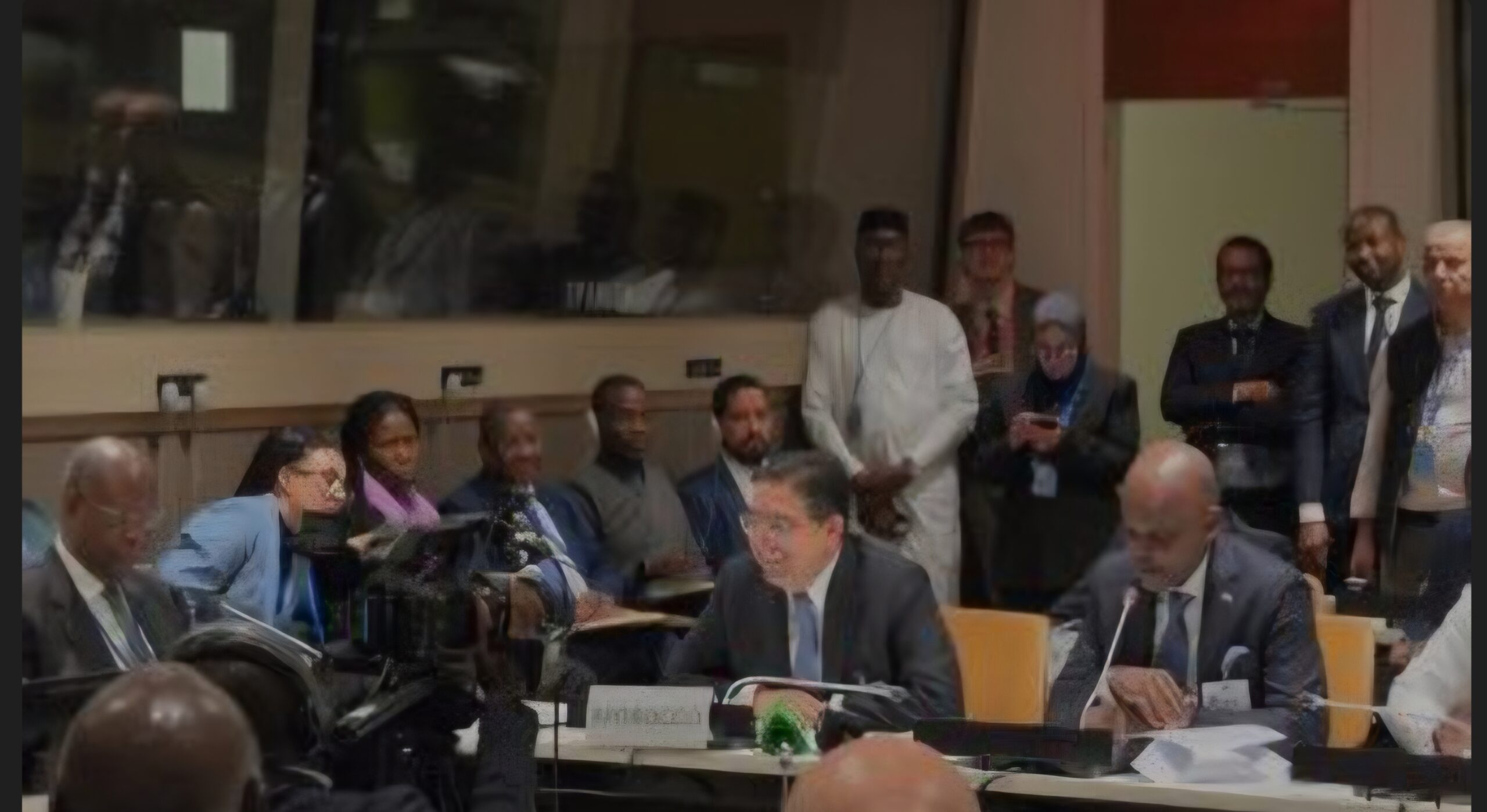
Speaking Friday in New York at a high-level event on “Security and Development in the Sahel” held on the sidelines of the 81st session of the United Nations General Assembly, Bourita said Morocco’s approach is guided by King Mohammed VI’s vision of strengthening security and development through cooperation, infrastructure and economic opportunity.
Bourita argued that the Sahel should not be defined exclusively by its security challenges.
The region, he said, possesses significant human and natural resources, including a predominantly young population and opportunities in agriculture, energy, mining and other productive sectors.
“The challenge is to turn this potential into concrete opportunities for the benefit of the peoples of the Sahel,” he said.
The development challenge is substantial. The World Bank has established new 2026–2031 partnership frameworks for Burkina Faso, Chad, Mali and Niger, focusing on job creation, particularly for young people and women, as well as infrastructure, agricultural productivity, human capital and private-sector development.
The institution has also emphasized the importance of cross-border economic opportunities in a region where fragile institutions, conflict and limited connectivity continue to constrain growth.
The United Nations has similarly identified the interaction between insecurity, climate pressures and economic vulnerability as a major challenge.
In the Liptako-Gourma area where Burkina Faso, Mali and Niger meet, temperatures are rising at roughly 1.5 times the global average, while recurrent drought, irregular rainfall and land degradation are putting additional pressure on agricultural and pastoral livelihoods.
The UN says these pressures can compound displacement, insecurity and economic vulnerability.
At the center of Morocco’s approach is the Royal Initiative to facilitate Atlantic access for Sahel countries, launched in 2023.
Morocco has presented the initiative as a framework for improving connectivity between landlocked Sahel economies and Atlantic ports, with the stated objective of supporting trade, investment, regional integration and economic transformation.
The initiative initially brought together Mali, Burkina Faso, Niger and Chad in ministerial coordination efforts. Morocco has subsequently continued consultations with the four countries.
In July 2026, Mali formally reaffirmed its commitment to the initiative and expressed its intention to begin progressively implementing projects proposed under the framework.
For the landlocked Sahel states, improved access to international maritime corridors could have implications for the movement of agricultural products, minerals, energy resources and manufactured goods.
However, translating the concept into an operational trade corridor would require substantial investment in roads, railways, logistics facilities, customs systems, border infrastructure and security along transit routes.
Morocco has framed the initiative as part of a broader South-South cooperation strategy, rather than simply a transportation project.
Its stated objective is to encourage structural economic transformation while strengthening integration between North, West and Sahelian Africa.
History, Trade and Human Connections
Bourita also placed the current initiative within a much longer historical relationship between Morocco and the Sahel.
He pointed to centuries of commercial, cultural and spiritual exchanges that connected communities across the Sahara.
Trans-Saharan trade historically linked North and West Africa through networks carrying commodities such as gold, salt and other goods, while Islamic scholarship and religious traditions moved along the same routes. Morocco’s southern and Saharan regions were consequently connected to commercial and intellectual networks extending deep into West Africa.
Bourita described these historical relationships as a “living bond” between peoples and argued that they provide a foundation for contemporary cooperation.
The minister said Morocco’s present-day engagement is based on solidarity, mutual respect and respect for national sovereignty and the choices of individual states.
He stressed that Rabat seeks cooperation while taking into account the priorities identified by its Sahelian partners.
Security and Development Intertwined
The economic dimension comes as the Sahel continues to confront serious security and humanitarian pressures.
Armed violence, displacement, food insecurity, climate shocks and weak infrastructure have created overlapping challenges across several countries.
International development institutions increasingly emphasize that security cannot be separated from economic opportunity.
The World Bank’s 2026–2031 framework for Burkina Faso, Chad, Mali and Niger specifically combines job creation, infrastructure, agricultural productivity and private-sector development with approaches addressing fragility and conflict.
Morocco’s position therefore places economic connectivity alongside traditional security cooperation.
Rabat argues that creating legitimate economic opportunities for young populations can contribute to greater resilience, while improved infrastructure can strengthen trade and regional integration.
The approach also coincides with Morocco’s wider effort to deepen its engagement with Atlantic Africa.
The African Atlantic States Process, launched in Rabat in 2022, has developed cooperation mechanisms covering political dialogue, maritime security, blue economy, connectivity, energy and protection of marine resources.
The Sahel initiative forms part of a wider Moroccan diplomatic and economic engagement with Africa under King Mohammed VI.
Moroccan officials have repeatedly presented the country’s African policy as one centered on South-South cooperation, infrastructure and mutually beneficial economic partnerships.
Morocco’s foreign ministry says the Atlantic initiative is intended to provide landlocked Sahel countries with new opportunities for regional integration and access to global markets. In December 2023, ministers from Mali, Niger, Burkina Faso and Chad participated in a coordination meeting in Marrakech focused on the initiative.
The initiative has also received renewed political backing from participating Sahel governments. In September 2025, foreign ministers from Niger, Mali, Burkina Faso and Chad reaffirmed their commitment to the Royal Initiative following discussions in New York.
For Morocco, the challenge now moves from diplomatic vision to implementation.
Turning Atlantic access into a functioning economic corridor will depend on financing, infrastructure, political coordination, border management and sustained security along multiple national territories.
Bourita nevertheless presented the initiative as evidence of Rabat’s longer-term commitment to the region.
He described Morocco’s relationship with the Sahel not merely as a conventional partnership, but as a commitment “deeply rooted in history, nourished by bonds of brotherhood and oriented towards a shared future.”
The message delivered in New York was therefore broader than a call for security cooperation: Morocco is positioning connectivity, trade, investment, infrastructure and human development as integral components of a long-term strategy for a more integrated and prosperous Sahel.
