
By: Julius Konton
King Mohammed VI has reaffirmed Morocco’s ambition to become one of Africa’s leading economic and industrial powers, highlighting nearly three decades of political stability, economic transformation and international diplomacy during his address marking the 27th anniversary of his accession to the throne.
The annual Throne Day celebration, one of Morocco’s most significant national events, commemorates King Mohammed VI’s accession on July 30, 1999, following the death of his father, the late King Hassan II, who ruled the North African kingdom for 38 years.
Since assuming the throne, Mohammed VI has overseen sweeping reforms aimed at modernizing the country’s economy, expanding infrastructure, improving social welfare and strengthening Morocco’s regional and international influence.
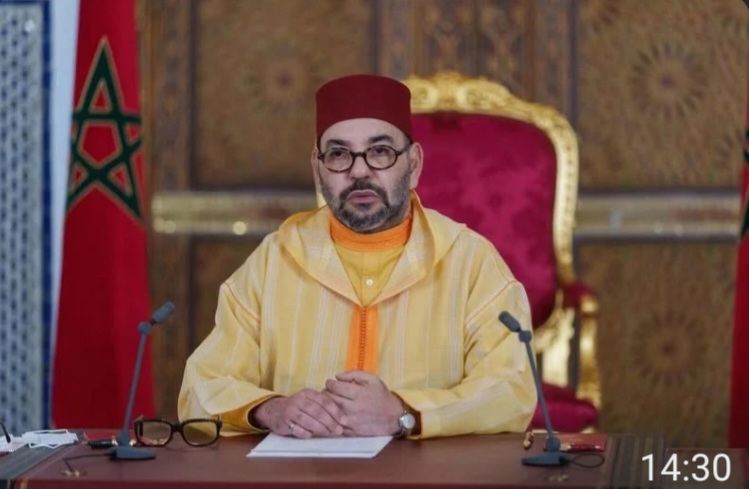
Addressing the nation Wednesday evening, the monarch reflected on what he described as nearly three decades of dedicated public service, emphasizing that his mission has always been centered on improving the lives of Moroccans rather than seeking personal recognition.
“I have never sought personal glory or recognition.
All that has ever mattered to me is fulfilling my duty, serving the Moroccan people and enabling every citizen to live in freedom and dignity,” the King declared.
King Mohammed VI described security, political stability and institutional continuity as Morocco’s greatest strategic assets, particularly at a time when many regions continue to grapple with conflict, political instability and economic uncertainty.
He noted that Morocco’s constitutional institutions have enabled the Kingdom to withstand global shocks while maintaining investor confidence and ensuring sustainable development.
According to the King, Morocco’s governance model, built on strategic planning, accountability, entrepreneurship and institutional resilience has positioned the country as one of Africa’s most stable investment destinations.
The monarch also praised Moroccan institutions for their effective response to recent natural disasters, including severe flooding in parts of western and northern Morocco, highlighting the country’s growing capacity to manage emergencies while maintaining social and economic stability.
The King announced that Morocco’s economy expanded by approximately 4.9 percent in 2025, with expectations that growth will remain at or above that level in 2026 despite continued global economic headwinds.
The positive outlook has been supported by favorable rainfall, stronger agricultural production and sustained investment across manufacturing, tourism and financial services.
Agriculture remains one of Morocco’s largest employers, contributing significantly to national food security and rural livelihoods.
Improved rainfall during the latest farming season has strengthened both agricultural output and water security after years of drought concerns.
One of the most notable achievements highlighted in the address was Morocco’s emergence as Africa’s largest automobile exporter.
The Kingdom now possesses an annual production capacity approaching one million vehicles, making it one of the continent’s fastest-growing automotive manufacturing hubs.
King Mohammed VI noted that exports from the automotive and aviation industries now account for more than 40 percent of Morocco’s total exports, surpassing even the country’s historically dominant phosphate sector.
Major international manufacturers have increasingly selected Morocco as a regional production base due to its strategic geographic location, modern transport infrastructure, competitive workforce and extensive trade agreements with Europe, Africa and the Middle East.
The King also announced continued expansion of Morocco’s aerospace industry, revealing that newly inaugurated factories have positioned the country among the select group of nations capable of producing advanced aircraft engines and landing gear systems.
As nations worldwide accelerate the transition toward cleaner energy, Morocco is investing heavily in renewable energy and green industrialization.
King Mohammed VI highlighted the launch of the “Morocco Offer” Green Hydrogen Initiative, which seeks to position the Kingdom as a major producer and exporter of green hydrogen and other low-carbon energy products.
The initiative complements Morocco’s long-standing investments in solar and wind power, including some of Africa’s largest renewable energy projects.
The monarch stressed that renewable energy has become a cornerstone of Morocco’s national energy security strategy while simultaneously attracting industries seeking competitive, carbon-free electricity.
He also announced continued efforts to develop integrated electric battery manufacturing, positioning Morocco within global supply chains for electric vehicles and emerging clean technologies.
Against a backdrop of rising global protectionism and supply chain disruptions, King Mohammed VI emphasized the importance of strengthening Morocco’s economic sovereignty.
He revealed that domestic food and pharmaceutical industries now satisfy approximately 80 percent of national demand, significantly reducing dependence on imports.
The Kingdom is also investing in defense manufacturing, cybersecurity and advanced technologies to reinforce national security while creating new opportunities for industrial development and employment.
Tourism, one of Morocco’s largest sources of foreign exchange, achieved another record in 2025, welcoming nearly 20 million visitors, including members of the Moroccan diaspora.
The milestone reflects Morocco’s growing reputation as one of Africa’s premier tourist destinations, renowned for its historic cities, Atlantic and Mediterranean coastlines, desert landscapes and rich cultural heritage.
Industry analysts say continued investment in airports, transportation networks and hospitality infrastructure has helped drive sustained tourism growth despite global economic challenges.
Beyond economic expansion, King Mohammed VI reaffirmed his government’s commitment to inclusive development and social justice.
He highlighted ongoing implementation of universal social protection programs, integrated local development initiatives and investments designed to reduce regional disparities and improve living standards nationwide.
The monarch also urged Morocco’s banking and financial institutions to expand access to financing for small and medium-sized enterprises (SMEs), innovation, manufacturing and export-oriented businesses.
He called for greater mobilization of domestic savings and deeper financial markets to support the country’s next phase of economic transformation.
Morocco’s Expanding Global Influence
On the diplomatic front, King Mohammed VI said Morocco has become a respected and influential international partner by pursuing balanced foreign relations and diversified strategic partnerships.
The Kingdom continues to strengthen cooperation across Africa, Europe, the Middle East and beyond through trade, investment, renewable energy, migration cooperation and regional security initiatives.
According to the King, Morocco’s expanding international partnerships reflect the country’s growing credibility and its ability to contribute constructively to global and regional affairs.
With legislative elections approaching and a new government expected to be formed afterward, King Mohammed VI announced plans to launch a new phase of national development focused on consolidating past achievements while accelerating reforms and major infrastructure projects.
He concluded by paying tribute to Morocco’s Royal Armed Forces, security institutions and emergency services for safeguarding national unity and stability, while honoring the legacy of his late father, King Hassan II, and grandfather, King Mohammed V, whose leadership laid the foundations of modern Morocco.
As Morocco celebrates 27 years under King Mohammed VI, the Kingdom presents itself as a nation seeking to balance economic modernization, industrial competitiveness, social inclusion and diplomatic engagement while reinforcing its position as one of Africa’s fastest-growing and most influential economies.
