
By: Julius Konton
Morocco has formally expressed its support for U.S.-led efforts to stabilize and reconstruct the Gaza Strip, positioning the initiative as a critical step toward reviving a comprehensive Middle East peace process based on the two-state solution.
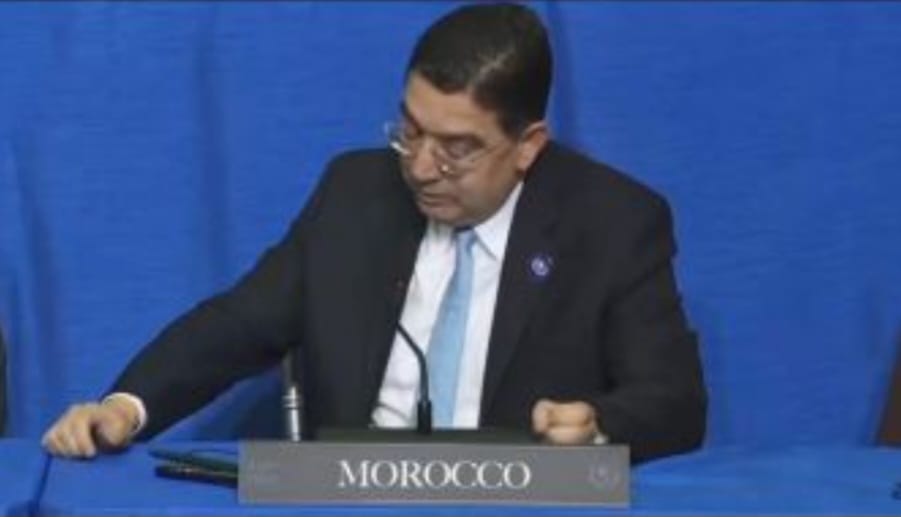
Speaking on Thursday in Washington, Moroccan Minister of Foreign Affairs, African Cooperation and Moroccan Expatriates Nasser Bourita said that Mohammed VI, Chairman of the Al-Quds Committee, supports the actions of U.S.
President Donald Trump aimed at ending hostilities in Gaza and laying the groundwork for long-term peace.
Bourita made the remarks during the inaugural meeting of the Board of Peace, a newly established international platform focused on post-conflict stabilization, humanitarian recovery, and political reconciliation in the Middle East.
Gaza: From War Zone to Reconstruction Effort
According to Moroccan officials, President Trump’s peace initiative succeeded in securing a ceasefire that halted what international organizations have described as one of the most destructive conflicts in Gaza’s modern history.
Prior to the truce, United Nations estimates indicated that more than 60 percent of Gaza’s housing stock had been damaged or destroyed, with over 1.7 million people nearly 80 percent of the population displaced amid shortages of food, water, and medical supplies.
“The plan has stopped the bloodshed, saved civilian lives, and introduced a pragmatic and forward-looking vision for Gaza’s reconstruction,” Bourita said, emphasizing that stability is a prerequisite for political progress.
Morocco’s Role: Security, Health, and Coexistence
Acting on the High Instructions of King Mohammed VI, Morocco has pledged to actively support the Board of Peace’s efforts, particularly in security sector coordination, healthcare rehabilitation, and the promotion of tolerance and coexistence areas Rabat considers essential for preventing renewed cycles of violence.
Morocco has a longstanding record of engagement on the Palestinian issue, including humanitarian assistance to Gaza, support for Jerusalem’s religious heritage, and mediation initiatives through multilateral and Islamic cooperation frameworks.
Phase II and the Political Horizon
Bourita stressed that the success of peace efforts depends on the full implementation of Phase II of President Trump’s plan, which focuses on governance, reconstruction financing, and political normalization.
He also underscored the need to preserve stability in the West Bank, warning that renewed unrest there could undermine progress in Gaza.
Crucially, Morocco called for ensuring Palestinian ownership of the peace process, led by their legitimate institutions, as a cornerstone of any sustainable settlement.
“The stabilization and reconstruction of Gaza must open the door to a genuine peace process,” Bourita said, “one that culminates in a negotiated two-state solution guaranteeing security and dignity for both Palestinians and Israelis.”
High-Level International Participation
The inaugural Board of Peace meeting was chaired by President Trump and attended by U.S. Vice President J. D. Vance and Secretary of State Marco Rubio, alongside heads of state, heads of government, and foreign ministers from nearly 50 countries.
Held in Washington, D.C., the gathering reflected growing international consensus that Gaza’s recovery is not only a humanitarian imperative but also a strategic gateway to reviving stalled peace negotiations across the region.
A Historic Moment for Diplomacy
Analysts note that Morocco’s endorsement adds significant diplomatic weight, given Rabat’s unique position as a U.S. ally, a regional mediator, and a leading voice on Jerusalem-related issues.
Since the Oslo Accords of the 1990s, multiple peace initiatives have faltered, often collapsing under renewed violence or political deadlock.
Moroccan officials argue that linking reconstruction, governance reform, and political dialogue as envisioned in the current plan offers a rare opportunity to break that cycle.
As international attention shifts from ceasefire maintenance to rebuilding and reconciliation, Morocco’s message from Washington was clear: peace in Gaza must be the foundation, not the end point, of a broader and lasting Middle East settlement
