
By: Staff Writer
In a dramatic twist that has reignited Liberia’s long-running debate over corruption, accountability, and political justice, former Executive Mansion Chief of Protocol Nora Finda Bundoo has been remanded to the Monrovia Central Prison after Criminal Court “C” rejected her proposed bail securities and imposed an extraordinary US$8 million criminal appearance bond.
The decision came just days after Bundoo told mourners at her father’s funeral that divine intervention had protected her from imprisonment despite what she described as the hopes of political opponents seeking her downfall.
But on Tuesday, the symbolism changed dramatically.
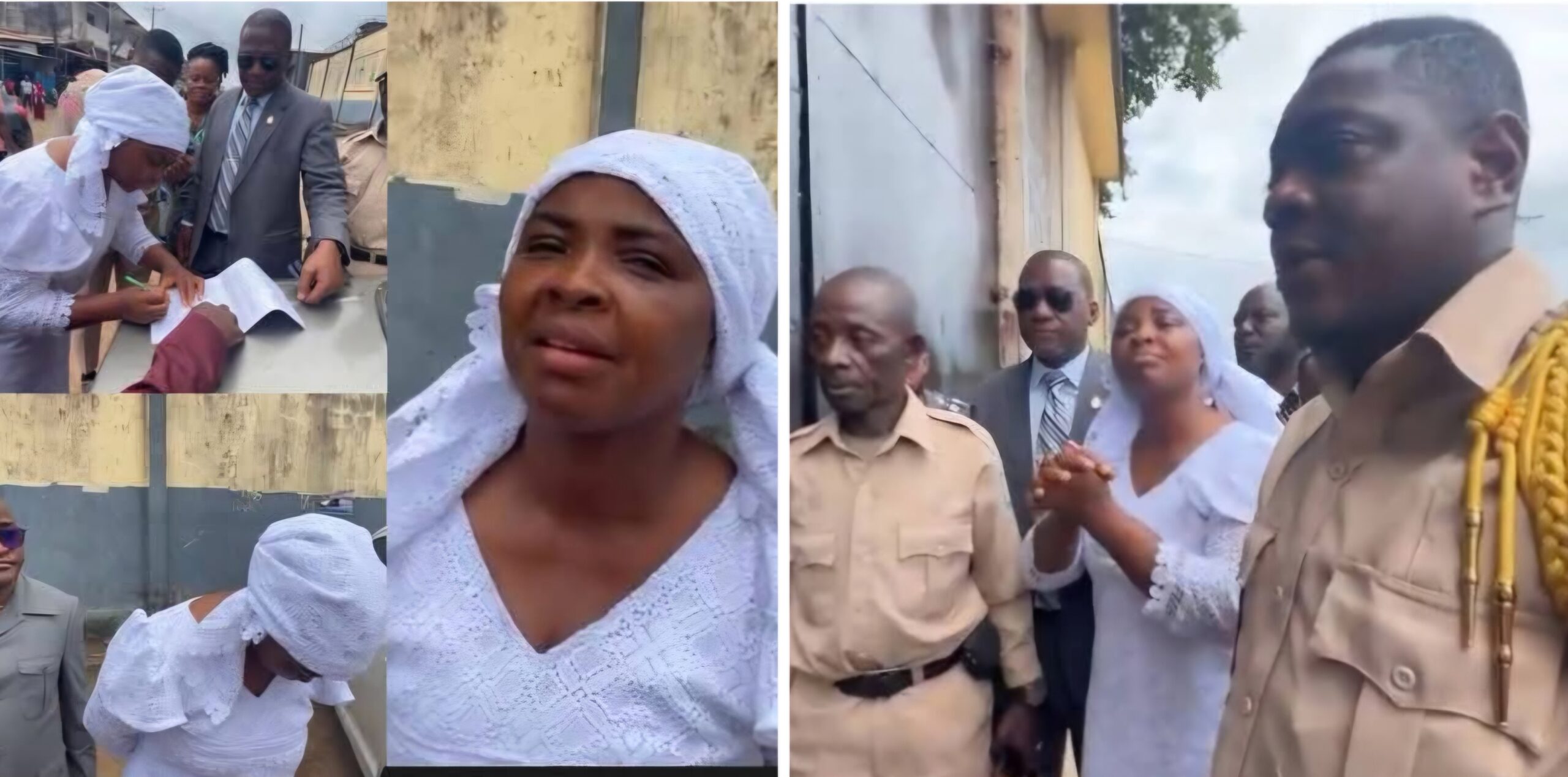
The former senior aide to ex-President George Manneh Weah passed through the gates of South Beach Prison not as a convicted person, but as an indicted public official awaiting trial in one of Liberia’s most closely watched corruption cases.
The case has become a major test of Liberia’s post-war governance reforms, raising questions about whether the justice system is strengthening accountability or imposing excessive financial barriers on defendants facing politically sensitive charges.
$8 Million Bail: A Record Bond or a Necessary Safeguard?
Judge Ousman F. Feika of Criminal Court “C” ruled that the properties presented by Bundoo’s defense team failed to meet Liberia’s legal requirements for criminal appearance bonds.
The court ordered that Bundoo remain incarcerated unless she secures an US$8 million bond backed by legally acceptable, unencumbered property.
The amount ranks among the highest bail requirements imposed in a corruption-related prosecution in Liberia’s recent history.
The decision stems from allegations surrounding the controversial “Gracious Ride” corruption case, in which prosecutors accuse former officials and business entities of diverting and laundering millions of dollars in public resources.
According to the indictment, more than US$6.7 million and L$845 million (approximately several million additional U.S. dollars depending on exchange rates) were allegedly misused between 2020 and 2023 through transactions involving Anita Group of Companies and Gracious Ride.
Bundoo has denied wrongdoing and maintains her innocence, consistent with Liberia’s constitutional principle that every accused person is presumed innocent until proven guilty.
THE PROPERTY CONTROVERSY: One Asset, 20 Court Cases, Millions in Liabilities
At the center of the bail dispute was property submitted by Bundoo’s surety, John Moses Gbetee.
The court found that the property, valued at approximately US$350,000, was already tied to numerous legal obligations.
Court records reportedly showed that the same property had previously been pledged in 20 separate criminal and civil matters, representing total bond commitments of about US$2.42 million.
The court concluded that the existing obligations were nearly seven times greater than the property’s assessed value, making it legally insufficient as security.
Judge Feika cited Chapter 63.2(2) of Liberia’s Civil Procedure Law, which requires property used for criminal bonds to be free from encumbrances and sufficient in value to guarantee a defendant’s appearance in court.
The judge warned that allowing repeatedly pledged property to serve as security could weaken the credibility of Liberia’s bail system.
Defense Calls Bail “Excessive” as Political Debate Intensifies
Bundoo’s legal team challenged the court’s decision, arguing that the bail amount was disproportionate and placed an unfair burden on their client.
Defense attorney Abraham Wade Simpson argued that Bundoo was being required to shoulder an extraordinary financial responsibility compared to other defendants in the same case.
He noted that other accused persons have already posted bonds totaling approximately US$2.3 million, arguing that demanding an additional US$8 million bond from Bundoo alone was excessive.
The defense has announced plans to seek appellate review while continuing efforts to secure an acceptable bond.
A Former Presidential Insider Now at the Center of Liberia’s Accountability Debate
Bundoo’s fall from one of Liberia’s most influential government positions to a prison cell reflects a broader political moment in Liberia, where corruption investigations involving former officials have become a central issue in national debate.
During the administration of former President George Weah (2018–2024), Liberia faced increasing domestic and international pressure to strengthen anti-corruption measures.
The United States government, international financial institutions, and local civil society organizations repeatedly emphasized the importance of transparency, public financial management reforms, and accountability in a country recovering from years of conflict.
Liberia’s public sector remains heavily dependent on donor confidence and international partnerships.
According to World Bank estimates, Liberia continues to face significant development challenges, with poverty affecting a large portion of the population despite economic reforms and growth efforts.
Against this backdrop, high-profile corruption prosecutions have become closely linked to public demands for stronger governance.
Justice or Political Retribution? Liberia Faces Another Test
The imprisonment of Bundoo has already triggered competing narratives.
Supporters of Liberia’s anti-corruption drive view the ruling as evidence that powerful officials are no longer beyond legal scrutiny.
Critics, however, question whether extremely high bail requirements risk becoming punitive before a defendant has been convicted.
Legal analysts note that while bail exists to ensure court appearance not to punish an accused person, courts must also consider the seriousness of alleged offenses, potential penalties, and the risk of flight.
The Bundoo case now sits at the intersection of these competing principles: the demand for accountability and the constitutional protection of individual rights.
‘I Came on My Own’: Bundoo’s Quiet Surrender
Unlike many defendants who are forcibly arrested, Bundoo voluntarily surrendered after her lawyers informed court authorities of her decision to comply with the order.
Wearing white clothing, she briefly addressed reporters before entering prison.
“All glory belongs to God. I came on my own,” she said.
Moments later, sheriffs executed the court order, and the former presidential aide entered the prison accompanied by her legal team.
A Political Era Under Judicial Spotlight
Bundoo’s incarceration adds another chapter to Liberia’s continuing struggle to confront corruption allegations involving former government officials.
The case will now move beyond the courtroom of public opinion into legal proceedings where prosecutors must prove their allegations and the defense will attempt to challenge the evidence.
For now, Nora Finda Bundoo remains behind prison walls not because she has been convicted, but because the court determined that the security offered for her temporary release did not meet Liberia’s legal threshold.
Her next battle is no longer political.
It is a legal fight over an US$8 million bond, a corruption indictment, and the future of one of the most consequential accountability cases in post-war Liberia.
