


By: Akoi M. Baysah, Jr.
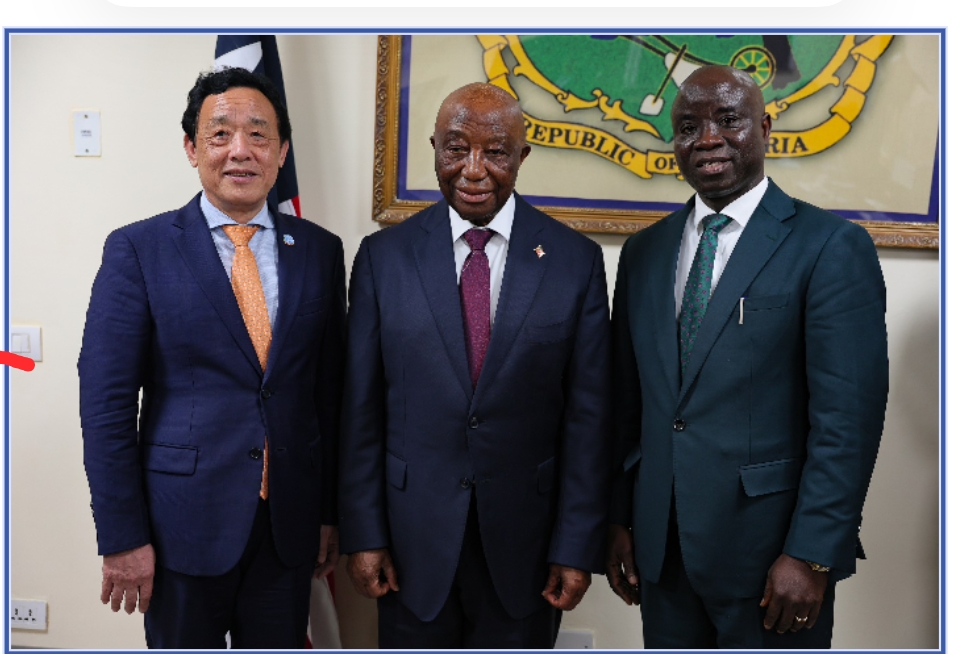
The Director-General of the Food and Agriculture Organization of the United Nations (FAO), Qu Dongyu, has concluded a two-day high-level mission to Liberia, marking a significant step forward in strengthening cooperation to transform the country’s agrifood systems through climate-resilient, market-oriented and evidence-based approaches.
During the visit, Dongyu met with President Joseph Nyuma Boakai, Minister of Agriculture J. Alexander Nuetah, Minister of Foreign Affairs Sara Beysolow Nyanti, and senior officials from national institutions overseeing forestry, environmental protection, fisheries and aquaculture.
He also held discussions with the United Nations Resident Coordinator in Liberia, underscoring a coordinated UN approach to supporting national development priorities.
The FAO Director-General highlighted Liberia’s substantial agricultural potential, noting its 1.6 million hectares of arable land and abundant rainfall as key assets for boosting food security, improving nutrition, creating rural employment and driving sustainable economic growth.
“This is a moment to develop smart and efficient agriculture through an integrated and holistic approach guided by the Four Betters, better production, better nutrition, a better environment and a better life,” Dongyu said during his meeting with President Boakai.
A major outcome of the mission was the launch of Liberia’s participation in FAO’s One Country One Priority Product (OCOP) Initiative, with Coffee Liberica selected as the country’s priority product.
Coffee Liberica, a rare and indigenous coffee species, is closely tied to Liberia’s national heritage and is recognized for its climate resilience and growing appeal in the global specialty coffee market.
Through the OCOP initiative, FAO will support the revitalization of Liberia’s coffee sector by improving productivity and quality, promoting sustainable agroforestry practices, strengthening value chains and developing a premium, traceable Liberian coffee brand.
The initiative is expected to generate decent employment and income opportunities, particularly for youth, women and rural communities.
The Director-General also launched Liberia’s participation in FAO’s Hand-in-Hand Initiative, a data-driven investment platform that uses advanced geospatial analysis and precision planning tools.
The initiative will help identify priority value chains—such as rice, maize, cassava and cocoa—as well as infrastructure gaps and vulnerable farming communities, guiding targeted investments with high socio-economic and environmental returns.
“I am delighted to share experience with a country endowed with immense agricultural potential and unique agricultural products,” Dongyu said.
Supporting National Development Goals FAO said both initiatives are fully aligned with Liberia’s national development agenda, contributing to agricultural and agro-industrial transformation, value chain development, forest restoration, climate action and the reduction of post-harvest losses.
Liberia was also highlighted as an emerging destination for responsible private sector investment in agriculture.
FAO reaffirmed its commitment to working closely with the Government of Liberia, development partners and the private sector to co-create, co-invest and deliver tangible actions that advance sustainable agrifood systems and inclusive economic growth.


