


By: Julius Konton
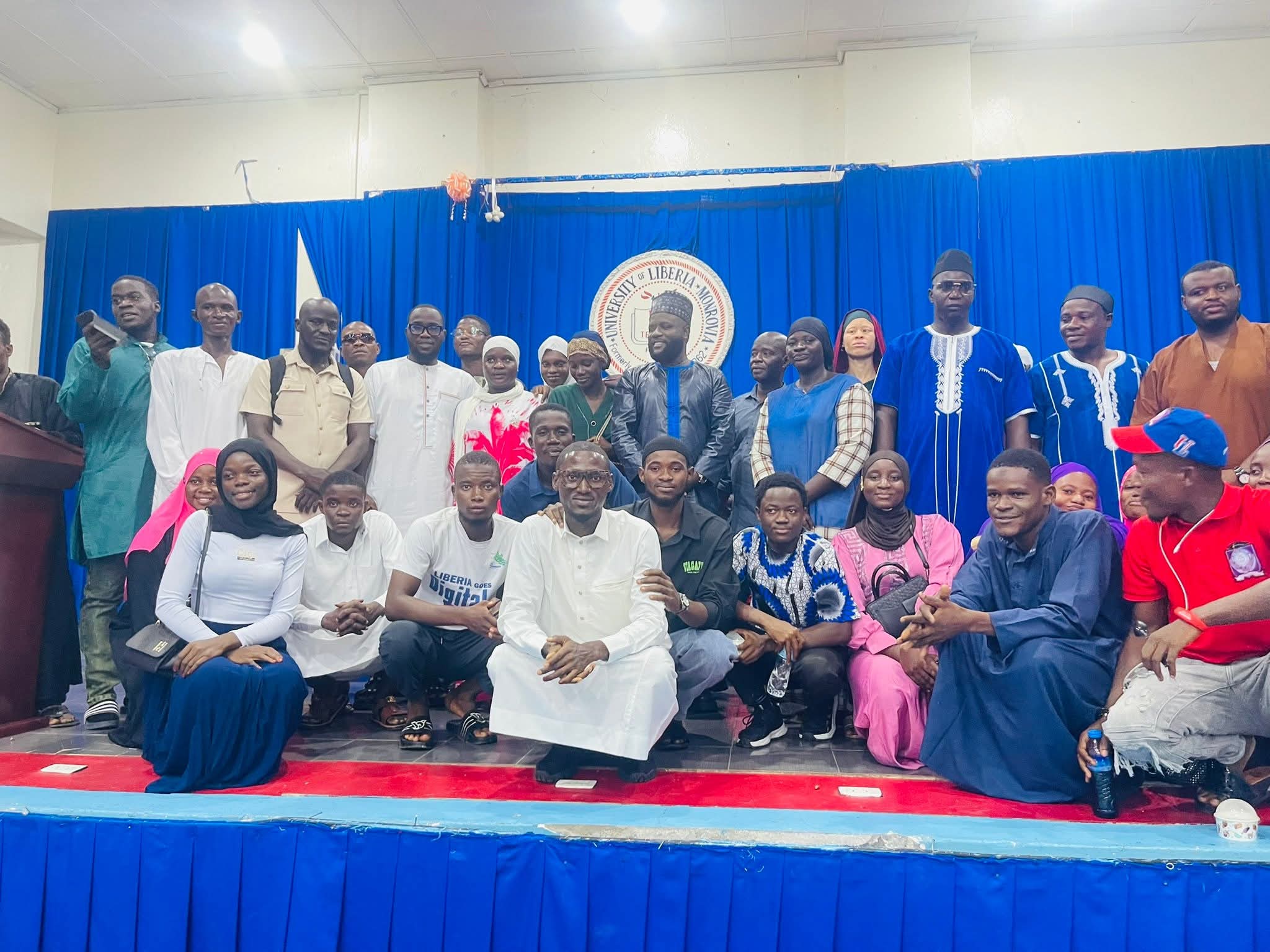
In a compelling blend of spirituality, youth engagement, and national reflection, Liberia’s Managing Director of the National Port Authority (NPA), Sekou A. M. Dukuly, delivered a thought-provoking address at the 2026 Iftar hosted by the University of Liberia Muslim Students Association.
Held at the University of Liberia Auditorium on Capitol Hill, the gathering brought together students, religious leaders, and government officials in a symbolic moment of unity during the holy month of Ramadan, a period observed by over 1.9 billion Muslims globally, according to estimates from the Pew Research Center.
A Spiritual Message With National Undertones
Opening with the traditional Islamic greeting, Dukuly framed Ramadan as a period not only of fasting but of deep moral recalibration.
Drawing from the Qur’an, he emphasized the concept of taqwa—God-consciousness as the central objective of fasting.
“Fasting has been prescribed… that you may attain taqwa,” he quoted, referencing Surah Al-Baqarah (2:183).
His remarks underscored the intersection between faith and public responsibility, suggesting that spiritual discipline has tangible implications for governance, leadership, and national cohesion.
Youth As Catalyst For Liberia’s Future
Addressing the student audience, Dukuly delivered a pointed message: education alone is insufficient without character.
In a country where over 60% of the population is under the age of 25, according to United Nations demographic data, the role of youth in shaping Liberia’s future remains pivotal.
He urged students to embody integrity, service, and ethical leadership:
“Your education is important, but your character and your faith are even more important.”
This message resonates in a broader African context, where youth unemployment and governance challenges continue to test the resilience of emerging leaders.
Liberia itself has faced persistent socio-economic hurdles since the end of its civil wars in 2003, making moral leadership a recurring national theme.
Unity: A Religious Principle and National Necessity
Central to Dukuly’s address was the theme of unity both within the Islamic community and across Liberia’s diverse society. Quoting Surah Aal Imran (3:103), he called on believers to “hold firmly to the rope of Allah… and not become divided.”
This message carries weight in Liberia, a nation of approximately 5.5 million people, characterized by religious diversity roughly 85% Christian and 12–15% Muslim, based on national estimates.
Historically, Liberia has maintained relative religious harmony, often cited as a model for interfaith coexistence in West Africa.
Dukuly reinforced this tradition, urging peaceful coexistence and reconciliation:
“Indeed the believers are but brothers… so make peace between your brothers,” he added, citing Surah Al-Hujurat (49:10).
Religion and Governance : A Delicate Balance
In a notable political undertone, Dukuly extended prayers for Liberia’s leadership, including President Joseph Nyuma Boakai Sr., calling for wisdom and guidance in national governance.
While largely ceremonial, such statements reflect the enduring influence of religion in Liberia’s public life, where political leaders frequently engage faith-based communities.
Analysts note that this intersection can foster unity but also requires careful navigation to maintain inclusivity in a pluralistic society.
Iftar AS A Symbol of Social Cohesion
The ULMSA Iftar itself represents more than a religious ritual.
Across Muslim communities worldwide, communal breaking of the fast serves as a platform for dialogue, charity, and solidarity.
In Liberia, student-led initiatives like ULMSA play a growing role in promoting interfaith understanding and youth engagement.
Events like these also highlight the increasing visibility of Muslim youth in Liberia’s academic and civic spaces, an evolution from decades past when such representation was less pronounced.
Broader Context : Ramadan In A Globalized World
Globally, Ramadan has evolved into both a deeply spiritual observance and a socio-economic phenomenon.
From increased charitable giving estimated in the billions of dollars annually to shifts in work and consumption patterns across Muslim-majority countries, the holy month continues to shape societies in profound ways.
In Liberia, while the Muslim population remains a minority, Ramadan’s values of discipline, generosity, and unity increasingly resonate beyond religious boundaries, reinforcing national ideals of peace and coexistence.
A Call For Moral Renewal
Dukuly concluded his address with a prayer for national progress, urging Liberians to embrace unity and ethical conduct as pillars of development.
“May this Ramadan renew our faith and bring blessings to all our families and communities.”
Faith As A Framework For Development
Dukuly’s remarks reflect a broader trend across Africa, where leaders increasingly invoke religious values to address governance challenges.
While critics argue that rhetoric must translate into policy, supporters contend that moral frameworks are essential in rebuilding trust in public institutions.
In Liberia’s case still navigating post-conflict recovery, economic reform, and youth empowerment the fusion of faith, education, and leadership may prove to be a powerful narrative for national transformation.
The 2026 ULMSA Iftar was more than a ceremonial gathering; it was a microcosm of Liberia’s ongoing dialogue between faith, youth, and nation-building.
As the country looks toward the future, voices like Sekou Dukuly’s highlight a central question: can spiritual values effectively guide the next generation of leaders in shaping a more unified and prosperous Liberia?


