


By: Julius Konton
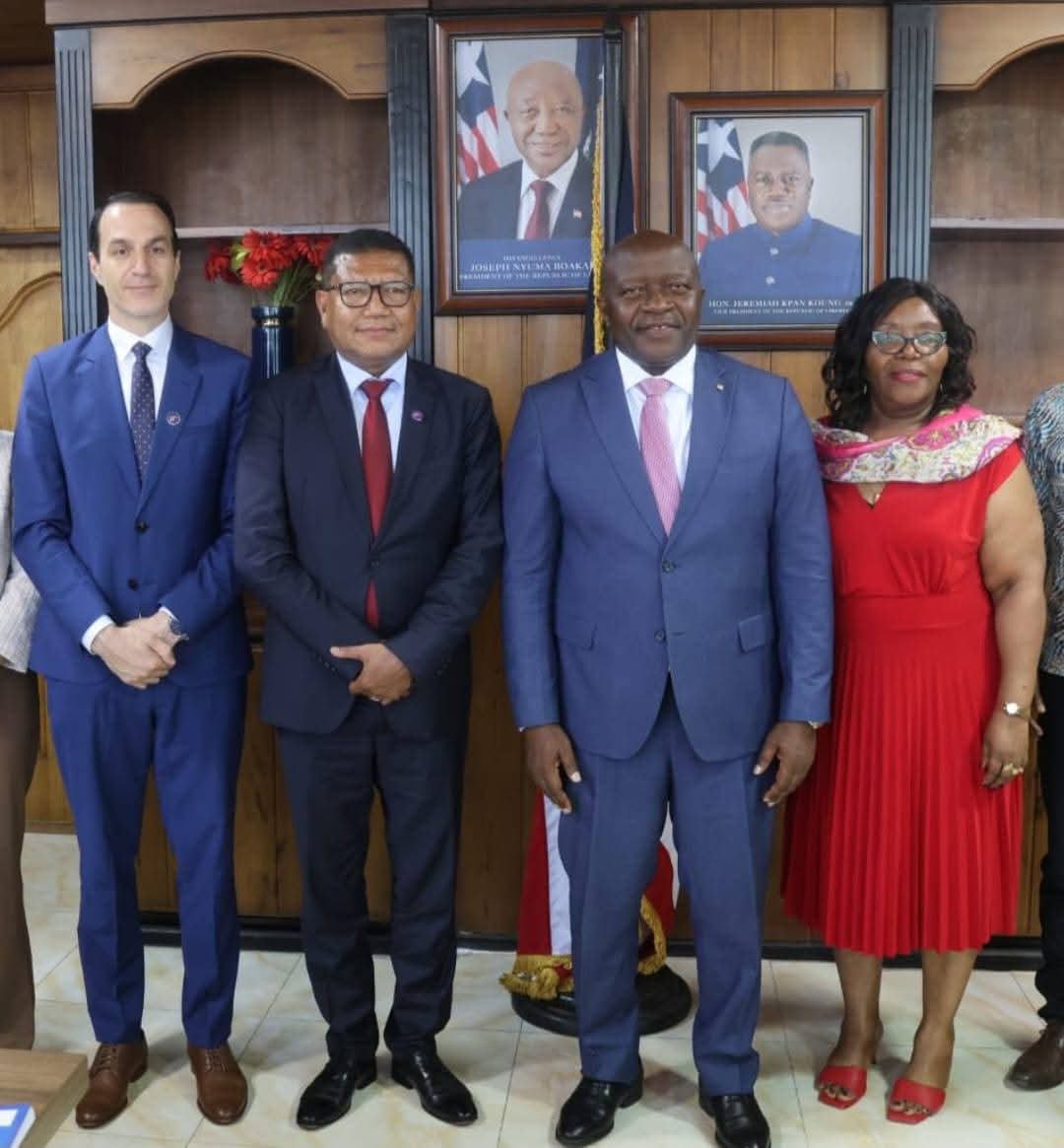
Liberia’s expanding role in global governance and development diplomacy was brought into sharp focus this week as a high-level delegation from the g7+ paid a courtesy visit to Finance and Development Planning Minister Augustine Kpehe Ngafuan.
The visit, held in Monrovia, underscores the West African nation’s transformation from a post-conflict state into an increasingly influential voice for fragile and conflict-affected countries on the international stage.
A Coalition of Fragile States with Global Impact
Founded in 2010 in Dili, the g7+ is a bloc of more than 20 countries affected by conflict and institutional fragility. Collectively, these nations represent over 1.5 billion people globally, many of whom face persistent challenges related to governance, poverty, and security.
The coalition was born out of a shared recognition that traditional development models often fail in fragile contexts.
Since its inception, the g7+ has played a pivotal role in reshaping global development discourse most notably contributing to the adoption of Sustainable Development Goal 16 (SDG 16), which focuses on peace, justice, and strong institutions.
In 2019, the group achieved a major diplomatic milestone by securing observer status at the United Nations, enhancing its ability to influence international policy frameworks.
Liberia’s Dual Leadership Role
Liberia currently serves as Deputy Chair of the g7+, working alongside the Democratic Republic of the Congo in support of the Solomon Islands, which chairs the organization.
This leadership position reflects growing confidence in Liberia’s governance reforms and diplomatic engagement.
Further amplifying its global standing, Liberia has secured a non-permanent seat on the United Nations Security Council for the 2026–2027 term a significant achievement for a country that emerged from civil conflict just over two decades ago.
Analysts note that this dual role places Liberia in a strategic position to advocate for fragile states within both political and financial multilateral systems.
Focus on Financial Governance and Institutional Reform
During the high-level discussions, both parties emphasized strengthening collaboration through the g7+’s peer-learning mechanisms.
Key areas of focus included:
Public Financial Management (PFM) reforms, critical for improving transparency and accountability in fragile economies.
Ratification and implementation of the g7+ Charter, aimed at institutionalizing cooperation among member states.
Updates on the Rapid Response Advisory Centre (RARC), a mechanism designed to provide technical support to member countries facing governance or fiscal crises.
The delegation also explored ways Liberia could leverage its leadership roles to advocate for increased support from International Financial Institutions (IFIs) and Multilateral Development Banks (MDBs) which collectively disburse hundreds of billions of dollars annually in development financing.
From Fragility to Influence: Liberia’s Development Trajectory
Liberia’s journey adds weight to its leadership within the g7+. After enduring two civil wars between 1989 and 2003 that devastated its economy shrinking GDP by nearly 90% at the peak of the conflict, the country has since made notable progress.
Economic growth averaged 4–5% annually in the decade following the war, despite setbacks from the Ebola crisis and global shocks.
Governance indicators, including public financial oversight and anti-corruption frameworks, have steadily improved with international support.
Liberia has increasingly participated in global diplomacy, positioning itself as a case study for post-conflict recovery.
Strategic Implications for Global Development
Experts suggest that Liberia’s engagement with the g7+ reflects a broader shift in international development policy.away from top-down aid models toward peer-led, context-specific solutions.
By leveraging its roles in both the g7+ and the UN Security Council, Liberia is uniquely positioned to:
Advocate for tailored financing models for fragile states.
Influence global peacebuilding and post-conflict reconstruction strategies.
Bridge the gap between political decision-making and development financing.
A Symbol of Collective Aspiration
The visit by the g7+ delegation not only highlights Liberia’s diplomatic ascent but also reinforces the coalition’s mission: to ensure that fragile states are not merely recipients of aid, but active architects of their own development pathways.
As Minister Ngafuan and the visiting delegation concluded discussions, the message was clear countries once defined by instability are increasingly shaping the global agenda on peace, resilience, and sustainable development.


