
A Political Commentator in Vandalark R. Patricks write ✍🏻 ✍🏻 👇 👇
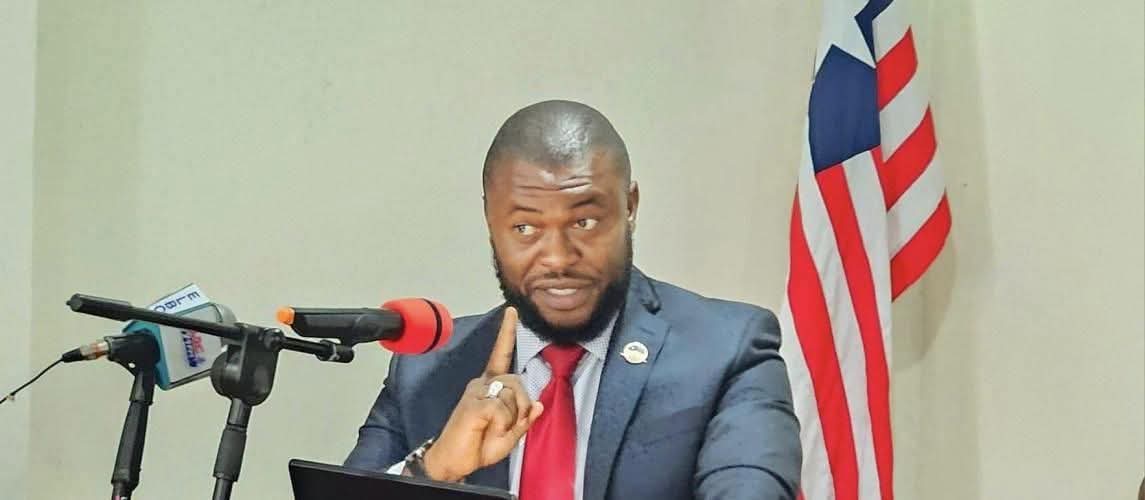
The Liberian Senate voted today to remove the Director-General of the Civil Service Agency (CSA), Josiah Joekai or requested Joseph Nyuma Boakai Sr to dismiss him over his attendance at the National Independent Movement for Boakai (NIMBO) political rally that was held a few months ago. This represents a profound misinterpretation of the law.
Under established legal and constitutional principles, the Senate’s demand lacks both a statutory basis and legal standing.
- Constitutional Protections of Political Association
First, the Senate should understand that the CSA is not an autonomous commission, nor does its head hold a tenured position. Rather, the Director-General is a political appointee serving strictly at the pleasure of the President under Article 56(a) of the 1986 Liberian Constitution.
As an executive appointee, the CSA boss enjoys full protection under Article 17 of the Constitution, which guarantees all citizens the right to assemble and associate freely with political parties and organizations.
Furthermore, Article 81 specifically permits citizens—including political appointees—to canvass and associate with political platforms, provided they do not use state resources to do so.
Dr. Joekai’s attendance at the NIMBO rally, which aligns with the President’s development agenda, was a legitimate exercise of these constitutional freedoms.
- Binding Supreme Court Precedents:
In Liberia, judicial precedent is a binding law. The Supreme Court has repeatedly adjudicated the scope of the National Code of Conduct, stripping the Senate of any legal standing to demand removals on these grounds.
For example, the Selena Mappy-Polson Case (2017): In Mappy-Polson v. Republic of Liberia, the Supreme Court ruled that the restriction of political activities under the Code of Conduct cannot be broadly applied to strip non-tenured, executive-appointed public officials of their fundamental rights. The Court clarified that executive appointees maintain their political associations as long as they do not abuse state office. How an attendance of a poltical rally meant to promote Boakai by a presidential appointee a violation of the Code of Conduct? Lol
The J. Fonati Koffa Case (2016) case: The Court affirmed that political appointees, unlike career civil servants, are inherently tied to the political mandate of the Executive. Because their role is to implement the President’s agenda, holding them to strict political neutrality is both a structural contradiction and a violation of their appointment mandate. On two occasions, the highest court in our country ruled before that poltical appointees with non-tenure status such as the CSA boss cannot be prevented from engaging in political activities.
The Supreme Court has already ruled on these exact constitutional limits and its decisions stand as a binding law. So, why iis the Senate giving God hard tiime na? The Senate has no standing to bypass judicial precedents or dictate the removal of a non-tenured executive officer. The Senate’s action is a clear overreach that undermines the separation of powers.
And President Boakai should NOT honor the Senate’s request.
