
By: Julius Konton
Liberia’s drive to strengthen governance and improve transparency in the management of its natural resources gained fresh momentum as the National Bureau of Concessions (NBC) formally presented comprehensive compliance review reports on two of Maryland County’s largest agricultural concessions, recommending sweeping reforms to ensure greater economic benefits for local communities.
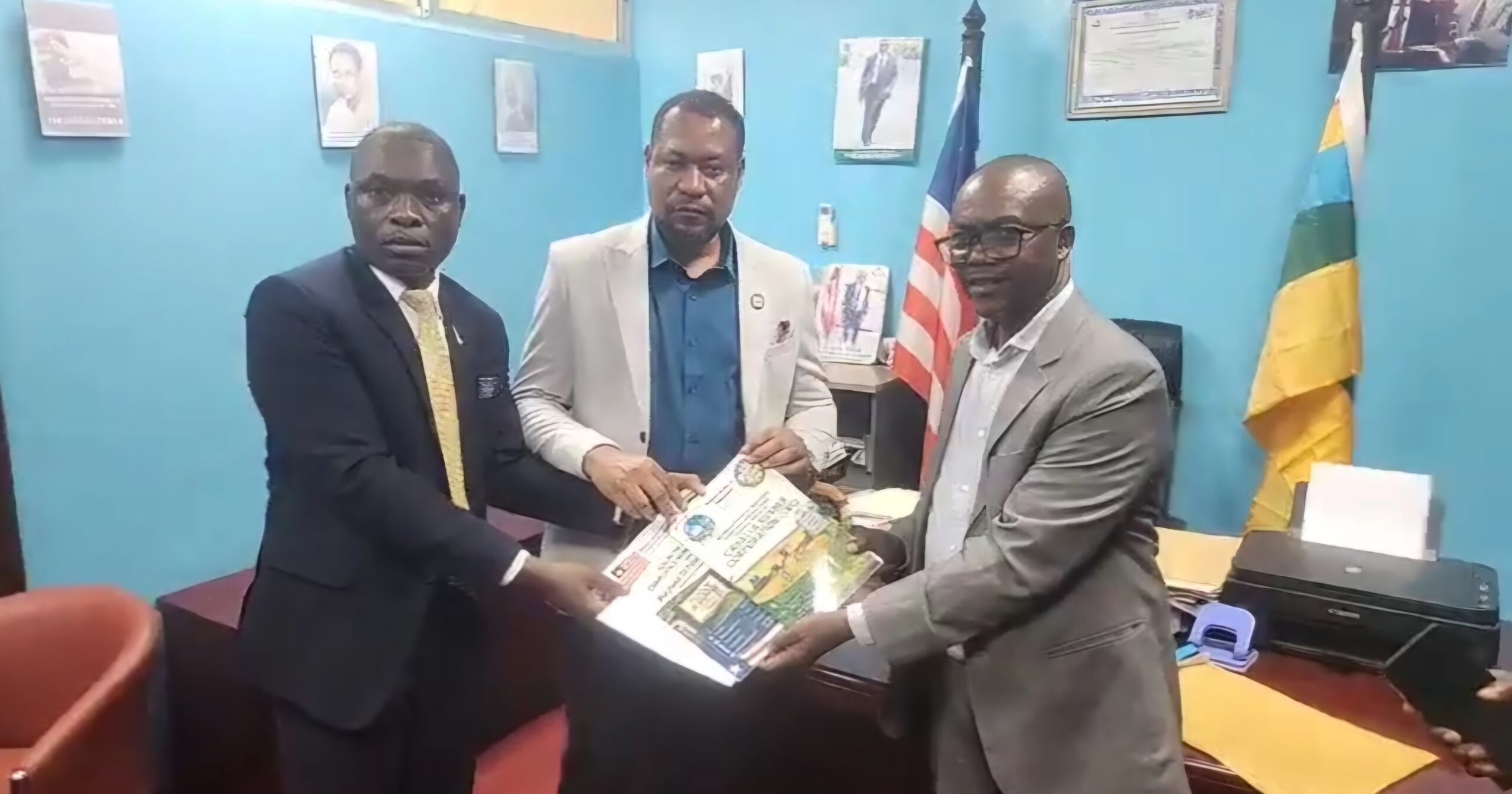
The reports, submitted by NBC Director General Hanson Senu Kiazolu Sr. to the Maryland County Legislative Caucus, cover the operations of the Cavalla Rubber Corporation (CRC) and the Maryland Oil Palm Plantation (MOPP), two concessions that have played a significant role in Liberia’s rubber and palm oil industries for decades.
The reviews mark one of the most comprehensive assessments of the two concession agreements in years and are expected to shape future discussions on concession governance, community development, and investment policy in southeastern Liberia.
Presenting the reports, Director General Kiazolu acknowledged that the mandatory compliance assessments had not been conducted for several years despite provisions requiring periodic reviews.
He credited his predecessor, Theodore Momo, for initiating the process, noting that the current NBC leadership had completed the extensive technical evaluation.
“The reports contain detailed findings, responses from the concessionaires, and comprehensive recommendations intended to improve compliance and strengthen the overall management of these concession agreements,” Kiazolu told lawmakers.
Liberia currently has more than 30 active concession agreements spanning mining, agriculture, forestry, and energy, collectively covering significant portions of the country’s landmass and contributing substantially to exports, employment, and government revenues.
Rubber and palm oil remain among Liberia’s leading agricultural exports, employing thousands of workers nationwide.
Among the report’s principal recommendations is a proposal to renegotiate both concession agreements, which NBC believes no longer adequately reflect Liberia’s evolving economic realities.
According to Kiazolu, many provisions contained in the agreements have become outdated and should be revised to align with modern investment standards, national development priorities, and current macroeconomic conditions.
“The concessions are antiquated,” he said. “They must be modernized to reflect present-day economic realities and ensure that both investors and host communities benefit fairly.”
Concession agreements in Liberia are generally expected to undergo periodic reviews typically every five years to evaluate compliance, operational performance, and adherence to social and environmental obligations.
A major focus of the reports concerns the establishment and management of Community Development Funds and the Oil Palm Development Fund.
Kiazolu explained that NBC commissioned an independent accountant to verify the financial obligations of the concessionaires.
“We engaged an independent accountant to determine the actual amounts due.
We also verified other obligations in collaboration with the Liberia Revenue Authority and were satisfied with the findings,” he said.
According to the NBC Director General, the concession companies have not rejected the idea of contributing to community development funds but have requested clear policy guidance from the Bureau regarding implementation and fund management.
He noted that NBC previously provided similar guidance for the Equatorial Palm Oil (EPO) concession in Grand Bassa County and intends to implement a comparable framework in Maryland County.
Kiazolu stressed that these funds should be ring-fenced to ensure they are used exclusively for transformative community projects such as schools, healthcare facilities, roads, clean water systems, youth empowerment initiatives, and other local development priorities.
Responding to the presentation, Representative Anthony Williams of Pleebo-Sodoken District welcomed the reports, describing them as a historic achievement for Maryland County.
He praised both former NBC Director General Theodore Momo for initiating the review process and Director General Kiazolu for successfully completing it.
“This is a dream come true for Maryland County and its people,” Representative Williams said.
He observed that although the concession agreements date back to 2011, mandatory reviews expected every five years had not been carried out until now.
“These concessions should have been reviewed every five years, but unfortunately that did not happen,” he said.
Williams revealed that upon assuming office, he deliberately pursued dialogue and constructive engagement with key stakeholders instead of public confrontation.
“My predecessor fought hard on these issues through arguments and public debates.
When I took office, I chose a diplomatic approach by engaging stakeholders directly, and today we are seeing the results.”
Representative Williams strongly endorsed the recommendation to establish dedicated Community Development Funds, arguing that revenues generated from concession operations should directly benefit affected communities rather than being absorbed into central government accounts.
He referenced Nimba County’s successful advocacy for a dedicated development funding mechanism under the ArcelorMittal Liberia concession, led by the late Senator Prince Yormie Johnson.
“Nimba demonstrated that concession revenues can be managed through dedicated county development mechanisms. This recommendation is good, and we will take it back to our people,” Williams said.
He added that the modernization of the concession agreements is equally important, noting that residents have long demanded reforms that guarantee greater accountability, transparency, and tangible development outcomes.
The presentation comes as Liberia continues efforts to strengthen oversight of concession agreements, which have historically attracted billions of dollars in investment while generating debate over revenue sharing, environmental protection, labor standards, and community benefits.
The National Bureau of Concessions serves as the government’s principal institution responsible for monitoring concession compliance, ensuring investors meet contractual obligations, and protecting the interests of both the state and host communities.
Analysts say the recommendations contained in the Maryland County compliance reports could serve as an important model for future reviews of concession agreements across Liberia, reinforcing the government’s broader agenda to modernize investment frameworks, promote sustainable economic growth, and ensure that the country’s natural resources deliver lasting benefits to ordinary Liberians.
