
By: Julius N. Konton
Liberia’s intensifying war against illicit drugs has taken a sharply political turn after former Finance Minister Samuel D. Tweah accused the administration of President Joseph Nyuma Boakai of allegedly “inventing charges” against former government officials, warning that politically motivated prosecutions could undermine the country’s judiciary and rule-of-law institutions.
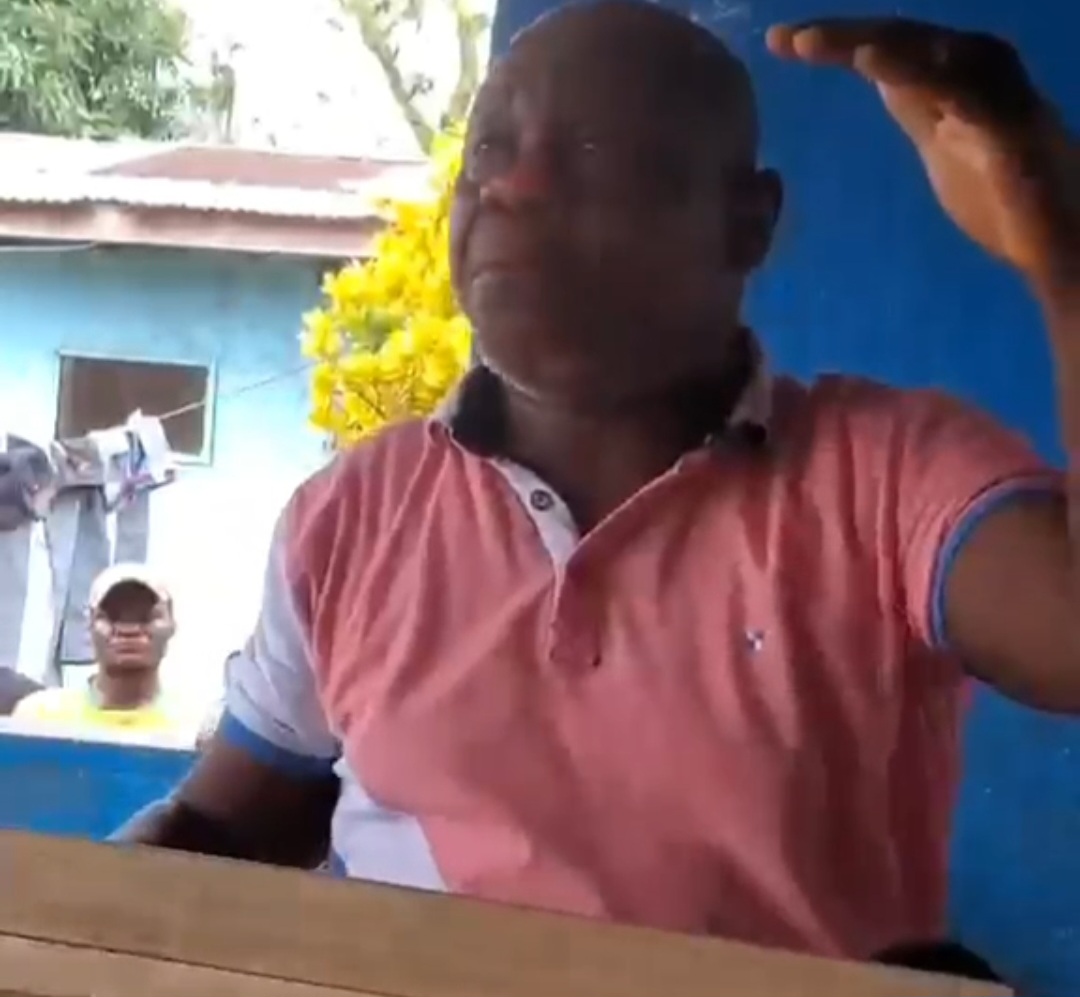
Tweah made the controversial remarks in Monrovia, where he questioned the government’s handling of criminal investigations involving prominent figures of the previous administration, including former Vice President Jewel Howard-Taylor.
His comments come amid one of Liberia’s most consequential narcotics investigations in recent years, following the seizure of cocaine worth hundreds of millions of dollars and the subsequent arrest and prosecution of Howard-Taylor.
Tweah acknowledged that a government has the legal authority to investigate and prosecute suspected crimes, but argued that such authority must be exercised on the basis of credible evidence rather than political considerations.
“The government has the right to place charges,” Tweah said, while arguing that authorities must not manufacture allegations to achieve political objectives.
He warned that if the state begins creating criminal cases against political opponents, the consequences could extend beyond individual defendants to the credibility of Liberia’s justice system.
“If the government invents charges, it destroys the judiciary and the legal system of the country,” Tweah argued.
Tweah was particularly critical of the charges brought against former Vice President Jewel Howard-Taylor, describing the allegations against her as “invented” and insisting that she is not guilty.
He specifically rejected allegations connecting Howard-Taylor to drug trafficking, saying she “did not do any drug trafficking in the country.”
Howard-Taylor, who served as Liberia’s vice president from 2018 to 2024, was arrested on August 19, 2026, at Roberts International Airport while attempting to leave Liberia.
The Ministry of Justice subsequently announced multiple charges against her in connection with an alleged transnational narcotics network.
The charges include alleged unlicensed importation, sale, distribution and transportation of controlled substances; illicit trafficking; criminal solicitation, facilitation and conspiracy; and money laundering.
Three foreign nationals have also been charged in absentia in connection with the investigation.
Howard-Taylor’s lawyers have rejected the allegations and characterized the case as politically motivated, while government investigators maintain that the prosecution is supported by evidence gathered during a broader narcotics investigation.
The former vice president was subsequently sent to prison to await trial after a court denied a request that she remain in a hospital for medical treatment.
The controversy surrounding the case cannot be separated from Liberia’s escalating struggle with narcotics trafficking.
In July, Liberian authorities seized approximately 4.2 metric tons of cocaine, reportedly valued at about US$317 million, in one of the largest drug seizures in the country’s history.
The operation intensified scrutiny of Liberia’s role in international cocaine trafficking networks and raised questions about possible corruption within law-enforcement institutions.
The July seizure followed another major interception at Roberts International Airport in June, when authorities seized approximately 237.6 kilograms of cocaine, with an estimated value exceeding US$19 million.
Together, the two seizures illustrate the extraordinary scale of the narcotics challenge confronting Liberia.
But the numbers also expose a deeper institutional problem.
According to figures reported by Al Jazeera from the Liberia Drug Enforcement Agency, 1,167 people were arrested on allegations of drug trafficking between September 2025 and June 22, 2026, while Liberian courts recorded only eight convictions during that period roughly one conviction for every 146 arrests.
That disparity raises a fundamental question for Liberia’s justice system: Is the country becoming more effective at arresting suspected drug offenders, or is it struggling to convert investigations into successful prosecutions?
Tweah’s argument centers on a fundamental principle of criminal justice: allegations are not convictions.
He argued that because the vice presidency represents the Liberian state, investigators should be exceptionally certain before publicly associating a former holder of that office with international drug trafficking.
“What the government did is telling the world, because the Vice Presidency is a representation of the country, that Liberians can elect a President or Vice President who can do drug business,” Tweah said.
He insisted that authorities must be “200 percent certain” before pursuing such a serious allegation against a former national leader.
The argument touches on one of the most sensitive issues in Liberia’s post-war political development: whether law enforcement can pursue former officials without appearing to engage in political retaliation.
The government’s position, however, is markedly different.
Justice Minister and Attorney General Cllr. N. Oswald Tweh has maintained that the Howard-Taylor investigation followed a review of evidence presented by a Joint National Security Investigative Team.
Authorities say the investigation involves an alleged transnational narcotics network operating within and beyond Liberia and that the government intends to pursue the matter through the courts.
The administration has repeatedly framed its anti-drug campaign as a national security and public-health priority rather than a political exercise.
That position is consistent with Liberia’s broader anti-drug policy framework.
In 2025, the government launched the National Anti-Drug Action Plan 2025–2030, describing drug abuse and trafficking as threats to public health, social stability, national security and national development.
The government has also publicly pledged that political status should not shield individuals involved in narcotics activities.
Liberia’s Drug War and the Rule of Law
Liberia’s current narcotics crackdown has historical significance.
The country has long faced challenges associated with its geographic position along West Africa’s Atlantic coast, a region that international authorities have identified as a transit corridor for cocaine originating in South America and destined primarily for European markets.
The government strengthened its legal framework in 2023 when former President George Weah signed the Controlled Drug and Substance Act of 2023 into law.
The legislation provides a modern framework for regulating controlled substances and criminalizing unauthorized importation and other drug-related activities.
The current investigation therefore represents not simply another criminal case, but a test of whether Liberia’s institutions can enforce increasingly stringent narcotics laws while protecting constitutional rights and judicial independence.
For President Boakai’s government, the case presents a difficult balancing act.
On one hand, failure to aggressively investigate a major international narcotics network could expose Liberia to accusations of weak enforcement, corruption and institutional complicity.
On the other hand, allegations against a former vice president require an unusually high level of transparency because of the political implications and the potential consequences for public confidence in the justice system.
Tweah’s intervention has consequently added a new dimension to an already explosive case.
His allegations do not establish that the government fabricated charges, just as the government’s accusations against Howard-Taylor do not establish her guilt.
Those questions ultimately belong to the courts, where prosecutors will have to demonstrate the evidentiary basis for the charges and the defense will have the opportunity to challenge them.
At its core, the controversy is no longer only about one former vice president.
It is increasingly about whether Liberia can wage an aggressive war against drugs without compromising due process, judicial independence and political neutrality.
The country’s record-breaking cocaine seizures demonstrate the scale of the threat.
The low number of convictions relative to arrests highlights weaknesses in the justice chain. And the prosecution of a former vice president has elevated the stakes to an unprecedented political level.
For Tweah and other critics, the danger is that the anti-drug campaign could become entangled with political competition.
For government authorities, the challenge is to demonstrate that powerful political figures are not receiving special protection and that every prosecution is grounded in credible, admissible evidence.
Ultimately, the Howard-Taylor case will be judged not in political forums, but in court.
And the credibility of Liberia’s renewed war against narcotics may depend as much on how the government proves its cases as on how many suspects it arrests.
