
By: Julius Konton
Liberia’s Minister of Finance and Development Planning, Augustine Kpehe Ngafuan, has pledged stronger efforts to ensure the timely disbursement of County Development Funds as he continues a tour of Southeastern Liberia aimed at assessing government projects, engaging local authorities and encouraging improved public service delivery.
Minister Ngafuan made the commitment during engagements with local officials in Grand Kru County, where he urged county authorities to work more closely with central government and accelerate efforts to deliver tangible services and development projects to residents.
He emphasized that government resources must translate into visible improvements in the lives of citizens, particularly in communities that face longstanding challenges in roads, public infrastructure, commerce and access to basic services.
“Government services must reach the people,” Minister Ngafuan told local officials, stressing the need for greater accountability, efficiency and cooperation between county authorities and the central government.
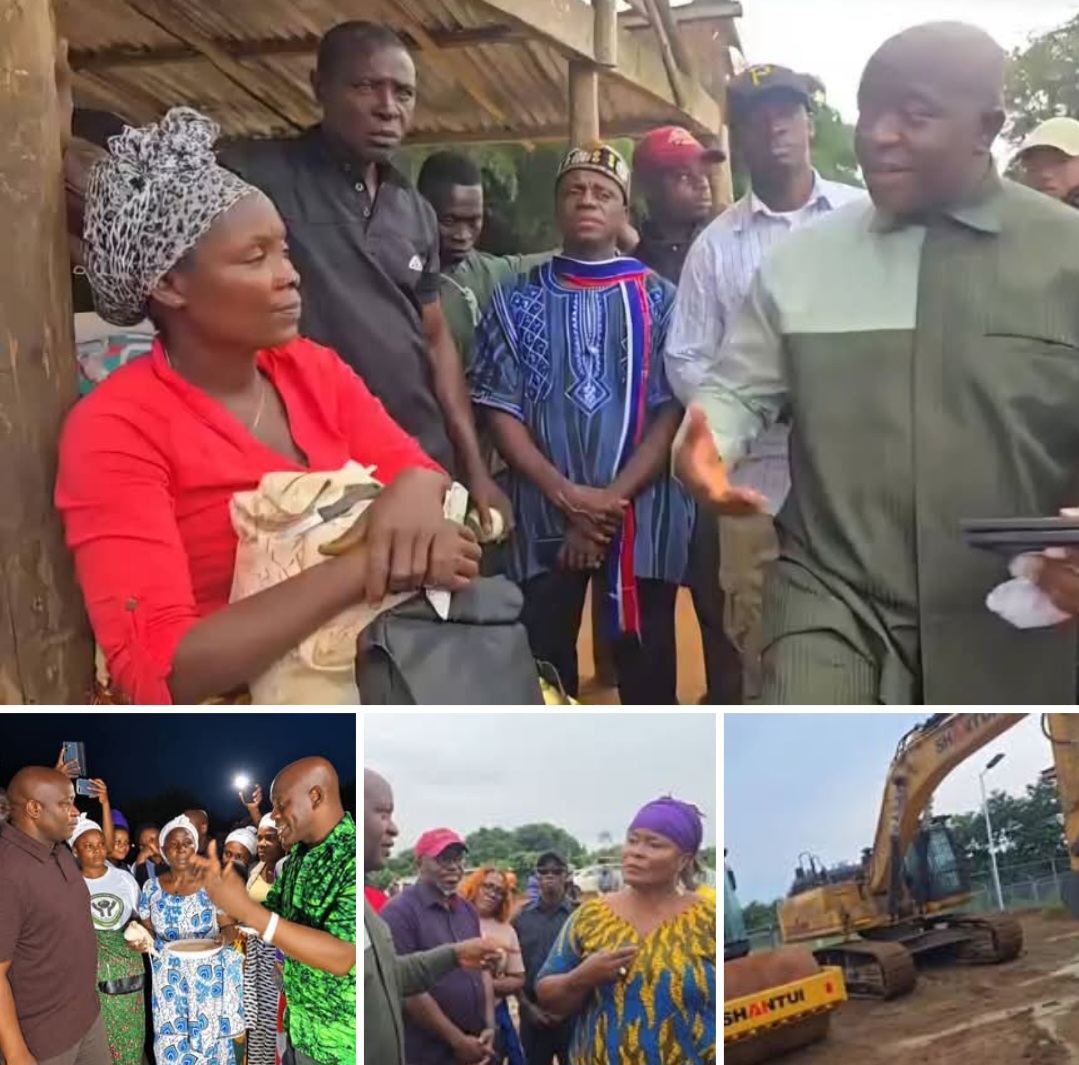
The Finance Minister also called on local officials and communities to safeguard public property, pointing specifically to the heavy-duty road equipment, popularly known as “Yellow Machines,” recently deployed to Grand Kru and other parts of Liberia.
The equipment forms part of the government’s broader effort to strengthen road maintenance and improve connectivity, particularly in counties where poor road conditions have historically constrained economic activity and access to essential services.
Ngafuan urged county authorities to ensure that government assets are properly maintained and used strictly for their intended public purposes.
His comments come as the government continues to place greater emphasis on regional infrastructure and decentralization, with Southeastern Liberia remaining strategically important to Liberia’s cross-border trade and economic integration with neighboring Côte d’Ivoire.
The Finance Minister’s tour comes against the backdrop of significant development needs across the Southeast.
According to Liberia’s 2022 Population and Housing Census, Grand Kru County had a population of approximately 109,342 people, while Maryland County recorded about 172,587 residents.
Together, the two counties account for more than 280,000 people whose livelihoods depend heavily on agriculture, trade, fishing, transportation and small-scale commerce.
For many communities, improved roads, bridges, public facilities and reliable government services are considered essential to unlocking economic opportunities and reducing the cost of moving people and goods.
At the Cavalla River in Maryland County, Minister Ngafuan also had a personal interaction with a local businesswoman engaged in petty trading.
After purchasing a bag of fruit from the woman, the Minister reportedly paid her twice the actual selling price as a gesture of encouragement and support for her small business.
Ngafuan encouraged the woman to remain committed to her business and continue working to support her family.
The encounter took on a personal dimension when the Minister reflected on his own upbringing, recalling that his mother had engaged in similar small-scale business activities to help provide for him and the family.
His interaction with the market woman highlighted the role of informal businesses and women-led micro-enterprises in sustaining household incomes across Liberia, particularly in rural communities.
During his visit to Maryland County, Minister Ngafuan also held a brief engagement with revenue officers stationed at the Cavalla Border Post, operated by the Liberia Revenue Authority.
He commended the officers for their work and encouraged them to intensify their efforts to mobilize domestic revenue while maintaining professionalism and integrity in the discharge of their duties.
The Cavalla crossing is strategically important to Liberia’s commercial relationship with Côte d’Ivoire, particularly as the two countries move toward improved road connectivity and border infrastructure.
One of the major infrastructure projects inspected during Minister Ngafuan’s Maryland County tour was the ongoing Cavalla River Bridge, designed to establish a permanent road connection between Liberia and Côte d’Ivoire.
The project is being implemented under the regional road development and trade facilitation framework supported by the African Development Bank and ECOWAS.
Liberia has already completed a 16-kilometer road connecting Harper City to the Cavalla River, according to Liberia’s Ministry of Public Works.
The bridge is expected to significantly improve the movement of people, agricultural products and commercial goods between the two countries while reducing reliance on river crossings.
The Liberian Government previously secured 18 hectares of land in Maryland County for the bridge and associated border infrastructure.
Officials have said the project is expected to include a one-stop border post designed to facilitate the movement of people, goods and services while reducing duplication in border procedures.
The African Development Bank has described the bridge as a critical component of efforts to improve livelihoods, trade and transport connectivity in the Liberia–Côte d’Ivoire corridor.
The bank has also reported that the bridge will help facilitate vehicle movement and improve access for traders and local producers once completed.
The Cavalla River project carries significance beyond Maryland County, forming part of broader efforts to strengthen regional integration and cross-border commerce within West Africa.
The infrastructure is expected to provide an alternative to river transportation, which has historically exposed travelers and traders to safety risks while increasing the time and cost associated with moving goods across the border.
For Liberia, improved connectivity between Harper and Côte d’Ivoire could also create opportunities for local farmers, traders, transport operators and small businesses to access larger regional markets.
Upon his arrival in Harper, Maryland County, on Saturday, Minister Ngafuan received a rousing welcome from the county’s Superintendent, traditional leaders, elders, women’s groups and youth representatives.
The reception reflected the importance attached to the government’s engagement with communities in the Southeast, where residents have repeatedly called for greater attention to infrastructure, economic opportunities and improved public services.
As his tour continues, Minister Ngafuan is expected to use the engagements to assess ongoing development activities, hear directly from local authorities and communities, and reinforce the government’s message of accountability, effective resource management and inclusive development.
The Finance Minister’s tour therefore combines two central priorities of Liberia’s development agenda: strengthening the flow of public resources to the counties and ensuring that major investments in roads, bridges, equipment and border infrastructure produce measurable benefits for ordinary citizens.
