
By: Julius Konton
The ambitious Nigeria-Morocco Gas Pipeline Project, one of Africa’s most transformative energy infrastructure initiatives, has entered a decisive phase following the completion of major technical and engineering studies, paving the way for preparations ahead of construction.
The African Atlantic Gas Pipeline, designed to become one of the longest offshore and onshore gas networks in the world, is expected to reshape Africa’s energy landscape by connecting gas-producing nations in West Africa with energy markets across the continent and Europe.
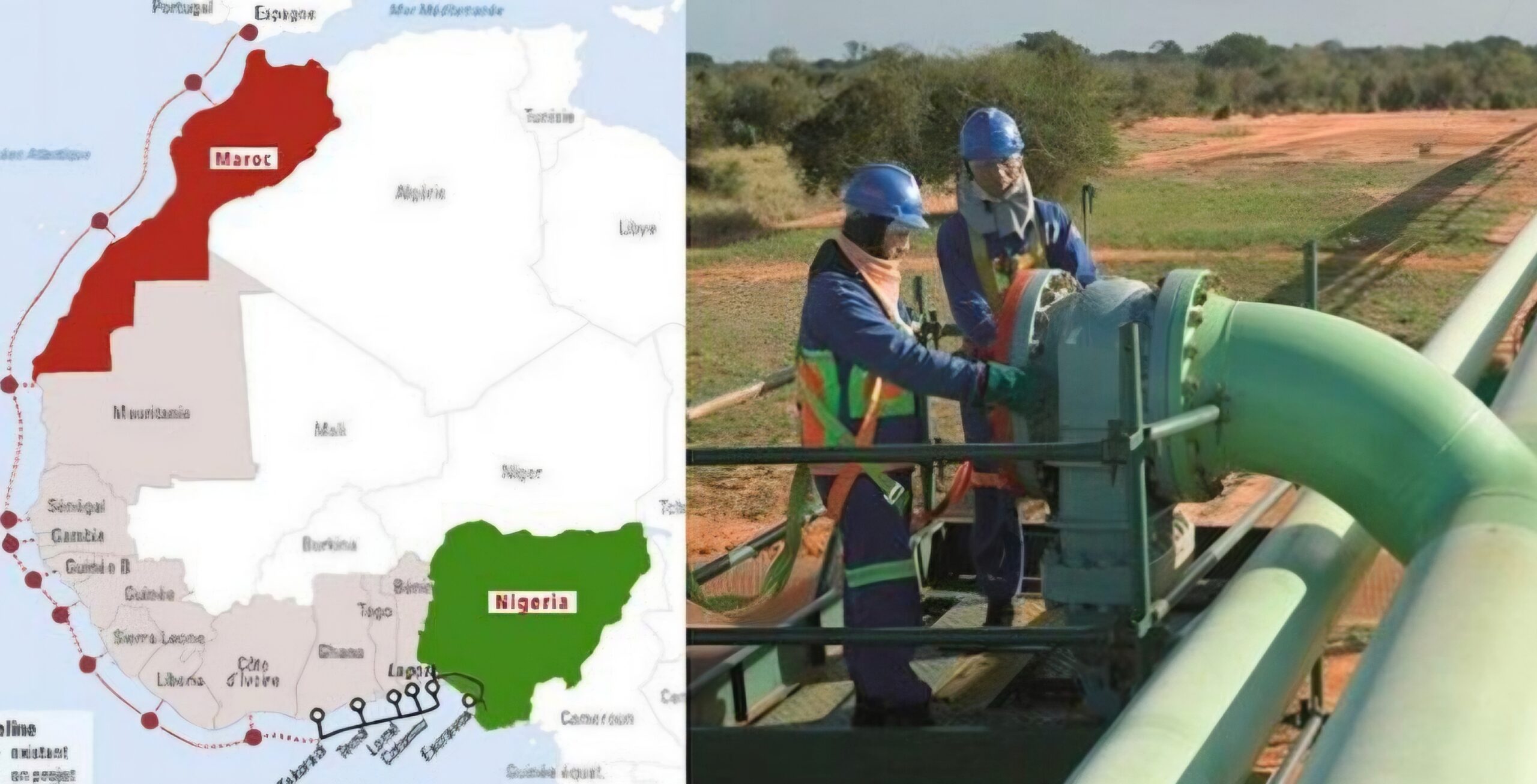
Stretching approximately 6,900 kilometers, the pipeline will cross 13 West African countries, creating a strategic energy corridor linking Nigeria, the continent’s largest natural gas producer, with Morocco and eventually European markets.
The project’s estimated investment cost stands at approximately $25 billion, making it one of the largest infrastructure investments ever undertaken in Africa’s energy sector.
The Nigeria-Morocco Gas Pipeline was first conceived as a major regional integration project aimed at utilizing Africa’s vast natural gas resources to address energy shortages, accelerate industrial development, and promote economic cooperation among African nations.
The pipeline will begin in Nigeria, home to Africa’s largest proven natural gas reserves estimated at more than 200 trillion cubic feet, and will travel along the Atlantic coastline through countries including:
Benin
Togo
Ghana
Côte d’Ivoire
Liberia
Sierra Leone
Guinea
Guinea-Bissau
The Gambia
Senegal
Mauritania
Morocco
The project is expected to provide a reliable supply of natural gas to participating countries while supporting electricity generation, industrial expansion, fertilizer production, and economic growth.
The Moroccan section of the pipeline will cover approximately 2,220 kilometers, consisting of:
1,830 kilometers of onshore infrastructure
390 kilometers of offshore pipeline connections
To ensure efficient gas transportation across thousands of kilometers, four major compression stations will be constructed near:
Boujdour
Tan-Tan
Agadir
Safi
These facilities will maintain gas pressure and guarantee continuous flow throughout the network.
Two reception stations are also planned, including a strategic connection with the existing Maghreb-Europe Gas Pipeline, which could provide additional access to European energy markets.
Energy analysts describe the pipeline as a potential game changer for Africa, where more than 600 million people still lack reliable access to electricity, according to international development estimates.
The project aligns with Africa’s broader goals of:
Expanding electricity access
Reducing dependence on imported energy
Supporting industrialization
Creating regional energy markets
Increasing African participation in global energy trade
For countries along the route, the pipeline could provide new opportunities for power generation, manufacturing, mining, agriculture, and technology development.
The construction phase is expected to generate significant employment opportunities across participating countries.
Plans include the establishment of six temporary construction bases, with each site expected to employ up to 1,200 workers during peak activity.
Project developers have emphasized the importance of:
Local workforce recruitment
Technical training programs
Skills development for young Africans
Increased participation of local companies
The project is expected to create both short-term construction jobs and long-term employment opportunities in energy operations, maintenance, logistics, and related industries.
The Nigeria-Morocco Gas Pipeline represents more than an energy project; it is viewed as a symbol of African economic integration.
Nigeria, Africa’s largest economy and leading gas producer, has long sought to expand its gas export capacity beyond traditional markets.
Morocco, meanwhile, has positioned itself as a regional energy hub connecting Africa, Europe, and the Atlantic world.
The initiative also supports Morocco’s broader strategy to strengthen its role as a bridge between African economies and international markets.
The project comes at a time when European nations are seeking diversified energy sources and stronger partnerships with African producers.
Through its connection to existing European gas infrastructure, the pipeline could eventually provide an additional supply route for European markets while increasing Africa’s influence in global energy trade.
With feasibility studies completed and technical preparations underway, the Nigeria-Morocco Gas Pipeline is moving closer to becoming a reality.
If successfully completed, the project will rank among the world’s most ambitious energy infrastructure networks and could redefine Africa’s role in the global energy economy.
The pipeline is expected to serve not only as a channel for natural gas but also as a foundation for deeper economic cooperation, regional integration, and shared prosperity across Africa.
