
B
By: Julius Konton
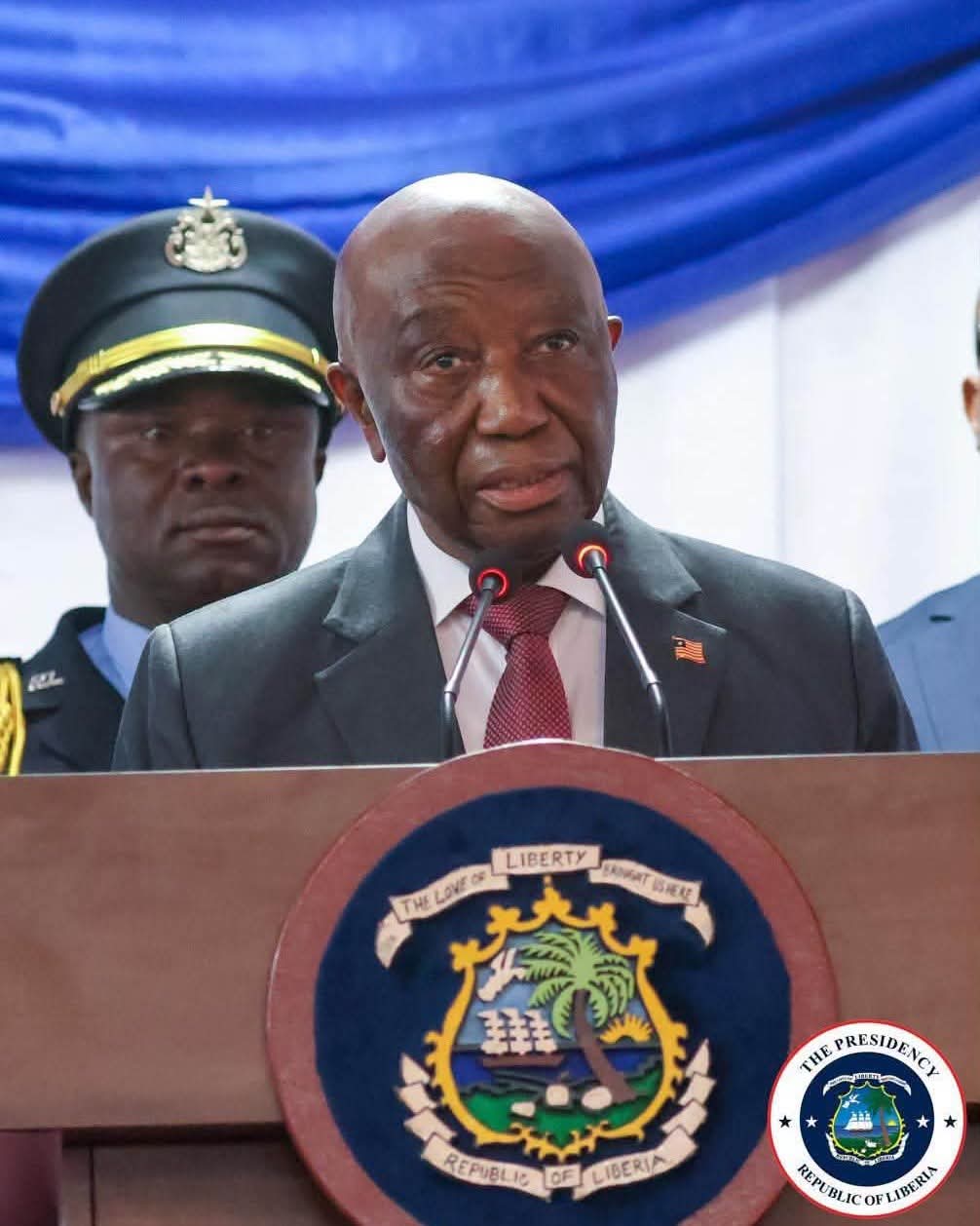
Liberia’s government will on Tuesday convene a high-level National Steering Committee meeting to assess the first year of implementation of the ARREST Agenda for Inclusive Development (AAID), as President Joseph Nyuma Boakai’s administration seeks to turn an ambitious national development blueprint into measurable improvements in the lives of ordinary Liberians.
The meeting, scheduled for August 11 at Monrovia City Hall under the theme “Consolidating AAID Gains: Accelerating Implementation into Measurable and People-Centered Outcomes,” comes at a critical juncture for the government’s flagship development program.
The review is expected to examine what has been achieved since the AAID was launched, where implementation has stalled, how development financing can be strengthened and what priorities should guide Liberia’s national development program through 2027.
The meeting will be chaired by President Boakai, with the United Nations Resident Coordinator serving as Deputy Chairperson of the National Steering Committee.
The committee brings together cabinet ministers, government ministries, agencies and commissions, development partners, civil society organizations, private-sector representatives and members of the Liberian diaspora.
The AAID, covering the 2025–2029 period, represents Liberia’s fourth post-war National Development Plan and is designed to move the country toward lower-middle-income status while addressing persistent poverty, weak infrastructure, limited fiscal capacity, unemployment and inadequate access to basic services.
According to the United Nations, Liberia was ranked 178th out of 191 countries in the 2024 Human Development Report, while nearly 45 percent of the population was living in multidimensional poverty.
More than 41 percent of Liberians are under the age of 18, placing enormous pressure on the government to expand education, health, employment and economic opportunities.
The AAID was developed as a successor to earlier national development frameworks, including the Agenda for Transformation (2012–2017) and the Pro-Poor Agenda for Prosperity and Development (2018–2023).
Its stated objective is to move Liberia from a low-income economy toward lower-middle-income status while advancing the country’s commitments under Liberia’s Vision 2030, the United Nations Sustainable Development Goals, Africa Agenda 2063, ECOWAS Vision 2050 and other international development frameworks.
But the government’s challenge is no longer simply designing a development plan. It is demonstrating that the plan can produce tangible results.
Implementation Numbers Raise Questions
Independent monitoring of the AAID’s first year has highlighted the scale of the implementation challenge.
The Naymote Partners for Democratic Development President Meter Report for 2025 tracked 378 interventions across 52 core programs and six strategic pillars of the AAID.
Its assessment found that only three interventions, or 0.8 percent, had been fully completed at the end of the first year.
Another 165 interventions, representing 43.7 percent, were ongoing, while 76 interventions, or 20.1 percent, had not started.
A further 134 interventions, equivalent to 35.4 percent, could not be rated because of insufficient information.
Those figures do not necessarily mean that the AAID has failed. Many development programs are multi-year initiatives whose implementation cannot reasonably be completed within 12 months.
However, the data underscore one of the central issues expected to dominate Tuesday’s deliberations: how Liberia can move from announcing interventions to demonstrating measurable outcomes.
That distinction will be particularly important as the government prepares its second-year implementation cycle.
Economy Provides Both Opportunity and Pressure
The meeting also comes against a mixed economic backdrop.
Liberia’s economy expanded by an estimated 5.1 percent in 2025, up from 4 percent in 2024, according to the International Monetary Fund.
The IMF attributed the acceleration largely to stronger mining activity, alongside moderate growth in agriculture and services.
The Fund’s June 2026 assessment projected 5.5 percent economic growth for 2026, supported particularly by continued expansion in mining, manufacturing and construction.
The IMF has nevertheless warned that Liberia remains exposed to external shocks, including elevated oil prices, changing global financing conditions and reductions in bilateral development assistance.
Inflation, which averaged 12.5 percent in the first quarter of 2025, fell sharply to 4.4 percent in the fourth quarter, according to IMF data.
The Fund expects inflationary pressures to remain an important consideration as the government balances fiscal discipline with increased development spending.
For the Boakai administration, the challenge is therefore twofold: maintain macroeconomic stability while ensuring that economic growth translates into better public services, jobs, infrastructure and household welfare.
Financing is expected to be one of the most consequential issues before the National Steering Committee.
Liberia’s development ambitions significantly exceed the resources available through domestic revenue alone.
The government is therefore heavily dependent on development partners, concessional financing, foreign investment and improved domestic revenue mobilization.
In April, the IMF Executive Board approved a US$266 million Resilience and Sustainability Facility for Liberia, alongside a disbursement of approximately US$26.5 million under the country’s Extended Credit Facility arrangement.
The financing is intended to strengthen economic resilience and support reforms addressing climate and other long-term vulnerabilities.
The IMF has also projected that Liberia’s nominal GDP could rise from approximately US$5.6 billion in 2026 toward US$7.4 billion by 2030, assuming continued implementation of reforms and favorable economic conditions.
Yet stronger GDP figures alone will not resolve Liberia’s development deficit.
The central question for policymakers is whether increased economic activity can generate enough fiscal space to finance roads, electricity, healthcare, education, agriculture, water and sanitation, digital infrastructure and employment programs.
Liberia’s experience with national development planning provides an important backdrop to the AAID review.
Following the civil wars, successive administrations attempted to use medium-term national plans to rebuild institutions, expand infrastructure and reduce poverty.
The Agenda for Transformation, implemented from 2012 to 2017, sought to consolidate peace and promote economic transformation.
It was followed by the Pro-Poor Agenda for Prosperity and Development, which covered 2018–2023.
The AAID is intended to build on the lessons of those programs while strengthening the link between development planning, budgeting and measurable results.
The plan adopts a program-based approach designed to connect national development outcomes more directly to government budgeting.
That historical experience makes Tuesday’s meeting more than a routine government review.
It is effectively an opportunity for the administration to determine whether AAID is becoming an implementation system or whether it risks becoming another ambitious national blueprint constrained by financing, institutional capacity and weak monitoring.
The government is also entering the review period amid an increasingly uncertain international economic environment.
Higher energy costs, shifting donor priorities, geopolitical tensions and tighter global development financing are creating additional pressure on countries such as Liberia, whose economy remains highly dependent on commodities and external financing.
The IMF has specifically identified elevated oil prices and declining bilateral assistance as downside risks to Liberia’s economic outlook.
For a country that imports most of its petroleum products, higher global oil prices can quickly affect transportation costs, food prices, household purchasing power and the government’s fiscal position.
The AAID steering committee is therefore expected to consider how Liberia can strengthen domestic resource mobilization while making development spending more efficient.
According to the government, the National Steering Committee will review progress across AAID sectors, identify implementation bottlenecks and assess lessons from the first year.
The committee is also expected to provide strategic direction on emerging national and international developments, development financing and the country’s priorities for 2027.
Among the anticipated outcomes are:
Approval of the AAID Year One
Implementation Status Report;
Policy guidance for an integrated AAID financing framework;
Progress toward a National Development Cooperation Policy;
Strategic guidance for the 2026–2027 implementation period;
Adoption of a high-level communiqué outlining priorities and coordination mechanisms; and
Stronger systems for monitoring implementation across government institutions.
The government says progress updates covering the first and second quarters of 2026 are also being finalized.
The most significant outcome of Tuesday’s meeting may ultimately be determined not by the number of resolutions adopted but by what happens after the meeting.
Liberia has no shortage of national development strategies, policy documents and international commitments. Its persistent challenge has been translating these commitments into sustained implementation.
The government’s decision to bring together the presidency, cabinet, development partners, civil society, the private sector and the diaspora signals an attempt to strengthen coordination and collective ownership of the AAID.
The next phase, however, will require measurable targets, reliable data, realistic financing, institutional accountability and regular public reporting.
As Liberia enters the second year of the AAID, the stakes are increasingly clear.
The country’s economy is growing, international partners remain engaged and the government has a comprehensive development framework.
But with hundreds of interventions still ongoing, not started or insufficiently documented, the administration faces a defining test:
Can Liberia convert economic growth and development financing into visible improvements in the daily lives of its people?
Tuesday’s National Steering Committee meeting is expected to provide the government’s clearest answer yet.
