
By: Julius Konton
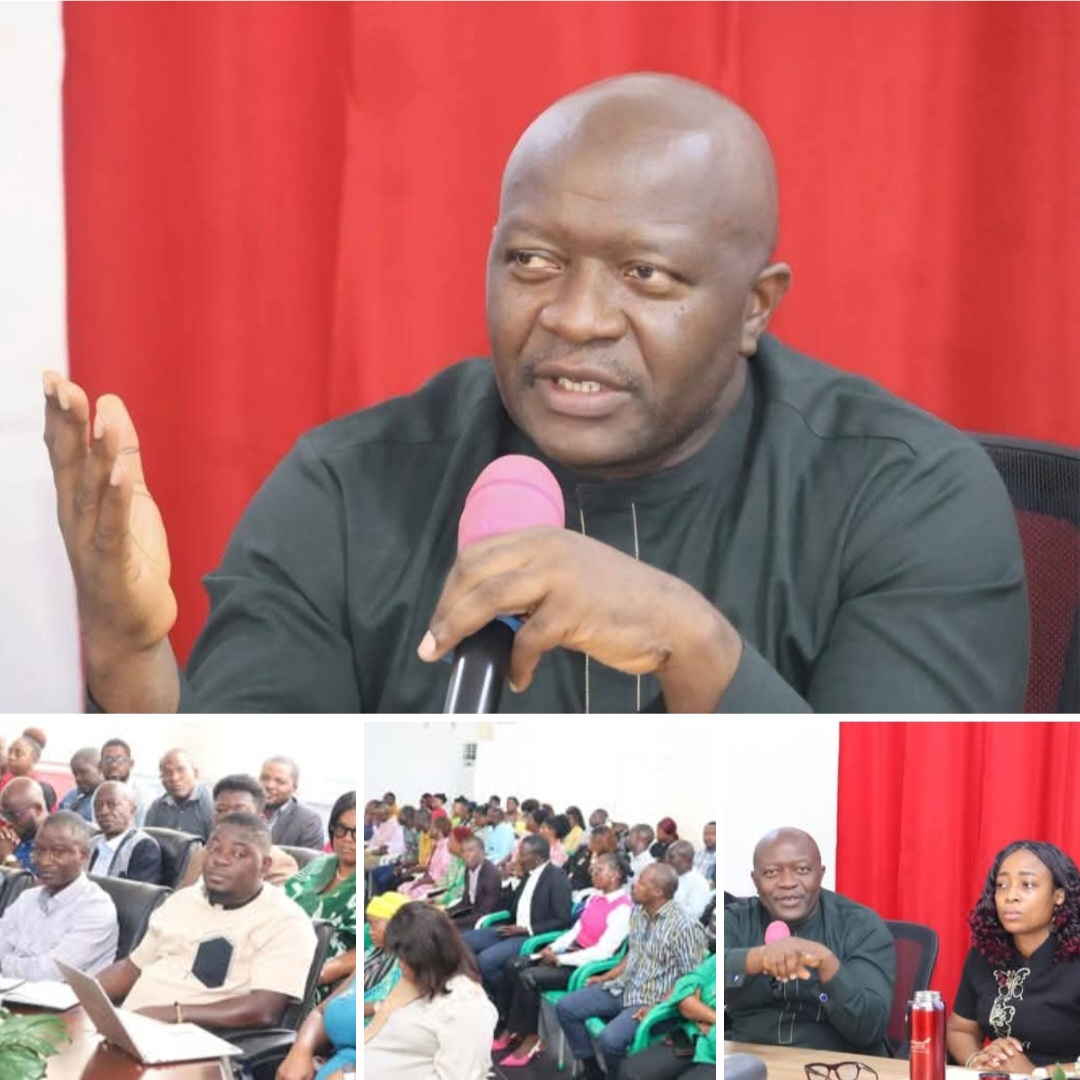
In a significant move aimed at tightening fiscal discipline and improving public sector efficiency, Liberia’s Minister of Finance and Development Planning, Augustine Kpehe Ngafuan held a high-level strategic engagement with the Ministry’s Department of Budget and Development Planning, focusing on ongoing institutional reforms, operational bottlenecks, and key priorities for the country’s next fiscal budget cycle.
The meeting forms part of Liberia’s broader efforts to strengthen public financial management at a time when the government faces increasing pressure to improve budget execution, revenue mobilization, and expenditure accountability.
Liberia’s national budget has expanded significantly in recent years, growing from approximately US$785 million in Fiscal Year 2023 to a record US$1.249 billion in FY2026 representing an increase of nearly 59% within three years.
A draft supplementary budget of US$45 million is also under legislative consideration, potentially pushing the total to US$1.294 billion, according to Finance Ministry projections.
Speaking during the engagement, Minister Ngafuan praised staff for their resilience and continued dedication to national service, emphasizing that ongoing personnel actions across Liberia’s civil service are intended to improve efficiency, productivity, and merit-based administration.
“We are working to ensure that our institutions function not merely as administrative centers, but as engines of national transformation,” Ngafuan told staff.
The Minister disclosed that the government has officially reactivated the Budget Working Group (BWG), a technical body considered central to improving coordination and strengthening policy alignment throughout the national budget preparation process.
The BWG plays a critical role in consolidating sectoral budget proposals, reviewing expenditure ceilings, and aligning national priorities with Liberia’s medium-term development agenda under the ARREST Agenda for Inclusive Development (AAID).
Public financial experts say Liberia has historically struggled with budget credibility and implementation gaps.
According to past reports from international financial institutions, average budget execution rates in some social sectors have fluctuated between 65% and 80%, often due to delayed disbursements, procurement inefficiencies, and weak inter-agency coordination.
The reactivation of the Budget Working Group is seen as an attempt to address these long-standing structural weaknesses.
Management within the Ministry also stressed the need for more deliberate engagement and periodic institutional reviews, proposing quarterly performance interactions between departmental heads and senior leadership to strengthen implementation oversight and improve accountability.
Liberia’s budget planning system has undergone several reforms since the post-war reconstruction era, particularly after the Public Financial Management Act of 2009, which introduced stronger legal frameworks for fiscal transparency.
However, governance analysts note that institutional discipline remains a work in progress.
The latest engagement comes as the government seeks to sustain economic growth projected at 5.1% and for 2025, driven largely by mining, agriculture, and infrastructure investments.
For many observers, the success of Liberia’s fiscal reform agenda will depend not only on budget formulation but on the government’s ability to translate appropriations into measurable development outcomes, a challenge that has defined the country’s economic governance for decades.
With the FY2027 budget process now taking shape, all eyes remain on the Finance Ministry as it attempts to balance rising development demands, debt sustainability concerns, and growing public expectations for improved service delivery.
