
By: Julius Konton
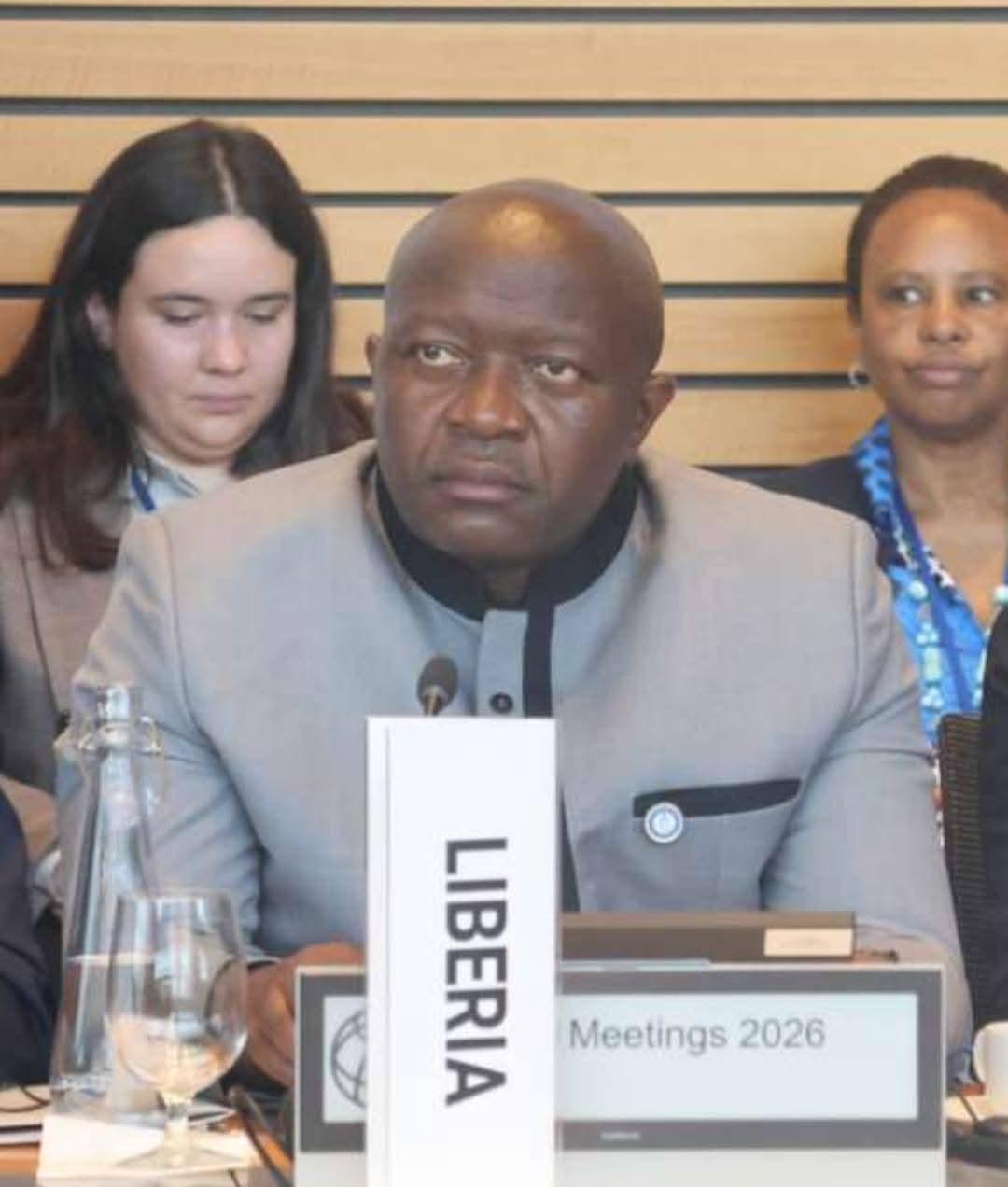
Liberia’s Minister of Finance and Development Planning, Augustine Kpehe Ngafuan, has presented one of Africa’s most ambitious climate action agendas at the 15th Ministerial Meeting of the Coalition of Finance Ministers for Climate Action, held on the sidelines of the World Bank and International Monetary Fund (IMF) Spring Meetings in Washington, D.C.
Addressing finance ministers, development institutions, and global policymakers, Minister Ngafuan described Liberia as a nation that contributes minimally to global greenhouse gas emissions, yet remains among the countries most exposed to climate shocks.
“Liberia comes to this dialogue as one of the world’s lowest emitters, but among its most climate-vulnerable nations,” Ngafuan declared.
Climate Threats Already Hitting Liberia
The Minister warned that rising sea levels, severe coastal erosion, recurring floods, and shifting rainfall patterns are already undermining Liberia’s economy and threatening the livelihoods of ordinary citizens.
With nearly 60 percent of Liberia’s population living along the Atlantic coastline, many communities face immediate danger.
A single tropical storm, officials say, can wipe out homes, roads, fisheries, and small businesses within hours.
Liberia’s coastal capital, Monrovia, along with vulnerable towns such as West Point, Buchanan, and Greenville, has increasingly experienced shoreline retreat and flood damage.
According to environmental studies, some parts of Liberia’s coastline are losing several meters of land annually due to erosion.
Liberia Commits to 64% Emissions Reduction by 2035
Despite its limited contribution to global emissions, Liberia has announced a major escalation of its climate ambitions under its updated Nationally Determined Contributions (NDC 3.0) under the Paris Agreement.
Minister Ngafuan said Liberia is now committing to:
64% reduction in greenhouse gas emissions by 2035, compared with business-as-usual projections
A long-term pathway toward net-zero emissions by 2050
Major investments in renewable energy, agriculture, transport, forestry, and resilience systems
He emphasized that Liberia’s climate strategy is not merely an environmental document but a national development blueprint aligned with the government’s economic transformation agenda.
“Our NDC is about jobs, growth, poverty reduction, and sustainable development,” he said.
Guardian of the Upper Guinea Forest
Liberia is home to one of West Africa’s most important ecological treasures, the Upper Guinea Forest, one of the planet’s critical carbon sinks and biodiversity hotspots.
The forest spans several West African countries, but Liberia retains around 43% of the remaining Upper Guinea rainforest, making it central to global carbon sequestration efforts.
Ngafuan noted that Liberia has long been at the forefront of REDD+ programs (Reducing Emissions from Deforestation and Forest Degradation), combining forest conservation with livelihood support for local communities.
“Protecting Liberia’s forests benefits the entire world,” he said.
Climate Action Already Underway
The Minister highlighted several national initiatives already in progress:
Coastal Defense
Liberia is prioritizing climate protection in hotspots such as West Point and Greenville, using sea barriers, mangrove restoration, and resilient infrastructure.
Climate-Smart Agriculture
Programs are being scaled up to boost food security, increase rural incomes, and protect farmers from droughts and erratic rainfall.
Renewable Energy Expansion
Liberia is increasing investments in solar, mini-grids, and energy efficiency to reduce heavy dependence on biomass, especially charcoal and firewood.
Inclusive Climate Governance
Women, youth, and local communities are being integrated into climate planning and decision-making.
Financing Remains the Greatest Obstacle
Minister Ngafuan stressed that Liberia’s climate ambition depends heavily on external financing.
He disclosed that:
More than 80% of Liberia’s mitigation targets require international support
A substantial portion of adaptation programs also depend on concessional funding and grants
Limited fiscal space and debt pressures constrain domestic investment
He warned that unchecked climate change could:
Slow economic growth
Deepen inequality
Push more Liberians into poverty
Increase migration pressures
Damage agriculture and mining sectors
Call for Climate Justice
In one of the strongest moments of his address, Ngafuan appealed for fairness in global climate financing.
“We cannot and should not be asked to choose between development today and resilience tomorrow.”
He argued that countries like Liberia which emit little carbon but bear severe climate consequences deserve easier access to grants, concessional loans, debt-for-climate swaps, and carbon market opportunities.
Liberia is particularly seeking support to:
Expand coastal protection infrastructure
Build early warning systems
Strengthen environmental data systems
Unlock carbon credit financing under Article 6 of the Paris Agreement
Finance large-scale resilience and adaptation programs
Partnership Appeal to World Bank and IMF
Ngafuan called for deeper collaboration with the World Bank, IMF, and bilateral development partners, urging them to scale up financing mechanisms tailored to vulnerable low-income countries.
“We ask you to walk this path with us in solidarity, fairness, and shared responsibility for our common future.”
Liberia’s Rising Global Profile
Liberia’s intervention at the Washington meetings comes as African nations increasingly push for reforms in the international financial system to reflect climate vulnerability, not just income status.
Analysts say Liberia’s strong policy position could elevate its standing in global climate negotiations ahead of COP31, where adaptation finance and carbon markets are expected to dominate discussions.
Background: Liberia and Climate Change
Population: 5.5 million+
Forest cover: Over 66% of land area
Electricity access: Around 35% nationally (higher in urban areas)
Main climate risks: Coastal erosion, flooding, storms, food insecurity, deforestation
GDP heavily reliant on agriculture, mining, forestry, and services
Liberia has made clear that while it contributes little to the climate crisis, it intends to lead in solutions. But officials insist global solidarity must match national ambition.
For a country balancing development needs with environmental stewardship, the stakes could not be higher.
