
By: Julius Konton
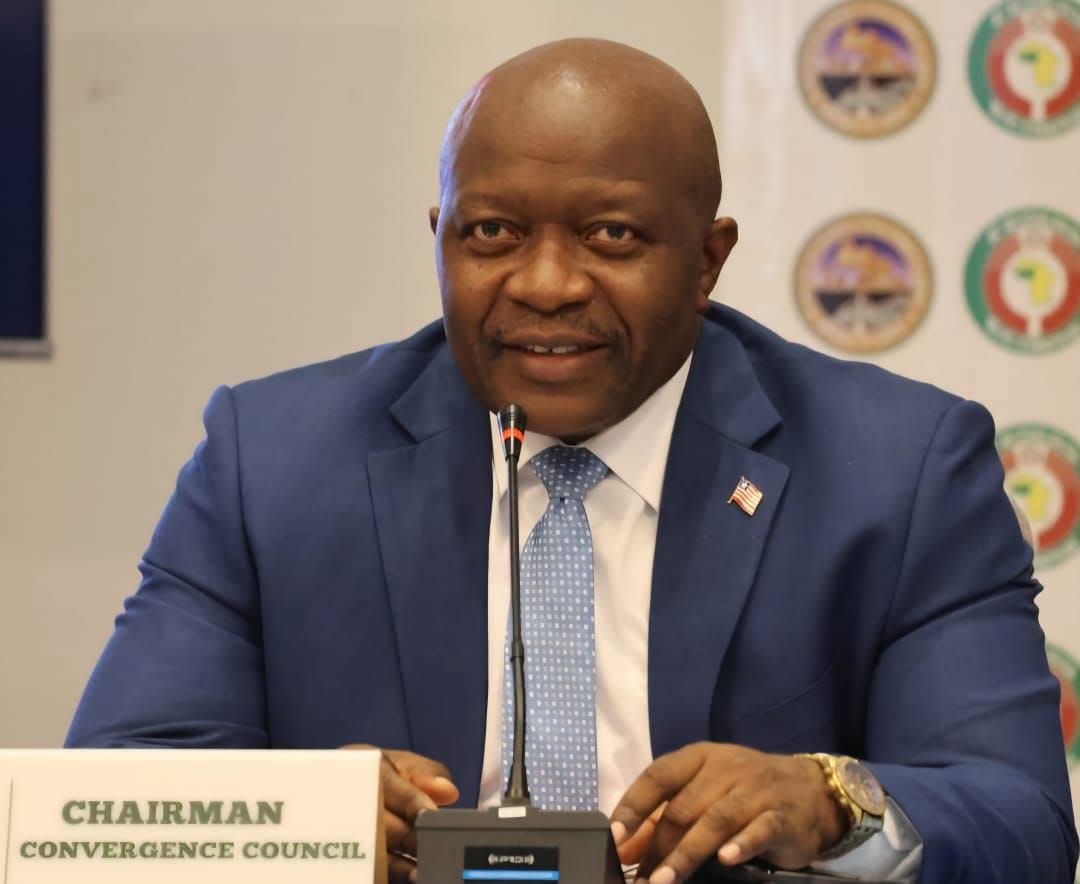
In a strategic move with regional economic implications, Liberia’s Augustine Kpehe Ngafuan has assumed the Chairmanship of the Economic Community of West African States (ECOWAS) Convergence Council of Ministers and Central Bank Governors, marking a milestone in regional financial coordination and integration.
Ngafuan, who serves as Liberia’s Minister of Finance and Development Planning, formally took over leadership of the Convergence Council during its latest plenary session where senior finance officials from ECOWAS’ 15 member states convened to discuss economic strategies and monetary policy implementation.
A New Leadership at a Critical Moment
The ECOWAS Convergence Council is a key policy-making body responsible for monitoring and advancing macroeconomic convergence among member states , a prerequisite for deeper economic integration and the eventual adoption of a single regional currency, the Eco.
The Council comprises finance ministers and central bank governors tasked with harmonizing fiscal and monetary frameworks across West Africa.
Ngafuan’s chairmanship comes at a pivotal moment as ECOWAS prepares to accelerate efforts toward the launch of the Eco, long envisioned as a tool to streamline cross-border trade, reduce transaction costs, and boost intra-regional economic growth.
From Liberia to the Regional Stage
Born in 1970 in Monrovia, Ngafuan has served in senior government roles across two decades, including as Liberia’s Foreign Minister and, most recently, as Finance Minister following his confirmation by the Liberian Senate in September 2024.
His professional experience spans international finance, diplomatic engagement, and public sector governance skills viewed as assets as ECOWAS confronts complex economic challenges, including inflation convergence, fiscal deficits, and external debt dynamics among member states.
Economic Context: Growth, Inflation, and Convergence
The ECOWAS region has recorded promising economic performance in recent years.
In 2025, the bloc’s combined economies grew by 4.5 percent, outpacing the 4.4 percent global growth rate recorded the year before, with projections of 5 percent growth in 2026, according to the Central Bank of Liberia’s recent assessments.
Inflations across member states have trended downward from an average of 23.3 percent in 2024 to 16.8 percent in 2025, although this remains above convergence targets.
Despite progress, economic disparities among member states continue to pose hurdles for fully harmonized macroeconomic indicators, such as public debt limits and fiscal deficits, criteria necessary to sustain the Eco roadmap and regional monetary union aspirations.
The Eco Agenda: A Long-Standing Vision
The idea of a single West African currency dates back to the 1993 revision of the ECOWAS Treaty, originally targeting a monetary union and culminating in the creation of the West African Monetary Zone (WAMZ) in 2000.
Multiple postponements followed with launch dates shifting from 2005 to 2010, then to 2015 and further ahead largely due to structural economic differences and global financial disruptions.
The bloc’s latest roadmap aims for the Eco launch in 2027, coupled with strengthening financial governance institutions that Ngafuan and his colleagues in the Convergence Council are now charged with steering.
Regional Financial Architecture and Beyond
Ngafuan’s chairmanship coincides with broader continental developments in African economic integration.
For example, Nigeria recently secured a permanent seat on the African Central Bank Board, reflecting a growing emphasis on multi-national financial cooperation across the continent.
These parallel advancements in regional monetary governance underscore the increasing importance of coordinated fiscal leadership in addressing shared economic challenges and optimizing opportunities for growth across West Africa.
As Chairman, Ngafuan is expected to:
Lead strategic sessions aimed at accelerating the ECO single currency roadmap;
Strengthen mechanisms for macroeconomic convergence and shared fiscal discipline;
Deepen collaboration between finance ministries and central banks across ECOWAS;
Engage with international financial institutions to mobilize technical and financial support for integration objectives.
Observers say the success of these efforts could redefine economic cooperation in West Africa, paving the way for enhanced regional resilience and global competitiveness.
