


By: Julius Konton
Liberian President Joseph Nyuma Boakai Sr. has called for a structured partnership between Liberia and Ghana to preserve historical records, strengthen museums, document heritage sites and support the recovery and possible restitution of African cultural properties.
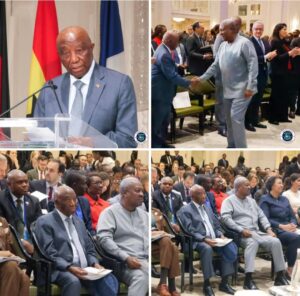
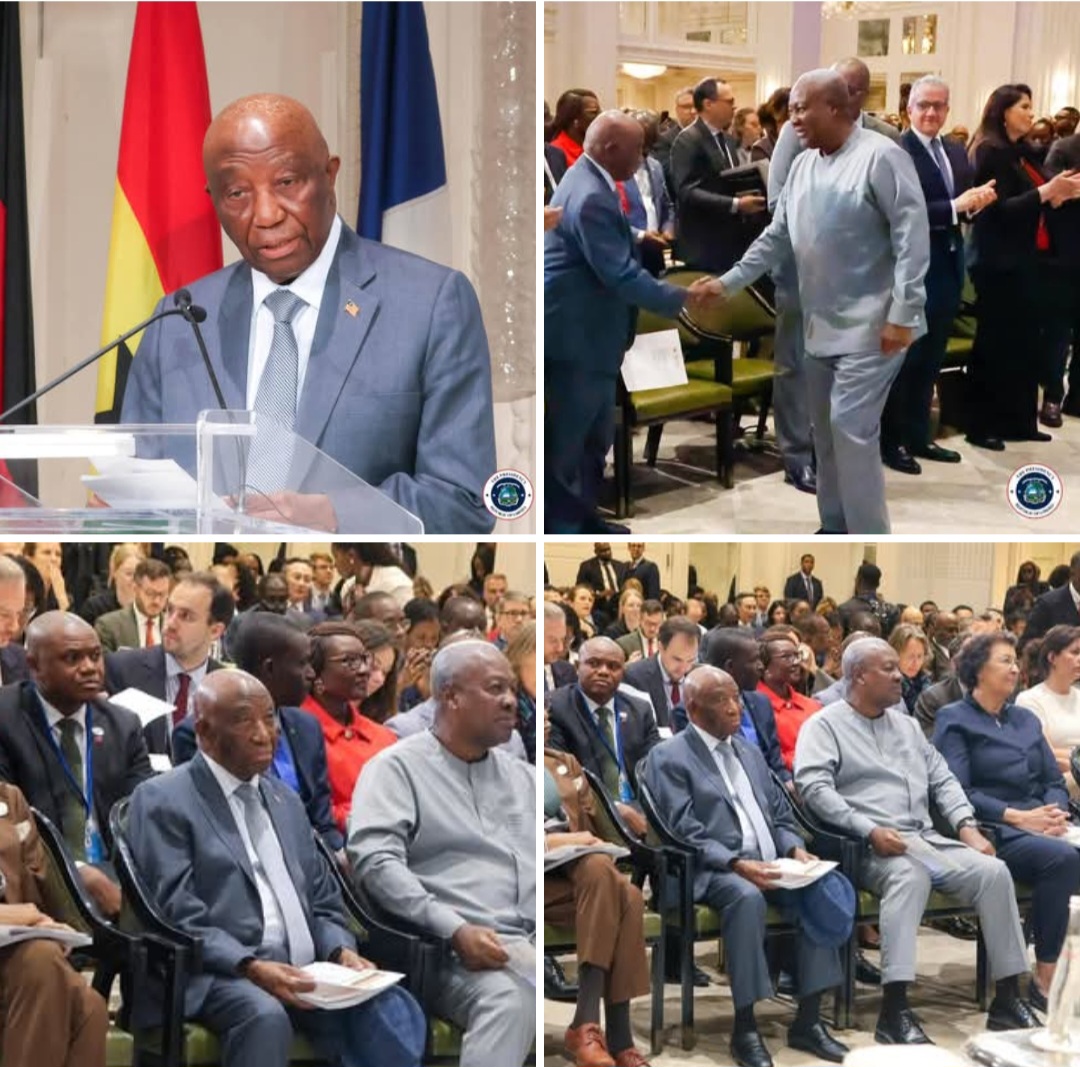
President Boakai made the proposal Wednesday in New York during a high-level side event convened on the margins of the 81st United Nations General Assembly, under the theme, “From Commitments to Action on Reparatory Justice: Advancing International Cooperation for the Return and Restitution of Cultural Properties and Heritage.”
The event was co-hosted by Ghana, Germany and France as part of broader international discussions on reparatory justice. Ghana had announced the event as a follow-up to its June 2026 Next Steps Conference on Reparatory Justice in Accra.
Boakai proposed the establishment of a Liberia–Ghana Cultural Heritage and Historical Recovery Cooperation Framework, arguing that the two West African countries could translate their shared interest in historical preservation and African heritage into practical institutional cooperation.
“I believe the next phase must move from conversation to practical cooperation,” President Boakai said.
Under the proposed framework, Liberian and Ghanaian museums, archives, universities and cultural institutions could collaborate on the digitization of historical records, professional training for archivists and museum specialists, joint historical research, conservation of heritage sites, exhibitions and educational programmes.
The initiative could also facilitate the identification of African cultural materials held outside their countries of origin and examination of avenues for their possible return.
A Broader African Restitution Debate
The proposal comes amid renewed international attention to the restitution of African cultural property and the preservation of historical memory.
Ghana has placed cultural restitution at the center of its wider reparatory-justice agenda.
Its Accra Next Steps Commitments, adopted following the June 17–19, 2026 conference, call for accelerated efforts toward the return of cultural property, human remains, archives and heritage to countries of origin, while also emphasizing cultural restoration, preservation and stronger coordination through UNESCO and other multilateral institutions.
The debate is also part of a broader African conversation.
UNESCO reported that representatives from all 54 African countries participated in a landmark 2025 conference in Addis Ababa focused on the restitution of cultural property, underscoring the continental dimension of efforts to reconnect African societies with displaced cultural heritage.
For Liberia, the issue has particular historical significance because the country’s national story is closely connected to the movement of formerly enslaved Africans from the United States back to West Africa and the subsequent creation of the Liberian state.
President Boakai specifically highlighted Providence Island, one of Liberia’s most significant historical sites, as an important component of the country’s heritage-preservation agenda.
According to UNESCO’s World Heritage Centre, Providence Island, historically known as Dozoa, covers approximately 11.22 acres in Montserrado County, between the Mesurado River and Stockton Creek.
The site is associated with the arrival of freed African Americans in Liberia beginning in 1822 and with the early encounters and negotiations that shaped the formation of the Liberian nation. Liberia declared independence in 1847.
UNESCO’s tentative-list documentation describes Providence Island as a site associated with slavery, emancipation, migration, cultural interaction and the formation of Liberian national identity.
The site contains remnants associated with early settlement, including an historic landing area and an old water well.
The island has received renewed attention under President Boakai.
In September 2026, the President met with representatives of the Friends of Providence Island to discuss initiatives aimed at preserving and promoting the site, with potential implications for historical education, community engagement and cultural tourism.
Boakai’s latest proposal therefore places Providence Island within a wider framework that links physical preservation with archival research, education and international cultural cooperation.
The Liberian President also pointed to his administration’s plans for a Peace, Reconciliation and Memorial Museum, saying Ghanaian experience could be useful as Liberia develops institutions capable of preserving the country’s historical record.
Such an institution, under the proposed vision, could provide a national platform for documenting Liberia’s complex political and social history, including periods of conflict, reconciliation and peacebuilding.
The proposed Liberia–Ghana cooperation could encompass museum governance, curation, archival preservation, conservation, historical research and public education.
President Boakai said the objective should extend beyond preserving objects to ensuring that historical knowledge is accessible to future generations.
Liberia has previously participated in international discussions on the restoration and restitution of African heritage.
In 2025, the Liberian government called at UNESCO for greater international solidarity in restoring African heritage through education, culture and science, including efforts to address displaced cultural treasures and historical knowledge.
President Boakai framed restitution as a broader process involving knowledge, archives, institutions and historical memory.
“Restitution should ultimately be about more than the physical return of objects,” he said.
He added that the process should encompass “the return of knowledge, the recovery of historical records, the restoration of dignity, the preservation of memory, and the renewal of African institutions.”
That approach is broadly consistent with UNESCO’s evolving description of restitution, which has increasingly emphasized the connection between cultural objects, identity, historical knowledge and future generations rather than treating restitution simply as the transfer of physical artifacts.
Ghana has also been strengthening institutional cooperation around restitution. In June 2026, Ghana’s Ministry of Tourism, Culture and Creative Arts said the country was working with UNESCO on cultural heritage preservation, restitution of cultural artefacts and institutional capacity-building.
The proposed cultural partnership would build on longstanding relations between Liberia and Ghana.
The two countries have maintained diplomatic and political relations for decades, while Ghana has also played a role in Liberia’s peace process.
Liberian government records have highlighted Ghana’s participation in regional peacekeeping efforts during Liberia’s civil wars, including through the Economic Community of West African States’ regional security framework.
The historical relationship gives the proposed cultural framework a broader context: cooperation that has previously involved diplomacy, regional security and peacebuilding could potentially expand into archives, museums, heritage preservation and cultural research.
President Boakai said the next step should be institutional rather than merely declaratory.
He proposed that Liberia and Ghana establish a small technical working group to identify immediate areas of cooperation and develop them toward a possible formal agreement.
“Ghana and Liberia have an opportunity to demonstrate that African solidarity can translate into practical action,” President Boakai said.
If pursued, the proposed framework could place Liberia within the expanding network of African initiatives seeking to document historical memory, strengthen cultural institutions and address the long-standing question of African cultural property held outside its countries of origin.
The proposal also reflects a broader shift in the international reparatory-justice debate from acknowledging historical dispossession toward developing practical mechanisms for research, preservation, restitution, institutional strengthening and public access to Africa’s historical record.
Ghana’s 2026 initiative and Liberia’s proposed bilateral framework are emerging within that wider continental and international discussion.


