


By: Julius Konton
Liberia has intensified its campaign to attract international private capital, with Finance and Development Planning Minister Augustine Kpehe Ngafuan urging investors in New York to look beyond the country’s historic challenges and consider its expanding economic opportunities, ongoing reforms and substantial infrastructure needs.
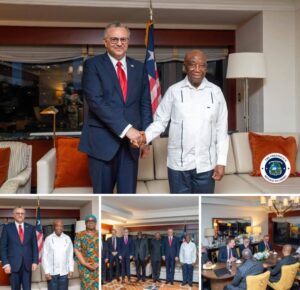
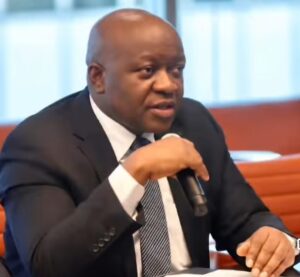
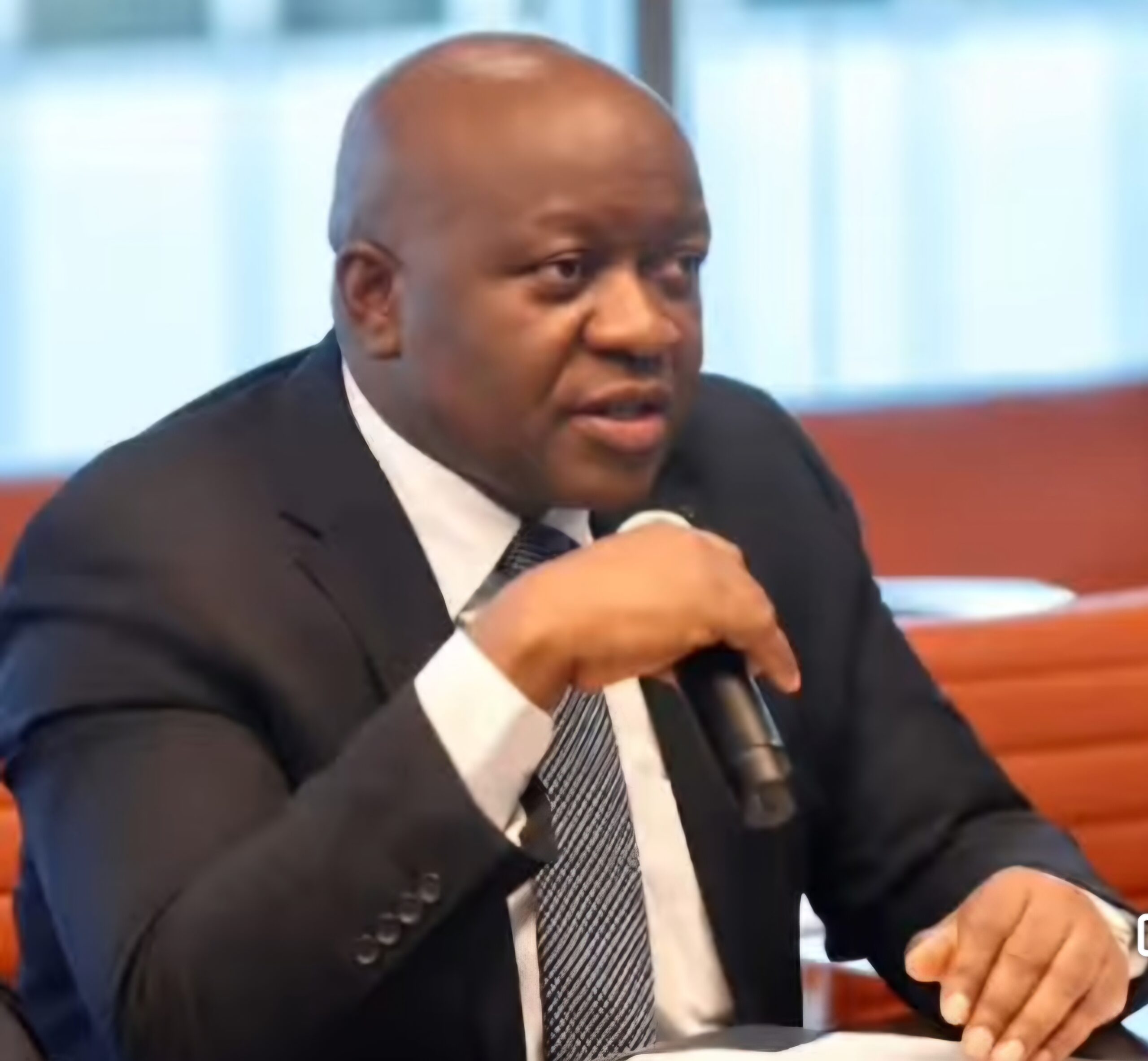
Addressing a high-level Liberia Investment Roundtable on the sidelines of the 81st United Nations General Assembly, Ngafuan presented Liberia as a country seeking to convert macroeconomic improvements and abundant natural resources into broader private-sector development, employment and infrastructure investment.
“Liberia is stable, growing, reforming, and open for serious business,” Ngafuan told participants, according to remarks from the event.
He encouraged international investors to explore opportunities in Liberia and participate in what the government describes as a long-term process of economic transformation.
The roundtable was convened by the Office of the Political Advisor to the President in collaboration with the National Investment Commission (NIC), bringing together senior Liberian officials and investment stakeholders at a time when the country’s economy is recording stronger growth.
Recent international economic data provide some context for Liberia’s investment pitch.
The World Bank estimates that Liberia’s economy expanded by 5.1 percent in 2025, supported particularly by a strong rebound in mining, alongside growth in services and agriculture.
Mining-sector growth accelerated to 17 percent, while services expanded by 4.4 percent and agriculture by 2.6 percent.
The World Bank also reports that Liberia’s fiscal position strengthened in 2025, with the overall fiscal deficit narrowing to 1.1 percent of GDP, compared with 2 percent in 2024.
Public debt declined from 57.2 percent of GDP in 2024 to 54.6 percent in 2025, while the current-account deficit narrowed from 8.1 percent to 6.5 percent of GDP.
The International Monetary Fund has similarly reported continued economic expansion.
In its June 2026 assessment, the IMF projected real GDP growth of 5.5 percent in 2026, driven primarily by mining activity, particularly iron ore, together with manufacturing and construction.
The IMF’s April 2026 Executive Board assessment also noted that Liberia’s economic growth accelerated to 5.1 percent in 2025 and highlighted fiscal adjustment and structural reforms as important elements of the country’s economic program.
The Fund approved a US$266 million Resilience and Sustainability Facility arrangement intended to strengthen Liberia’s resilience to climate-related shocks.
For investors, Liberia’s appeal remains closely linked to its natural-resource base and large infrastructure requirements.
The National Investment Commission identifies agriculture and agro-processing, mining, energy, infrastructure, manufacturing, tourism and digital development among the country’s principal investment areas.
The commission describes opportunities ranging from agricultural production and value-added processing to transport, energy and digital infrastructure.
Liberia has historically been an iron-ore producer, while gold and diamonds are also extracted.
The NIC says substantial exploration potential remains beyond existing production, including opportunities involving critical and industrial minerals and downstream mineral processing.
That creates an investment question that extends beyond extraction: whether Liberia can attract sufficient capital, technology and infrastructure to process more of its resources domestically, thereby increasing local value addition, government revenues, industrial activity and employment.
The government is also seeking private-sector participation in major infrastructure projects.
Among current opportunities identified by the NIC is the proposed expansion and development of Roberts International Airport under a finance-design-build-operate-transfer model with a 25-year concession period.
Liberia’s investment drive comes alongside efforts to strengthen the legal and institutional framework governing private capital.
The National Investment Act 2023 provides the principal legal framework for domestic and foreign investment, with provisions addressing investor protections, registration and priority sectors.
The framework identifies agriculture and agro-processing, infrastructure, manufacturing, energy, tourism and digital technology among areas where investment is encouraged.
Liberia has also introduced an Investment Incentives Act 2025, establishing a framework for fiscal and non-fiscal incentives for qualifying investments.
The National Investment Commission says eligible projects may receive incentives involving areas such as corporate taxation, import duties on qualifying capital equipment, accelerated depreciation and other investment facilitation measures, subject to statutory requirements.
The NIC’s 2025 investment climate assessment identifies agriculture, agro-processing, mining, energy and infrastructure as major opportunity areas while highlighting reforms aimed at simplifying business registration, improving transparency and strengthening regulatory systems.
Liberia’s investment story is also shaped by its history.
The country emerged from a devastating 14-year civil conflict in 2003, followed by a long reconstruction period focused on rebuilding institutions, infrastructure and public services.
Since the end of the conflict, Liberia has sought to transition from post-war recovery toward sustained economic development, although infrastructure deficits, limited industrial capacity and dependence on commodity exports continue to influence the economy.
Today, the country’s investment proposition is increasingly tied to the intersection of natural resources, regional trade, agriculture, energy and infrastructure.
The government is seeking to use private investment to complement public resources, particularly in sectors where the scale of financing required exceeds the capacity of the national budget.
The New York roundtable brought together senior officials from several sectors, including Mines and Energy Minister R. Matenokay Tingban; Agriculture Minister Dr. J. Alexander Nuetah; Posts and Telecommunications Minister Sekou M. Kromah; Carbon Markets Authority Chief Executive Officer and Presidential Envoy on Climate Action Jeanine Cooper; Senior Presidential Advisor Dr. Augustine Konneh; and Christian Dunbar, Senior Advisor for Investment Financing and Development and Presidential Special Envoy for Trade and Investment.
Their participation reflected the government’s effort to present investment opportunities as part of a broader economic strategy rather than as isolated sectoral projects.
For Liberia, the challenge is now to translate investor interest into bankable projects, long-term financing, technology transfers, local employment and measurable economic benefits.
The country’s economic expansion provides a stronger backdrop for that effort, but international financial institutions continue to point to structural constraints and external vulnerabilities.
The IMF has emphasized the importance of maintaining fiscal discipline, strengthening financial-sector resilience and continuing structural reforms, while noting risks from global economic conditions and commodity-price movements.
For the government, however, the message in New York was clear: Liberia wants international investors to see the country not simply as a recipient of development assistance, but increasingly as a market for long-term investment partnerships.
As Ngafuan told participants, the government’s objective is to mobilize private capital and partnerships capable of accelerating infrastructure development, expanding productive capacity, creating jobs and supporting sustainable economic growth.


