


By: Julius Konton
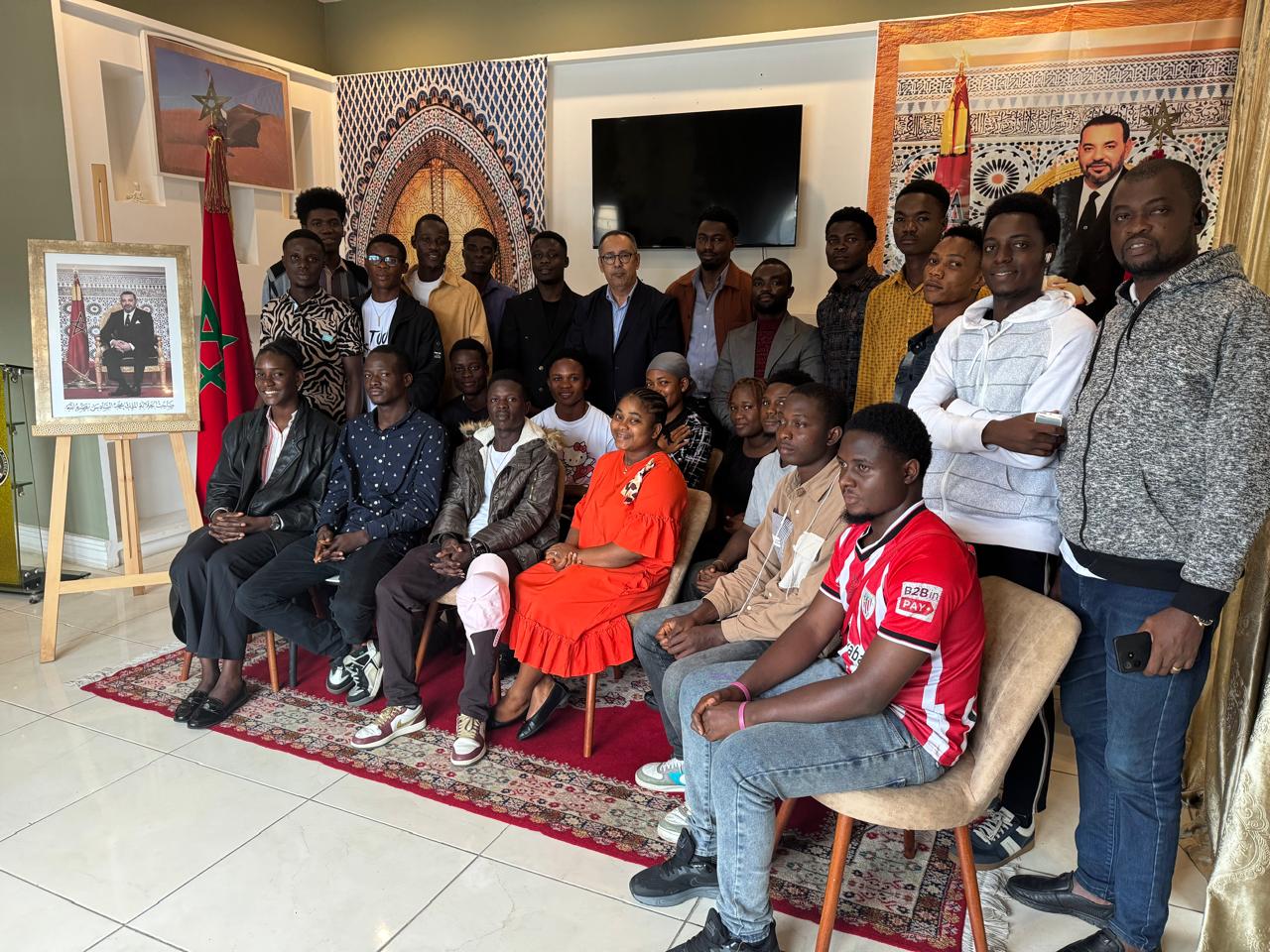
Morocco is expanding educational and skills-development opportunities for Liberian students through a longstanding bilateral partnership that has increasingly placed higher education, vocational training and human-capital development at the center of cooperation between the two countries.
For the 2025/2026 academic year, the Government of Liberia, in partnership with the Kingdom of Morocco, announced 105 bilateral scholarship opportunities, including 50 places for Technical and Vocational Education and Training (TVET) and opportunities in bachelor’s, medical, engineering, paramedical, architecture, commerce and management programs.
The Liberian Ministry of Education published the scholarship announcement on May 27, 2025.
The program covers a broad range of disciplines designed to develop both university graduates and technically skilled workers.
TVET opportunities include civil engineering, computer programming, computer networking, industrial automation, electrical maintenance, mechanical manufacturing, motor-vehicle repair, horticulture, logistics, culinary arts, construction, transportation operations and digital infrastructure, among other fields.
The university-level opportunities include fields such as geology, civil engineering, biology, chemistry, computer engineering, telecommunications, economics, information technology, mechanical engineering, mining engineering, agriculture and computer science.
The 2025 announcement also included places in general medicine, paramedical studies, architecture, commerce and management and agronomy.
Programs range from two to seven years, excluding a year of French-language preparation, with studies conducted in French at Moroccan public institutions.
The scale of the initiative is not new.
Liberia and Morocco also offered 105 bilateral scholarships in 2024, including 50 TVET places, while a similar 105-place package was announced in 2023.
The repeated allocation demonstrates the continuing role of education and technical training in the bilateral relationship.
The scholarships are administered within the broader framework of the Moroccan Agency for International Cooperation (AMCI), which has operated since 1986 as a major instrument of Morocco’s South-South cooperation.
According to AMCI, the agency has supported the training of more than 35,000 graduates from 98 countries, including 47 African countries, across fields ranging from medicine and engineering to economics, management, technical education and professional training.
For the 2019/2020 academic year, AMCI reported approximately 14,500 international students in Moroccan public higher-education institutions, including 12,500 Africans from 47 countries; more than 85 percent of the African students managed by AMCI were scholarship beneficiaries.
The agency says its wider technical-cooperation programs have also benefited more than 10,000 African public-sector professionals, reflecting Morocco’s broader approach of combining university education with professional and institutional capacity-building.
The educational relationship is part of a broader Liberia-Morocco partnership dating back decades.
Liberia’s Embassy in Morocco traces the relationship to the 1960s, when both countries were active in the emerging African diplomatic movement that contributed to the creation of the Organization of African Unity in 1963, the predecessor of today’s African Union.
Liberia opened its embassy near Rabat in 1996, while Morocco reopened its embassy near Monrovia in 2024.
The partnership has also survived periods of regional instability.
During Liberia’s Ebola crisis, Morocco maintained Royal Air Maroc flights to Liberia and provided humanitarian assistance, including medical protective equipment, according to Liberia’s Foreign Ministry.
The relationship has gained additional momentum in recent years.
In January 2025, Liberian Foreign Minister Sara Beysolow Nyanti and Moroccan Foreign Minister Nasser Bourita signed 15 bilateral cooperation agreements covering areas including education, vocational training, agriculture, health, mining, youth empowerment, justice, tourism and other sectors.
Liberia’s Foreign Ministry specifically identified scholarships and vocational training for Liberian students as an important component of the renewed partnership.
The two governments had already strengthened their education cooperation in 2020, when they signed agreements covering agriculture, higher education and research, and health.
At the time, Morocco also committed to increasing scholarship opportunities for Liberian students.
For Liberia, the Moroccan scholarship program extends beyond conventional university education by providing access to technical disciplines directly connected to infrastructure, manufacturing, information technology, transportation, agriculture, health and other sectors relevant to economic development.
The emphasis on TVET is particularly significant because the 2025 package allocated 50 of its 105 places nearly 48 percent to technical and vocational training.
This gives the program a substantial skills-development component alongside its academic offerings.
Morocco’s broader cooperation model similarly combines scholarships with technical training, professional exchanges and institutional capacity-building across Africa. AMCI says its partnerships currently extend to 119 countries worldwide, including 47 African states.
As Liberia continues efforts to strengthen its education system and develop a workforce capable of supporting infrastructure, technology, agriculture, healthcare and industrial growth, the Morocco scholarship program represents one of the country’s established international pathways for acquiring specialized knowledge and professional skills.
The challenge now extends beyond securing scholarships: ensuring that beneficiaries complete their training, return with relevant expertise, and translate their Moroccan educational experience into measurable contributions to Liberia’s development will be a critical part of the partnership’s long-term impact.


