


By: Julius Konton
The Government of Liberia has renewed its commitment to eliminating gender-based discrimination in the payment of workers, declaring that men and women performing work of equal value within the public service should receive equal remuneration.
The commitment, communicated through the Civil Service Agency (CSA) on Friday as Liberia joined countries around the world in observing International Equal Pay Day, comes against the backdrop of persistent gender disparities in employment, income and access to economic opportunities globally.
International Equal Pay Day is observed annually on September 18 following a United Nations General Assembly resolution adopted without a vote in December 2019.
The resolution established the observance beginning in 2020 and linked equal pay for work of equal value to the broader Sustainable Development Goals, particularly SDG Target 8.5, which calls for full and productive employment and decent work for all, together with equal pay for work of equal value.
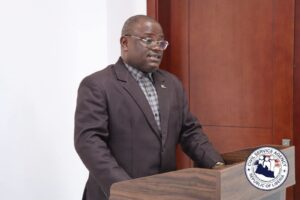
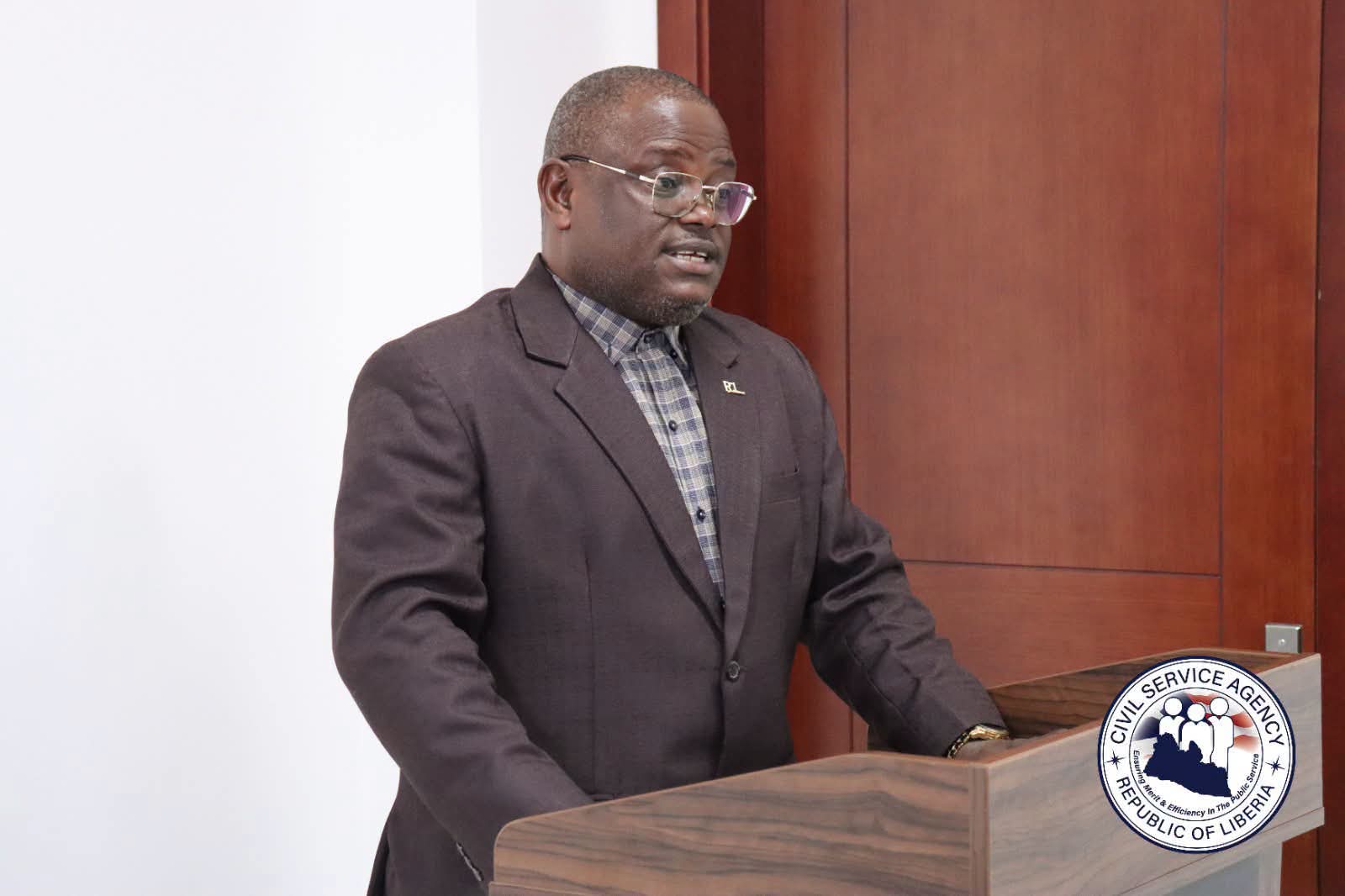
Speaking on Liberia National Television in Paynesville on Friday, CSA Deputy Director-General for Human Resource Management and Policy Edwin K. Jallah said the government currently applies the principle of equal remuneration to men and women occupying equivalent positions in the public service.
“Whilst there remains room for improvement, the Government of Liberia is currently administering equity in wage dispensation between male and female workers,” Jallah said.
“A female director in the public service is paid the same salary as her male counterpart performing similar tasks.”
Jallah said the principle is embedded in the public-service compensation structure, where remuneration is tied to positions, grades and responsibilities rather than the gender of the individual occupying the position.
The CSA official, however, identified Liberia’s fragmented labour and human-resource regulatory environment as one of the country’s continuing challenges.
He noted that public-sector employees are administered under the Standing Orders for the Civil Service, while workers in the private sector fall primarily under the Decent Work Act, creating differences in institutional frameworks and the way employment and wage data are generated and reported.
He said the CSA is considering collaboration with the Ministry of Labour to convene a national labour conference aimed at examining these differences and exploring ways to strengthen coordination and harmonisation between the public and private sectors.
Global Wage Gap Remains Significant
Liberia’s discussion comes as the gender pay gap remains a major international labour-market issue.
The United Nations says women globally earn, on average, about 20 percent less than men, although the size of the gap varies substantially across countries, sectors and occupations.
The UN also reports that women working in the health and care sector earn, on average, 24 percent less than their male counterparts.
The International Labour Organization has similarly documented significant wage disparities across African economies and has stressed the importance of stronger wage statistics and comparable labour-market data for understanding differences in earnings.
Its African wage analysis covered data from 28 countries, representing approximately 84 percent of wage employees in Africa in 2017, while noting that comprehensive country-level coverage remains a challenge.
For Liberia, the challenge extends beyond the question of salaries alone.
Recent Afrobarometer findings show continuing differences between men and women in education and employment.
In its 2024 Round 10 survey, women were less likely than men to have completed secondary education 42 percent compared with 50 percent and were also less likely to have attained post-secondary education, 17 percent compared with 22 percent.
The survey also found that among working-age adults, 29 percent of men compared with 19 percent of women were employed.
Respondents identified lack of necessary education or skills and employers’ preference for hiring men among the leading barriers affecting women’s entry into and advancement in the workplace.
Jallah also pointed to women’s participation in senior government as another indicator of the administration’s stated commitment to expanding opportunities for women.
The government has increased the representation of women in senior decision-making positions under President Joseph Nyuma Boakai Sr. Following appointments announced in September, public reporting placed women at nine of 19 core ministerial positions, or approximately 42.1 percent.
The Executive Mansion confirmed a series of ministerial changes on September 2, including the appointment of Cllr. Betty M. Lamin-Blamo as Minister of Justice.
The figure differs from the 47.3 percent cited in the original government statement, underscoring the importance of specifying the date, definition and number of positions included when reporting cabinet representation.
Beyond government appointments, Afrobarometer’s 2024 Liberia survey found that 69.3 percent of respondents said women should have the same opportunity as men to be elected to political office.
At the same time, the survey documented continuing barriers affecting women’s economic participation.
Jallah’s comments also highlight a broader statistical challenge: measuring gender inequality requires reliable, comparable data across both formal and informal employment.
The ILO’s Liberia country profile notes that its labour-market indicators distinguish between nationally reported figures and ILO-modeled estimates, while some indicators including gender pay-gap measurements can be unavailable where sufficiently comparable national data are not reported.
This makes the distinction between equal pay for equal work and the broader gender pay gap particularly important.
Equal-pay policies address whether men and women performing work of equal value receive equivalent remuneration, while the overall pay gap can also reflect differences in occupations, hours worked, seniority, education, employment sectors and participation in the labour market.
For Liberia, strengthening labour-market statistics across the public and private sectors could therefore provide policymakers with a clearer picture of where disparities exist and which interventions are most effective.
A Continuing International Commitment
As International Equal Pay Day is observed worldwide, Liberia’s renewed commitment places the country within a broader international effort to advance workplace equality and decent work.
For the United Nations, equal pay is not only a question of wages but part of a wider human-rights and development agenda aimed at removing structural barriers that limit women’s access to employment, resources and economic opportunities.
For Liberia, the government’s challenge now extends from reaffirming the principle of equal pay to strengthening enforcement, improving labour-market data, harmonising public- and private-sector employment frameworks and addressing the educational and structural barriers that continue to affect women’s participation in the economy.
The debate over equal pay therefore remains broader than the salary received at the end of each month. It encompasses who gets hired, who advances, which jobs women and men occupy, how work is valued and whether workers have equal access to opportunities throughout their careers.


