


By: Julius Konton
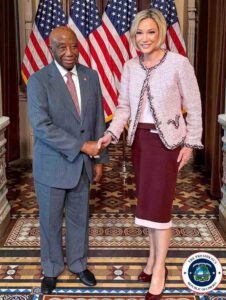
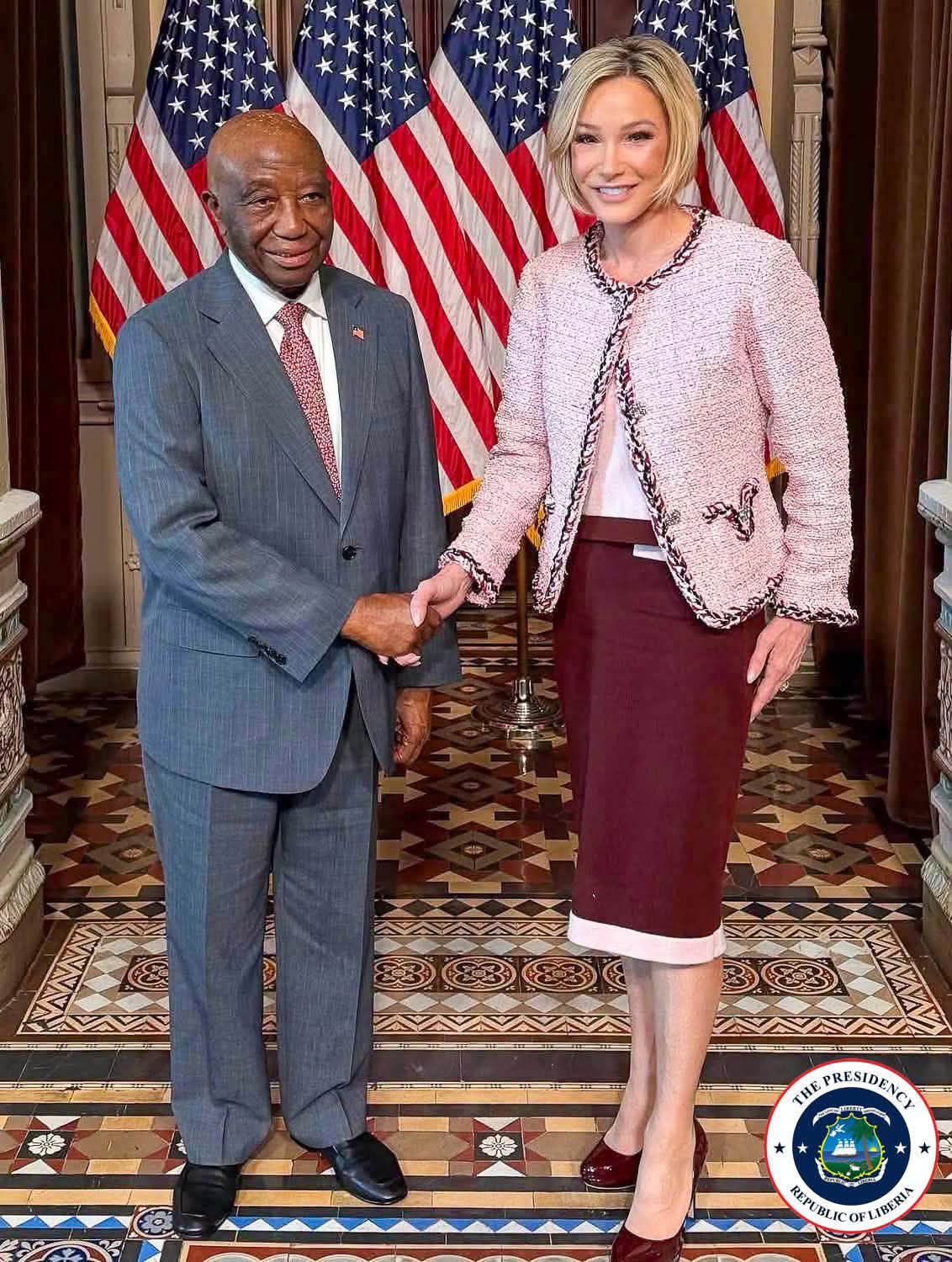
Liberian President Joseph Nyuma Boakai Sr. has held a White House meeting with Paula White-Cain, Senior Adviser to the United States President’s White House Faith Office, in an engagement focused on faith, leadership and the longstanding relationship between Liberia and the United States.
The meeting, according to a statement issued by the Liberian presidency, provided an opportunity for President Boakai to underscore Monrovia’s interest in strengthening cooperation with Washington in areas connected to peace, stability, national development and people-to-people relations.
“Liberia deeply values its historic relationship with the United States. We remain committed to strengthening this partnership for the benefit of our people,” President Boakai said.
The engagement comes against the backdrop of one of Africa’s longest-standing relationships with the United States.
Washington formally recognized Liberia on September 23, 1862, and diplomatic relations were established in February 1864.
Liberia had declared independence in 1847 after its establishment as a settlement associated with the American Colonization Society.
The historical connection has since evolved through periods of close political, economic and security cooperation, as well as significant challenges during Liberia’s civil wars.
U.S. engagement has also played a substantial role in Liberia’s post-war recovery.
A Congressional Research Service review reported that, since the end of Liberia’s second civil war, Congress had appropriated more than $2.4 billion in State Department and USAID-administered assistance for stabilization, development, governance, security-sector reform, health and other programs.
During the 2014–2016 Ebola crisis, the United States provided roughly $600 million in additional State Department and USAID-administered assistance for the response.
The relationship also has an important economic and development dimension. U.S. government records have identified trade, investment, education, health, governance and economic growth as major areas of bilateral engagement.
Liberia is eligible for preferential trade treatment under the African Growth and Opportunity Act, while the country’s maritime registry has historically been an important component of its economy.
In December 2024, the U.S. Millennium Challenge Corporation selected Liberia as eligible to develop a new compact for fiscal year 2025, following an assessment process covering governance, economic freedom and investment in people.
The White House engagement also follows White-Cain’s July 2026 visit to Liberia for the country’s 179th Independence Anniversary.
During the visit, she participated in national religious observances in Buchanan, Grand Bassa County, where she delivered the sermon at a Thanksgiving and Intercessory Service.
The visit was followed by President Boakai conferring on her the Grand Band of the Order of the Star of Africa on July 27, according to White-Cain’s organization.
The award is among Liberia’s highest national distinctions.
During her July visit, White-Cain spoke about Liberia’s history of conflict and recovery and called for values including humility, integrity, accountability and service, while encouraging attention to the country’s younger generation.
Her subsequent White House engagement with President Boakai gives the relationship a continuing faith-based and people-to-people dimension, alongside the broader diplomatic and development ties between Monrovia and Washington.
White-Cain said it was an honor to welcome President Boakai and his delegation to the White House, describing her recent experience in Liberia as particularly meaningful.
She said she had developed a strong affection for the country and its people and characterized her discussions with the Liberian president as centered on faith, leadership and the longstanding friendship between Liberia and the United States.
The Liberian delegation accompanying President Boakai included Foreign Minister and Dean of the Cabinet Sara Beysolow Nyanti; Director General of the Cabinet Nathaniel T. Kwabo; Liberia’s Ambassador to the United States, Dr. Al-Hassan Conteh; Executive Assistant to the President Morie Nemah; and Special Assistant to the President Louise Tamba.
For Monrovia, the Washington engagement comes as Liberia continues to pursue international partnerships to support economic growth, institutional development, education, health and social stability.
For Washington, Liberia remains a country with unusually deep historical links to the United States, dating back more than 160 years of formal diplomatic relations and more than two centuries of historical interaction.
The latest meeting therefore adds another chapter to a relationship shaped by Liberia’s unique historical connection to the United States, decades of development cooperation and the shared experience of Liberia’s post-war reconstruction and democratic transition.


