


Cllr. Vamah Calls for Comprehensive Mining Law Reform as Liberia Pursues New MCC Compact
By: Julius Konton
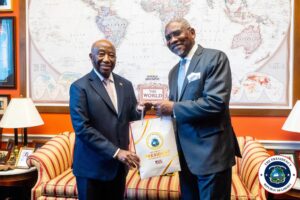
The Chairperson of Liberia’s Law Reform Commission, Cllr. Bornor Vamah, has called for a comprehensive overhaul of the country’s mining legislation, arguing that modernizing the legal framework is critical to strengthening governance of Liberia’s mineral resources and advancing the country’s efforts toward a second Millennium Challenge Corporation (MCC) Compact.
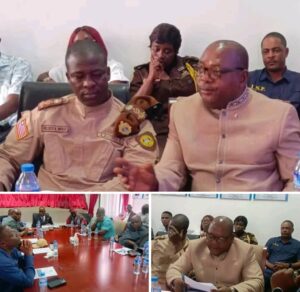
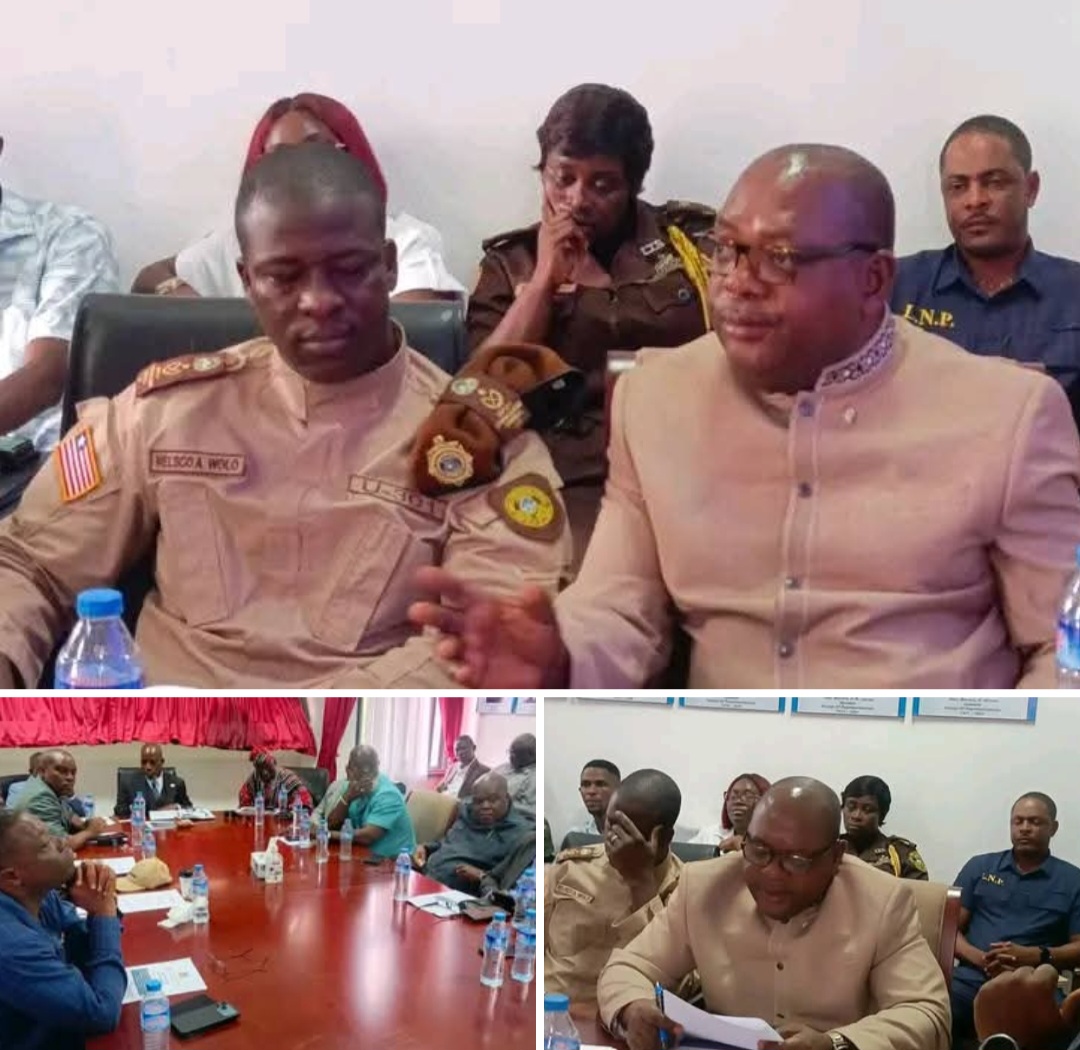
Cllr. Vamah made the call on Thursday, September 17, 2026, during a legislative briefing and policy framework discussion convened by the House Committee on Mines and Energy.
Addressing members of the 55th Legislature, he urged lawmakers to go beyond piecemeal amendments and undertake a comprehensive review of the mining law to bring it in line with Liberia’s current economic, environmental and investment realities.
His comments come as Liberia is developing a new MCC Compact after the MCC Board of Directors selected the country as eligible to develop a compact in December 2024.
MCC’s current records list Liberia’s proposed compact as being in the development stage.
According to Cllr. Vamah, reforms in the mining sector are among the areas that Liberia needs to address as it seeks to strengthen its performance against the policy benchmarks associated with the MCC process.
The MCC scorecard, however, assesses countries across a broader range of governance, economic freedom and investment-in-people indicators.
For fiscal year 2026, the framework includes 22 indicators, including Regulatory Quality, Property and Land Rights, Natural Resource Protection, Rule of Law, Control of Corruption, Government Effectiveness and Trade Policy.
To pass the scorecard, countries generally must pass at least 11 indicators, pass Personal Freedom, and pass either Control of Corruption or Government Accountability.
The distinction is significant because Liberia’s mining-law reform could intersect with several of these broader policy areas without being, by itself, a standalone MCC scorecard indicator.
The Natural Resource Protection indicator, for example, assesses government commitment to biodiversity, natural habitats and sustainable management of natural resources, while Regulatory Quality considers the quality of regulations affecting businesses and investment.
Liberia’s principal mining legislation is the Minerals and Mining Law of 2000, approved on April 3, 2000.
The law established the legal framework governing mineral exploration and mining activities in the country and remains the foundation of the sector’s regulatory architecture.
More than two decades after its enactment, Liberia’s mining industry has changed substantially.
The country has expanded large-scale iron-ore operations, gold production and artisanal and small-scale mining, while environmental protection, community rights, revenue management, transparency and local economic participation have become increasingly important components of modern mining governance.
The United States Geological Survey reported that in 2024, production of Liberia’s diamond, gold and iron-ore sectors accounted for approximately 18.5 percent of GDP, while exports of those minerals reached about US$1.1 billion, representing roughly 85 percent of total goods exports.
The World Bank also reported that Liberia’s economy grew by 5.1 percent in 2025, with mining-sector growth accelerating to 17 percent, compared with 2.1 percent in 2024.
Gold and iron ore were among the principal drivers of the country’s export performance.
Mining has historically occupied a central place in Liberia’s economy.
Iron-ore production emerged as one of the country’s major economic activities before the civil war, with major deposits and associated rail and port infrastructure supporting exports.
The civil conflict severely disrupted the industry, destroying or disabling mining and transportation infrastructure and bringing large-scale production to a halt.
Since the end of the conflict, Liberia has gradually rebuilt its mining industry and attracted renewed investment into iron ore, gold and other mineral resources.
The sector has since become one of the country’s principal sources of export earnings and foreign exchange. U.S. government trade data notes that iron ore alone accounted for 27 percent of Liberia’s total export earnings in 2022, underscoring the country’s continuing dependence on mineral commodities.
Against this background, Cllr. Vamah told lawmakers that simply modifying selected sections of the existing legislation may not adequately address the structural challenges confronting the sector.
A comprehensive review could provide lawmakers an opportunity to examine issues including licensing and concessions, environmental safeguards, community participation, land access, artisanal and small-scale mining, revenue collection, transparency, dispute resolution and institutional responsibilities.
The reform debate also comes amid Liberia’s continuing effort to improve the management of natural resources and ensure that mineral wealth generates broader economic and social benefits.
The International Monetary Fund has described mining as one of Liberia’s major sources of real GDP while noting that the sector presents both opportunities and risks, including the potential for investment and development on one hand and social and economic instability where natural resources are poorly managed on the other.
Liberia’s pursuit of a second MCC Compact follows the successful completion of its first five-year compact.
In 2015, the United States and Liberia signed a US$257 million MCC Compact, focused principally on improving access to reliable electricity and strengthening road infrastructure.
The program closed in January 2021.
MCC reported that approximately 92.1 percent of its US$256.7 million budget was disbursed, with the Energy Project receiving major investment, including support for the rehabilitation of the Mount Coffee Hydropower Plant.
The project helped expand Liberia’s electricity infrastructure and supported institutional reforms in the power sector.
Liberia’s current opportunity is therefore being pursued against the background of that earlier partnership, but the selection process remains broader than any single legislative reform.
MCC says its selection system uses independently sourced data to compare countries on policies linked to economic growth, including governance, economic freedom and investment in people.
For the 55th Legislature, the proposed mining-law review could become an important test of Liberia’s ability to modernize one of its most economically significant sectors while balancing investor interests with environmental protection, community rights, transparency and national revenue.
Cllr. Vamah’s appeal places the Law Reform Commission firmly in the ongoing policy conversation and challenges lawmakers to consider whether Liberia’s principal mining legislation is sufficiently equipped for a sector that has changed dramatically since the law was enacted in 2000.
As Liberia advances the development of its proposed second MCC Compact, the debate over mining-law reform is likely to remain closely linked to wider discussions about governance, investment, natural-resource management and sustainable economic growth.


