
By: Julius Konton
The Republic of Gabon has reaffirmed its strong support for Morocco’s growing leadership role in Africa, praising initiatives launched by His Majesty King Mohammed VI aimed at accelerating development, strengthening regional integration, and expanding economic opportunities across the continent.
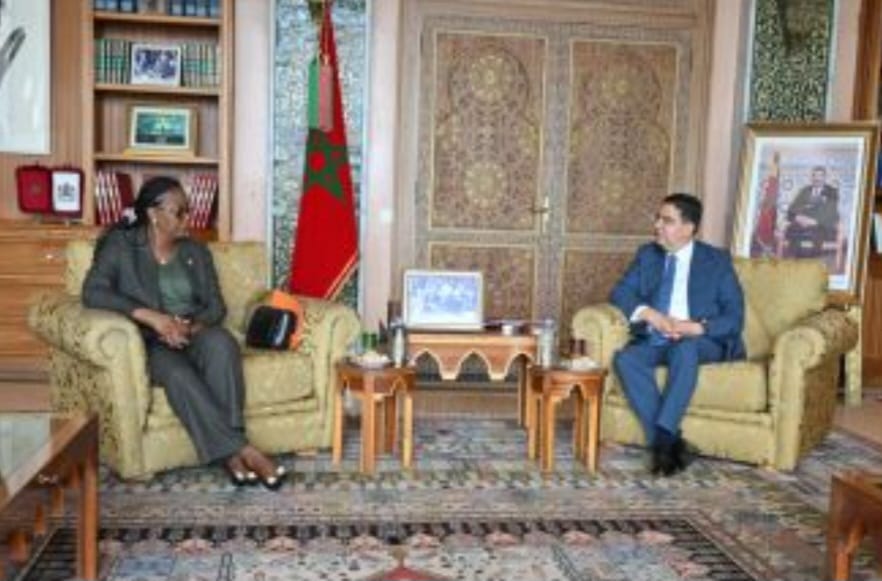
During high-level diplomatic talks held Tuesday in Rabat, Gabon’s Minister of Foreign Affairs and Cooperation, in charge of Integration and the Diaspora, Marie Edith Tassyla-Ye-Doumbeneny, expressed Libreville’s full endorsement of Morocco’s African strategy while meeting with Morocco’s Minister of Foreign Affairs, African Cooperation, and Moroccan Expatriates, Nasser Bourita.
The discussions underscored increasing cooperation between the two nations and highlighted a shared vision for a more connected, stable, and prosperous Africa.
Gabon Praises Morocco’s Atlantic African States Process
The Gabonese foreign minister commended the momentum created under the Process of the Atlantic African States (PAAS) a strategic platform designed to strengthen cooperation among Atlantic-facing African countries.
The initiative seeks to transform the Atlantic African region into a major geostrategic corridor for development, trade, and security cooperation. Officials said the framework offers strong opportunities in key sectors including:
Environmental sustainability
Food security
Public health systems
Renewable and conventional energy
Maritime and logistics connectivity
Resource sharing
Skills transfer and institutional cooperation
Analysts say the Atlantic coastline of Africa, stretching over 26,000 kilometers, represents one of the continent’s most underutilized economic frontiers, with vast opportunities in shipping, fisheries, offshore energy, and trade corridors.
Strong Support for Sahel Access to the Atlantic Ocean
Gabon also welcomed Morocco’s flagship Royal Initiative aimed at facilitating access of landlocked Sahel countries to the Atlantic Ocean.
The plan is widely viewed as a transformative economic proposal for nations such as Mali, Niger, Burkina Faso, and Chad, which face major logistical challenges due to limited maritime access.
According to development experts, landlocked African economies can face transport costs up to 50% higher than coastal nations, reducing competitiveness and slowing growth. Improved Atlantic access could significantly lower costs, stimulate exports, and improve food and energy supply chains.
Tassyla-Ye-Doumbeneny described the initiative as a powerful example of Morocco’s “active solidarity” with fellow African nations.
King Mohammed VI’s Expanding African Diplomacy
The Gabonese minister praised the leadership of King Mohammed VI, commending his sustained contribution to international efforts promoting peace, stability, and economic development across Africa.
Since ascending the throne in 1999, King Mohammed VI has made African diplomacy a cornerstone of Morocco’s foreign policy.
Morocco has signed hundreds of bilateral agreements across the continent in banking, agriculture, renewable energy, education, and infrastructure.
Morocco officially rejoined the African Union in 2017, marking a significant return to continental institutions and expanding its political and economic influence across Africa.
Morocco-Gabon Relations Enter New Phase
Both sides reaffirmed their commitment to strengthening bilateral cooperation across multiple sectors, signaling a new phase in Morocco-Gabon relations.
Morocco and Gabon have historically maintained cordial diplomatic ties, with growing collaboration in trade, education, private investment, and technical exchange.
Officials indicated that future partnerships may expand into logistics, energy, climate resilience, and regional transport systems.
Africa’s Push for Homegrown Integration
The Rabat meeting comes as African nations intensify efforts to implement the African Continental Free Trade Area (AfCFTA), a market of more than 1.4 billion people with a combined GDP exceeding $3.4 trillion.
Regional leaders increasingly see infrastructure connectivity, maritime access, and political cooperation as critical to unlocking Africa’s next wave of economic growth.
Observers say Morocco’s Atlantic and Sahel initiatives reflect a broader shift toward African-led solutions for African challenges.
