
By: Julius Konton
Liberia’s Ministry of Finance and Development Planning (MFDP) has launched a major nationwide initiative aimed at improving how county governments execute budgets, report expenditures, and deliver development projects, as the government seeks faster and more transparent local service delivery.
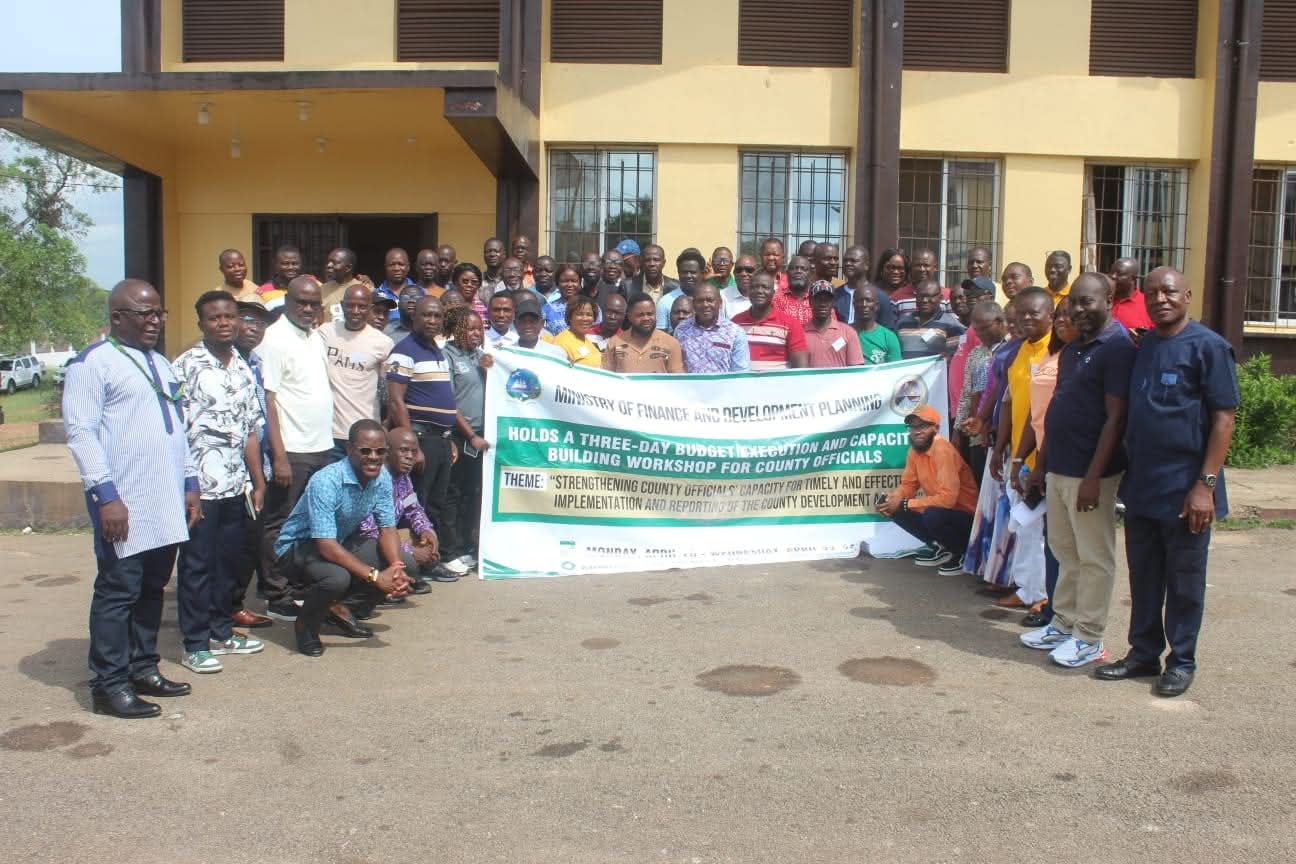
The three-day County Budget Execution Workshop, held from April 20–22, 2026 at the Gbarnga Administrative Building in Bong County, brought together county officials, development officers, financial administrators, and government technicians under the theme:
“Strengthening County Officials’ Capacity for Timely and Effective Implementation and Reporting of the County Development Agenda.”
The workshop was officially opened by Liberia’s Assistant Minister for Development Planning, J. Wellington Barchue speaking on behalf of Finance and Development Planning Minister Augustine Kpehe Ngafuan.
A Critical Moment for Liberia’s Development Agenda
Addressing delegates, Assistant Minister Barchue said the meeting comes at a decisive time when citizens across Liberia’s 15 counties expect visible improvements in roads, schools, healthcare, electricity, and livelihoods.
He quoted Minister Ngafuan as saying:
“The burden for doing good is to do more.”
He praised county authorities for making progress despite limited resources, noting that many counties continue to deliver development outcomes under difficult fiscal conditions.
Liberia, a nation of approximately 5.5 million people, has in recent years intensified efforts to decentralize governance and shift development responsibilities from Monrovia to county administrations.
Experts say stronger county budget execution is essential if decentralization reforms are to succeed.
Why County Budget Execution Matters
Although annual national budgets allocate millions of dollars to county operations and development programs, many African governments including Liberia often face challenges in turning approved budgets into completed projects.
Common issues include:
Delays in fund disbursement
Weak procurement systems
Inadequate technical capacity
Poor financial reporting
Weak monitoring and evaluation systems
Low transparency in local spending
The Assistant Minister emphasized that allocating funds alone is not enough.
“Effective development goes beyond allocating resources. It is about how well those resources are managed, implemented, monitored, and reported.”
He warned that weak execution systems can undermine even the best policies.
Workshop to Improve Financial
Management and Accountability
During the three-day training, county officials are expected to receive guidance on:
Budget execution procedures
Public financial management rules
Monitoring and evaluation systems
Timely reporting standards
Transparency and anti-corruption safeguards
Efficient use of county development funds
The Ministry says the training is part of a broader effort to align county spending with Liberia’s national development priorities and international public finance standards.
New Measures to Tackle Staff Absenteeism
In a notable policy announcement, the Assistant Minister acknowledged complaints that some ministry staff assigned to counties have not been consistently present to provide technical support.
He said the government would immediately introduce new oversight measures.
Proposed Reforms Include:
Daily attendance registries for Regional
Development Officers (RDOs) and County
Development Officers (CDOs)
Mandatory sign-in and sign-out systems
Monthly reports signed by county superintendents before submission to the Ministry
Stronger county-ministry coordination mechanisms
Officials believe these steps will reduce absenteeism and improve support services to county administrations.
Liberia’s Decentralization Push Gains Momentum
Since the end of Liberia’s civil conflict in 2003, successive governments have pursued decentralization to bring governance closer to citizens.
The administration of President Joseph Nyuma Boakai has made county development and performance accountability key pillars of governance.
Analysts note that counties such as Bong, Nimba, Grand Bassa, Lofa, and Maryland remain central to agricultural production, trade, and future economic growth.
Better budget execution at county level could accelerate:
Farm-to-market roads
Rural electrification
School rehabilitation
County hospitals and clinics
Youth employment programs
Water and sanitation systems
Call for Greater Citizen Impact
Closing his remarks, the Assistant Minister urged participants to apply the skills gained after returning to their counties.
“The ultimate measure of our success lies in the positive changes we bring to our communities.”
He said citizens would judge government performance through visible improvements such as:
Better roads
Improved schools
Accessible healthcare
Electricity access
Stronger livelihoods
What This Means for Liberia
With donor financing tightening globally and domestic revenues under pressure, Liberia faces growing pressure to ensure every public dollar produces measurable results.
If effectively implemented, the county budget reform initiative could become one of the most significant steps toward accountable local governance in recent years.
For many Liberians outside Monrovia, success will not be measured by speeches or workshops but by whether roads are built, clinics stocked, teachers paid, and opportunities created.
