


By: Julius Konton
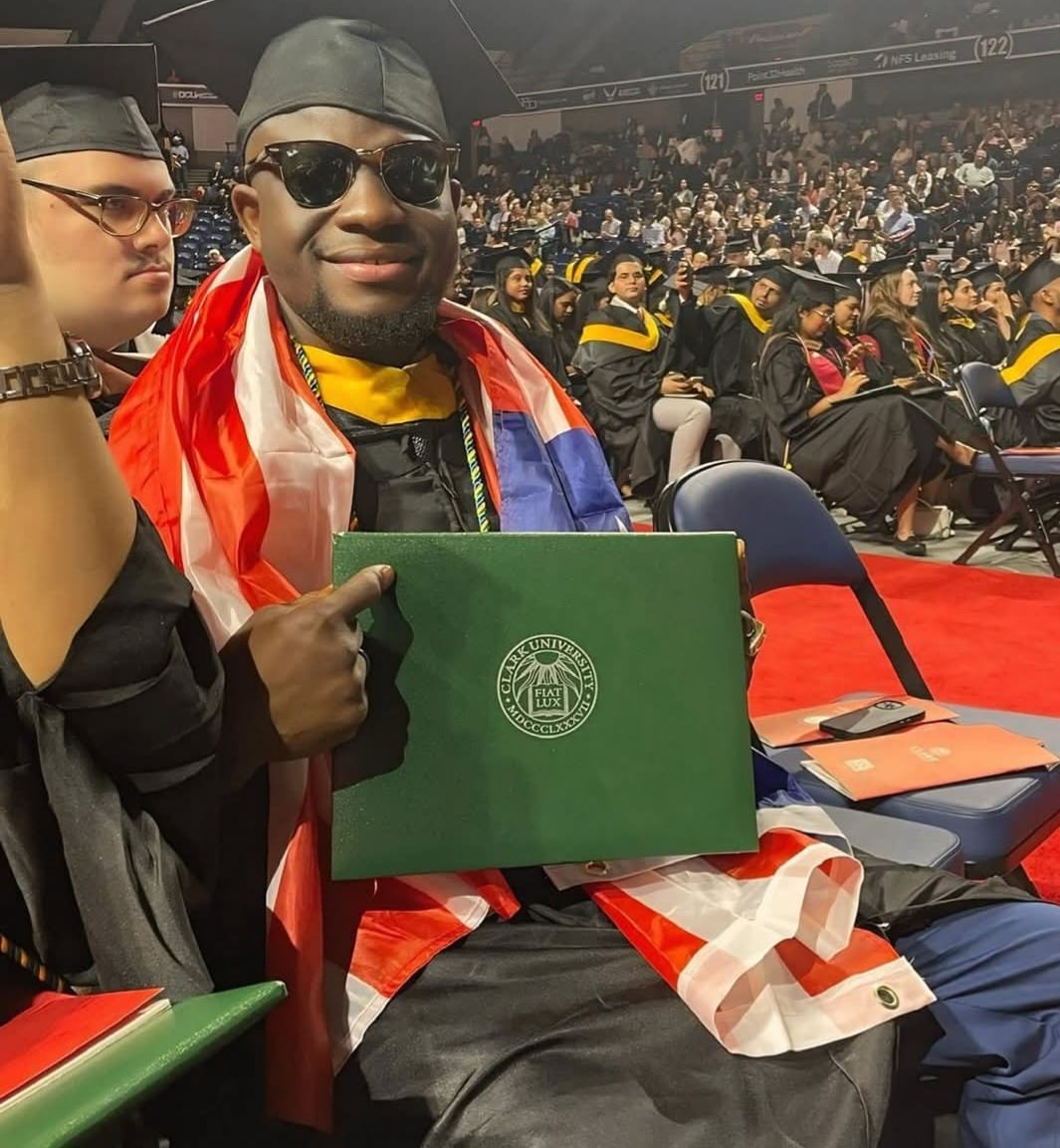
Liberia’s drive toward food security and climate resilience has gained renewed momentum as former Deputy Executive Director of the Environmental Protection Agency (EPA) of Liberia, Randall Dobayou, has earned a second Master’s degree from Clark University, Massachusetts, completing the program at the close of 2025.
Dobayou graduated from the university’s inaugural STEM-designated Master’s program in Sustainable Food Systems, with a concentration in Climate-Smart Agriculture (CSA), a field increasingly recognized as critical to addressing climate change, food insecurity, and sustainable development in low-income and climate-vulnerable countries.
The program, valued at over US$69,000 in scholarship support, is designed to equip professionals with advanced scientific, technological, and policy-driven tools to improve agricultural productivity while reducing environmental risks.
A Strategic Shift from Law to Food Systems
At the beginning of 2025, Dobayou was pursuing a legal education, but made the strategic decision to pause law school to accept the highly competitive scholarship opportunity in the United States.
“Leaving law school was not an easy decision,” Dobayou said, “but food is fundamental to human survival, economic stability, and national security.
Understanding the science, systems, and technologies behind food production is even more valuable, especially for countries like Liberia”, he re-emphasized.
Clark University, widely recognized for its global leadership in climate, sustainability, and development studies, launched the Sustainable Food Systems program to respond to mounting global food challenges intensified by climate change, population growth, and supply chain disruptions.
Liberia’s Food Security Challenge
Liberia remains heavily dependent on food imports, despite agriculture employing nearly 40 percent of the national workforce.
According to development partners and sector assessments, the country imports an estimated 60–70 percent of its staple foods, including rice, the national staple costing the economy tens of millions of U.S. dollars annually.
Climate variability, low mechanization, weak value chains, and limited technical expertise continue to undermine domestic production.
Climate smart agriculture, an approach that increases productivity, enhances resilience, and reduces greenhouse gas emissions is increasingly viewed as a pathway to reversing this trend.
“Liberia urgently needs skilled professionals in agriculture and sustainability,” Dobayou noted.
“Despite our desire for self-sufficiency, we continue to import food aggressively on a recurring basis. This second master’s degree is part of my contribution to closing that gap”, he added.
From Environmental Governance to Agricultural Transformation
Dobayou previously served as Deputy Executive Director of Liberia’s Environmental Protection Agency, where he worked on environmental governance, climate policy, and sustainable development frameworks.
His transition into food systems science reflects a growing recognition that environmental protection, climate adaptation, and agriculture are deeply interconnected.
Experts note that climate-smart agriculture can increase yields by 20–30 percent in climate-vulnerable regions while reducing environmental degradation when properly implemented making trained professionals essential to national planning and policy execution.
A Transformative Academic Journey
Completing two master’s degrees has marked 2025 as a defining year for Dobayou’s academic and professional trajectory.
“Earning two master’s degrees has strengthened my commitment to advancing sustainable agriculture in Liberia and beyond,” he said.
“This training is not just academic, it is practical, solution-oriented, and urgently needed.”
As Liberia and other West African nations confront rising food prices, climate shocks, and supply chain uncertainties, professionals with advanced expertise in sustainable food systems are expected to play a critical role in shaping policy, investment, and implementation strategies.
Dobayou’s achievement highlights the importance of international academic partnerships and targeted investments in human capital as Liberia works toward food sufficiency, climate resilience, and sustainable economic growth.
With global food demand projected to rise by over 50 percent by 2050, Liberia’s long-term success may increasingly depend on the kind of climate-smart expertise now being brought home by professionals like Randall Dobayou.
Meanwhile, Mr. Dobayou earned his first master degree in Environmental Science and Policy with concentration in Climate Change impacts and Adaptation.
Editor’s Note
This article highlights the growing convergence between environmental governance and food security in Liberia at a time when climate change and global supply shocks continue to strain vulnerable economies.
Randall Dobayou’s completion of a second U.S.-based master’s degree in Sustainable Food Systems underscores a broader national and continental imperative: investing in specialized human capital to address food insecurity, climate resilience, and sustainable development.
Beyond a personal academic milestone, the story situates Dobayou’s achievement within Liberia’s persistent dependence on food imports, the escalating impacts of climate variability, and the urgent need for technically trained professionals capable of translating policy into practice.
It also reflects a shifting development narrative in which agriculture, science, and environmental policy are increasingly inseparable.
The Editors consider this profile relevant to policymakers, development partners, academic institutions, and the wider public, as it illustrates how international education and targeted expertise can contribute to national transformation.
As Liberia charts its path toward food sufficiency and climate-smart growth, such individual journeys provide insight into the human capital investments shaping the country’s future.


